An Argument Against the System of Capital Punishment
Written by: Grace Silva | University of Texas at Austin
Edited by: Kazon Barbee
Abstract:
This article argues that capital punishment should be abolished in the United States due to its high financial cost, lack of deterrent effect, risk of wrongful execution, and inherently discriminatory application. Drawing on Supreme Court jurisprudence and the opinions of Justices Thurgood Marshall, William J. Brennan Jr., and Stephen Breyer, the article demonstrates that the death penalty conflicts with evolving standards of decency under the Eighth Amendment. Empirical evidence shows that capital punishment imposes significantly higher costs than the alternative of life imprisonment, fails to reduce crime, and is often influenced by race and socioeconomic status. Additionally, documented cases of wrongful convictions highlight the irreversible risk of executing innocent individuals. The analysis further examines the methods of execution and their associated ethical and constitutional concerns. This article contends that the abolition of capital punishment is necessary for an equitable legal system.
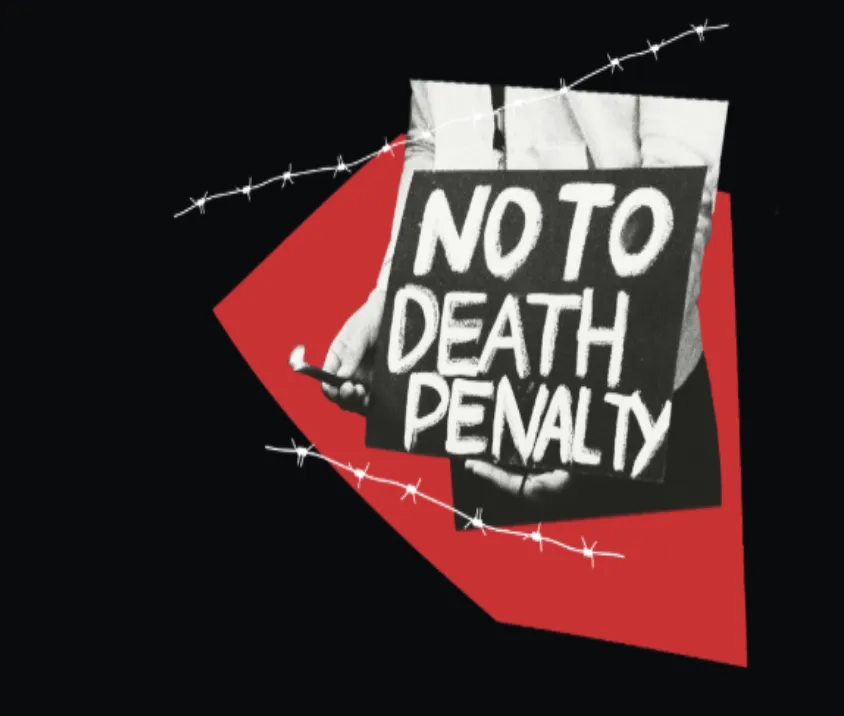
Capital punishment is an outdated and flawed practice that should be abolished because it is costly, ineffective as a deterrent, and risks the execution of innocent people while perpetuating discrimination. The debate over whether and when governments should use capital punishment has long been a contested issue in both legal and moral discourse, raising complex empirical and philosophical questions surrounding the death penalty’s use. While the United States Supreme Court continues to uphold the constitutionality of the death penalty, its application has been increasingly scrutinized and narrowed over time. Evidence demonstrates that capital punishment imposes significant financial burdens, fails to reliably deter crime, and is administered in ways that are often arbitrary and discriminatory. Moreover, the irreversible nature of the death penalty, combined with documented cases of wrongful convictions, underscores the profound risk of executing innocent individuals. These concerns call into serious question the legitimacy and continued use of capital punishment in the modern justice system.
Capital punishment was ruled unconstitutional in the 1972 case Furman v. Georgia, 408 U.S. 238 (1972), for violating the Cruel and Unusual Punishment Clause of the Eighth Amendment and the Due Process Clause of the Fourteenth Amendment. However, following the 1976 decision in Gregg v. Georgia, the death penalty is federal law and still applies today. Notably, Supreme Court Justices Thurgood Marshall, William J. Brennan, and Stephen Breyer were staunch believers that the death penalty is unconstitutional and argued so throughout their careers.
Thurgood Marshall is, to date, the only Supreme Court Justice to have litigated a death penalty case. This experience, combined with his fervent efforts to combat discrimination, shaped his strong opposition to capital punishment. As a Supreme Court Justice, Marshall first articulated his stance on capital punishment in Furman v. Georgia, stating “the death penalty is an excessive and unnecessary punishment that violates the Eighth Amendment” [1]. In his concurring opinion, Marshall further argued that he believed even the most hesitant, well-informed citizen would condemn capital punishment. He asserted that the system of capital punishment was inherently discriminatory, stating, “capital punishment is imposed discriminatorily against certain identifiable classes of people; there is evidence that innocent people have been executed before their innocence can be proved” [2]. Marshall was one of merely two justices whose opinion in Furman v. Georgia was based on the conclusion that the death penalty was inherently cruel and unusual in all instances due to being excessive and incompatible with the evolving societal decency standards [3]. The other four concurring justices on the case narrowly applied their opinion to the specific case presented based on the evidence of racial bias and the arbitrary application of capital punishment. During his time on the Supreme Court, Marshall wrote numerous dissenting opinions in cases the Court refused to hear on death penalty appeals, ultimately believing that the death penalty was unconstitutional in its incompatibility with the human right to dignity [4].
In Furman v. Georgia, Justice Brennan asserted his opposition to the death penalty. He argued that although the death penalty is referenced as a possibility, as “was then a common punishment,” defendants are entitled to due process of law under the Fifth Amendment; its unending use was not necessarily intended by the framers of the Constitution [5]. He later asserted that those who try to legitimize the death penalty through reference to the framers’ intent exhibit “arrogance cloaked in humility” [6]. Furthermore, he argued the definition of the Cruel and Unusual Punishment Clause of the Eighth Amendment is “not static” and should no longer include the death penalty. Brennan cited West Virginia State Board of Education v. Barnette, 319 in support of his argument that state-sponsored executions are not a matter of legislative act: “the right to be free of cruel and unusual punishments like the other guarantees of the Bill of Rights, may not be submitted to vote…” and that the purpose of the Bill of Rights was to remove specific issues from political controversy and establish them as jurisprudence applied by the courts [7]. The aim of the framers’ debates surrounding capital punishment was to ensure that the legislature would not have unfettered power to prescribe punishment for crimes. Further, if there was no evidence that capital punishment is a more effective punitive measure than a less severe punishment, then the continued use of capital punishment violates the Eighth Amendment. Brennan’s guiding principle was the assertion that a punishment found to be cruel and unusual “does not comport with human dignity” and ultimately conflicts with the Cruel and Unusual Punishment Clause, which “prohibits the infliction of uncivilized and inhuman punishments” [8]. Justice Brennan categorically opposed the death penalty throughout his career.
In his dissenting opinion in Glossip v. Gross, Justice Stephen Breyer argued that the nation has been consistently reducing the use of the death penalty to the point that it is so infrequently used as to constitute “unusual” punishment under the Eighth Amendment. His dissent was built upon three fundamental defects he saw in the death penalty system: reliability, arbitrariness, and extended duration. The lack of reliability is the first tenet of his argument, citing definitive evidence that innocent people have been executed. He noted that in 2002, the Supreme Court used the word “disturbing” to describe the great number of cases in which individuals had been sentenced to death and were later exonerated [9]. The second defect is the arbitrary application of the death penalty. Breyer argued that when capital punishment was reinstated in 1976 under Gregg v. Georgia, the Court acknowledged that capital punishment would be unconstitutional if it were “inflicted arbitrarily and capriciously,” but that in the intervening 40 years, it has become “increasingly clear that the death penalty is imposed arbitrarily” [10]. Finally, Breyer argued that the excessively long periods individuals tend to spend on death row constitute cruel punishment. Breyer called for a full briefing on the question of the constitutionality of the death penalty in his dissent. In 2021, Justice Breyer further reiterated these arguments in his dissenting opinion in United States v. Dustin John Higgs. He again asserted that cases like United States v. Higgs, alongside other federal capital cases, are “examples that illustrate the difficulties of administering the death penalty consistent with the Constitution.” Breyer concludes that it is “highly likely” the death penalty violates the Eighth Amendment [11].
The Supreme Court and other state courts in the modern era have tended toward limiting the circumstances in which the death penalty can be applied. In Coker v. Georgia, which was later upheld in Kennedy v. Louisiana, the Court ruled that the death penalty may only be applied to cases that involve the death of a victim. The Supreme Court performed a proportionality analysis by evaluating the offense's gravity and the severity of the penalty, the manner in which the given jurisdiction punishes other criminals, and, finally, how other jurisdictions punish the same crime. In these two cases, the death penalty was determined to be a disproportionate punishment for rape and child rape, respectively, because the victims in these cases lived. In 2002, with Atkins v. Virginia, the Supreme Court narrowed the scope of the application of the death penalty to exclude those with mental disabilities who could not understand the punishment, stating it would be a violation of the Eighth Amendment. It was not until 2005 that the Supreme Court decided that the “standard of decency” had evolved so that executing minors also constituted cruel and unusual punishment in Roper v. Simmons. The Justices cited a consensus of state legislatures and international opinion against juvenile executions in their decision [12]. Numerous complex factors influence the constitutionality of the flawed practice of capital punishment. Several of these factors, such as mental incapacities and age, have necessitated exceptions to the practice.
Capital punishment is a significantly more expensive system than sentencing individuals to life without the possibility of parole, placing a high burden on taxpayers. In addition to costs driven by the execution itself, the complex legal process required in capital cases significantly increases costs. The majority of defendants in death penalty cases cannot afford a privately hired attorney, thus necessitating public defenders or state-appointed attorneys. Capital cases are more complex than non-capital cases, thereby extending trial durations through jury, witness, and expert selection processes. Capital trials can last up to four times longer than non-capital cases and require specialized security facilities and surveillance, substantially increasing expenses [13]. To minimize error, each defendant is entitled to a series of appeals, including a direct appeal. In several states, this is mandatory, requires multiple layers of review, and further compounds costs for the taxpayer.
An independent 2017 study prepared for the Oklahoma Death Penalty Review Commission found that, on average, Oklahoma death penalty cases cost $110,000 more than non-capital first-degree murder cases [14]. Country-wide, cases seeking the death penalty on average imposed approximately $700,000 more in costs than those seeking alternative punitive measures such as life in prison without the possibility of parole [15]. Most cases in which capital punishment is sought do not ultimately result in the imposition of the death penalty. Even when the death penalty is imposed, the most frequent outcome is that the death sentence or conviction is eventually overturned [16]. Therefore, most defendants sentenced to death spend the remainder of their natural lives in prison. Further, the death penalty process inflates costs. These unnecessary costs to the taxpayer would be eliminated if alternatives to the death penalty were implemented.
While the Supreme Court has never ruled a method of execution unconstitutional, some state courts have ruled particular methods unconstitutional, such as death by hanging or firing squad. In the modern era, the primary method of execution is lethal injection in 28 of the 29 states that allow the death penalty, according to the National Conference of State Legislatures [17]. Many states have statutes allowing for secondary methods of execution if lethal injection is found to be unconstitutional. Methods of execution vary by state, as do their protocols. Texas was the first state to use lethal injection in 1982, and today it is the sole authorized method of execution [18]. An NPR analysis of 200 autopsies of prisoners executed by lethal injection found that 84% of those executed exhibited signs of pulmonary edema: a condition that fills the lungs with fluid, the sensation of which experts have likened to waterboarding [19]. In his dissent in the U.S. v. Higgs case, Justice Breyer echoed this research as a reason to consider lethal injection cruel and unusual, and therefore unconstitutional [20].
Professor of jurisprudence and political science Austin Sarat estimates that approximately 3% of executions in the U.S. from 1890 to 2010 were botched in his book Gruesome Spectacles: Botched Executions and America’s Death Penalty [21]. Sarat defines a botched execution as a breakdown or departure from standard protocols for a particular execution method. Botched executions involve unanticipated delays or complications that cause unnecessary agony for the prisoner, which include, but are not limited to: incorrect dosing of lethal injection materials, individuals catching fire while being electrocuted, or having to be electrocuted multiple times.
Five southern states, including Alabama and Louisiana, authorize nitrogen hypoxia as a method of execution. According to the United Nations, nitrogen gas is “an untested method of execution which may subject [the condemned person] to cruel, inhuman or degrading treatment or even torture” [22]. Nitrogen gas is odorless and colorless, causing a risk of asphyxiation to prison staff and observers if a leak occurs. According to Sarat, lethal gas has the second-highest rate of botched executions at 5.4% [23]. However, this method is largely used only if shortages of lethal injection materials are unavailable or in the case that lethal injection is ruled unconstitutional.
Nine states across the country authorize electrocution, and in almost all of these states, the death-row prisoner may choose electrocution over lethal injection or nitrogen hypoxia. Electrocution was once the most widely used method of execution in the U.S. after it was deemed more humane than hanging in New York in the late 19th century [24]. Over the decades, court challenges eventually led most states to abandon electrocution as the primary method of execution in favor of lethal injection.
Five states authorize the firing squad as a method of execution, which was the first method of execution in the U.S., and dates back to 1608. South Carolina is the only state that still allows inmates to elect this method [25]. In all other states, the firing squad remains an alternative option to lethal injection and lethal gas if the materials are unavailable. However, in March 2025, the Idaho legislature passed a bill to make the firing squad the primary method of execution, effective July 1, 2026 [26]. The firing squad has no recorded botched execution, according to Professor Sarat [27]. Due to this fact and the relatively quick observed deaths, it has been argued that the firing squad may be the most humane method of execution. However, this is a disputed claim, and lethal injection remains the primary method of execution in the U.S.
A common rationale for the death penalty is deterrence. The theory is that the threat of execution will be sufficient to prevent a significant number of people from committing crimes they otherwise would. The death penalty was then expanded in 1994 by the Violent Crime Control and Law Enforcement Act, which added 60 new offenses to the list of crimes eligible for capital punishment [28]. One of the aims of this act was to deter crime by expanding the offenses eligible for capital punishment. Despite the rhetorical prominence of deterrence as a justification, studies have found no empirical evidence that the use of the death penalty deters crime [29].
One approach to studying supposed deterrence in the U.S. has been to compare homicide rates between states that retain the death penalty and those that have abolished it. Overall, national homicide rates have been decreasing since the 1990s; however, states that retain the death penalty have higher homicide rates than those that have abolished it [30]. However, it is not enough to compare jurisdictions with and without the death penalty, without consideration for other factors such as police involvement in the community or unemployment rates, which influence crime rates. Due to complicated social factors and implausible models of the public and inmates' perceptions of capital punishment, the National Academy of Science has not been able to find conclusive evidence that the use of the system of capital punishment deters capital crime [31]. Other punishments, such as life in prison without parole, may therefore be equally effective in deterring crime at far less monetary cost and risk of executing an innocent person.
One of the primary reasons capital punishment was determined to be unconstitutional in Furman v. Georgia was due to the arbitrary and discriminatory application of the practice, particularly among the impoverished and racial minority groups. In his concurrence, Justice Brennan stated that “the very words ‘cruel and unusual punishments’ imply condemnation of the arbitrary infliction of severe punishments” [32]. Arbitrary and often discriminatory factors, such as the race of the defendant or victim, the quality of the defense counsel, and the county in which the crime was committed, select an arbitrary group of individuals for death row. In Gregg v. Georgia, the death penalty was reinstated, however, with many stipulations, such as bifurcated proceedings and a comparison of a capital case’s sentence to the circumstances of similar cases, as safeguards to prevent discriminatory application. However, staggering statistics have emerged proving the continued discriminatory application of capital punishment. For example, a 2016 Washington State study found that Black defendants were four times more likely to be given the death sentence than non-Black defendants with similar cases [33]. A 2005 California study found that homicides in which the victim was white were 3.7 times more likely to result in a death sentence than homicides with Black victims [34]. In a 2010 interview, Justice Stevens, who voted in favor of upholding capital punishment based on new regulatory requirements in Gregg v. Georgia, stated that “the death penalty today is vastly different from the death penalty that we thought we were authorizing” [35]. In the decades since the Gregg decision, studies and reports have shown that the administration of capital punishment is affected by legally irrelevant and arbitrary factors.
Although the population of death-row inmates has declined consecutively for 20 years, approximately 2,100 inmates currently face execution in the U.S [36]. A 2014 study conservatively estimated through a survival analysis model that at least 4.1% of current death-row prisoners have been falsely convicted [37]. Furthermore, a 2000 study by Columbia University Law School found that approximately 68% of all trials involving capital punishment contained serious errors [38]. When these cases were retried, 7% of defendants were acquitted, and 80% were ultimately not given a death sentence. According to the Death Penalty Information Center, at least 200 people have been exonerated since 1973 [39]. Due to errors in human judgment and systemic biases, there always remains a risk of executing innocent people. In his dissent in Glossip v. Gross, Justice Breyer stated that evidence of flawed forensic testimony, procedural errors, and other factors suggests “...there are too many instances in which courts sentence defendants to death without complying with the necessary procedures; and… in a significant number of cases, the death sentence is imposed on a person who did not commit the crime” [40]. Substituting a life sentence without the possibility of parole, erroneous executions can be entirely prevented, while maintaining appropriate punishment and protecting society from greater harm.
Despite decades of efforts to reform the legal and procedural system surrounding capital punishment, the death penalty remains irreparably marked by discrimination, arbitrariness, and error. Its continued use directly contradicts the principles it claims to uphold. The evidence demonstrates that the death penalty imposes extraordinary financial costs to the taxpayer, fails to deter crime, and operates within a system where race, geography, and access to adequate legal representation can determine who lives or dies. Perhaps most troublingly, the death penalty carries the risk of executing innocent individuals. Even members of the Supreme Court have increasingly questioned its constitutionality, recognizing that evolving standards of decency are incompatible with the flawed and extreme punishment. Therefore, the justification for capital punishment is weak. A justice system committed to fairness, human dignity, and the protection of life must reject a practice so prone to failure and declare it unconstitutional. Alternative punitive measures, such as life without parole, preserve public safety and punish the perpetrator, while eliminating the risk of irreversible injustice, and may be equally effective and pose less risk of human rights violations. Abolition is a necessary step toward a more equitable legal system.
Endotes
[1] “Thurgood Marshall LDF Legend,” Thurgood Marshall Institute at LDF, 2019.
[2] Furman v. Georgia, 408 U.S. 364 (1972).
[3] Furman v. Georgia, 408 U.S. 325 (1972).
[4] Kevin Barry, "The Death Penalty & the Dignity Clauses," Iowa Law Review 102, no. 1 (2017): 383.
[5] Furman v. Georgia, 408 U. S. 364 (1972).
[6] Associated Press, “Justice Brennan Calls Criticism of Court Disguised Arrogance.” Los Angeles Times, October 13, 1985.
[7] Ronald J. Tabak, “Justice Brennan and the Death Penalty,” Pace Law Review 11, no. 3 (1991).
[8] Furman v. Georgia, 408 U.S. 270. Id. at 356 U.S. 100 (1972).
[9] Glossip v. Gross, 576 U.S. 863 (2015) (Breyer, J., dissenting).
[10] Glossip v. Gross, 576 U.S. 863 (2015) (Breyer, J., dissenting).
[11] United States v. Dustin John Higgs, 592 U. S. ____ (2021).
[12] Roper v. Simmons, 543 U.S. 112. S. W. 3d, at 399, (2005). (Breyer, J., dissenting).
[13] “State Studies on Monetary Costs,” Death Penalty Information Center, 2025.
[14] “An Analysis of the Economic Costs of Capital Punishment in Oklahoma,” Death Penalty Information Center, 2017.
[15] “State Studies on Monetary Costs,” Death Penalty Information Center, 2025.
[16] “Landmark Study Finds Capital Punishment System ‘Fraught with Error,’” Columbia University News, 2000.
[17] “States and Capital Punishment,” National Conference of State Legislatures, August 11, 2021.
[18] “Methods of Execution,” Death Penalty Information Center, 2024.
[19] “NPR Investigation of Lethal-Injection Autopsies Finds Executed Prisoners Experience Sensations of Suffocation and Drowning,” Death Penalty Information Center, July 26, 2019.
[20] United States v. Higgs, 592 U.S. ___ (2021) (Breyer, J., dissenting).
[21] Austin Sarat, “Gruesome Spectacles: Botched Executions and America’s Death Penalty”. Stanford University Press, (2020).
[22] “Nitrogen Suffocation,” Equal Justice Initiative, February 5, 2025.
[23] Sarat, Austin, Gruesome Spectacles: Botched Executions and America’s Death Penalty. Stanford, CA: Stanford University Press, 2020.
[24] “Methods of Execution.” Death Penalty Information Center, 2024.
[25] “Authorized Methods by State.” Death Penalty Information Center (2025).
[26] Death Penalty Information Center, “Idaho Governor Signs Legislation Authorizing Firing Squad as State’s Primary Execution Method,” March 17, 2025.
[27] Austin Sarat, Gruesome Spectacles: Botched Executions and America’s Death Penalty. (Stanford: Stanford University Press, 2020).
[28] Violent Crime Control and Law Enforcement Act of 1994, Pub. L. No. 103-322, 108 Stat. 1796 (1994).
[29] “Deterrence Overview,” Death Penalty Information Center, 2025.
[30] National Research Council, Deterrence and the Death Penalty (Washington, DC: National Academies Press, 2012).
[31] National Research Council, Deterrence and the Death Penalty (Washington, DC: National Academies Press, 2012).
[32] Furman v. Georgia, 408 U.S. 274 (1972) (Breyer, J., concurring).
[33] “Race and the Death Penalty,” National Association of Criminal Defense Lawyers, November 4, 2026.
[34] “Race and the Death Penalty,” National Association of Criminal Defense Lawyers, November 4, 2026.
[35] “Retired Supreme Court Justice Regrets 1976 Vote Upholding the Death Penalty,” Death Penalty Information Center, March 14, 2025.
[36] “Death Row Overview,” Death Penalty Information Center, 2025.
[37] Samuel R. Gross et al., “Rate of False Conviction of Criminal Defendants Who Are Sentenced to Death,” Proceedings of the National Academy of Sciences 111, no. 20 (2014).
[38] “Landmark Study Finds Capital Punishment System ‘Fraught with Error,’” Columbia University News, June 12, 2000.
[39] “Death Row Overview,” Death Penalty Information Center, 2025.
[40] Glossip v. Gross, 576 U.S. 863 (2015) (Breyer, J., dissenting).
Works Cited
Alabama Death-Row Prisoner Doyle Hamm. “Who Survived Botched Execution Attempt, Dies of Cancer.” Death Penalty Information Center, March 14, 2025.
“An Analysis of the Economic Costs of Capital Punishment in Oklahoma.” Death Penalty Information Center, 2017.
Associated Press. “Justice Brennan Calls Criticism of Court Disguised Arrogance.” Los Angeles Times, October 13, 1985. https://www.latimes.com/archives/la-xpm-1985-10-13-mn-15849-story.html.
Atkins v. Virginia, 536 U.S. 304 (2002).
“Authorized Methods by State.” Death Penalty Information Center, 2025. https://deathpenaltyinfo.org/executions/methods-of-execution/authorized-methods-by-state
Barry, Kevin. "The Death Penalty & the Dignity Clauses." Iowa Law Review 102, no. 1 (2017): 383–444 https://ilr.law.uiowa.edu/sites/ilr.law.uiowa.edu/files/2022-10/The%20Death%20Penalty%20&%20the%20Dignity%20Clauses%20.pdf
“Botched Executions.” Death Penalty Information Center. Accessed April 19, 2025. https://deathpenaltyinfo.org/executions/botched-executions.
Coker v. Georgia, 433 U.S. 584 (1977).
“Confidential Settlement Leaves Questions About Alabama Execution Process Unanswered.” Death Penalty Information Center, 2018. https://deathpenaltyinfo.org/confidential-settlement-leaves-questions-about-alabama-execution-process-unanswered
“Death Penalty.” Legal Information Institute, Cornell Law School. https://www.law.cornell.edu/wex/death_penalty
National Research Council. Deterrence and the Death Penalty. Washington, DC: National Academies Press, 2012. https://nap.nationalacademies.org/catalog/13363/deterrence-and-the-death-penalty.
“Deterrence Overview.” Death Penalty Information Center, February 11, 2025. https://deathpenaltyinfo.org/policy-issues/policy/deterrence
Furman v. Georgia, 408 U.S. 238 (1972).
“Furman v. Georgia.” Witness to Innocence. https://www.witnesstoinnocence.org/furmanvgeorgia
“Full Text of the U.S. Constitution.” National Constitution Center. https://constitutioncenter.org/the-constitution/full-text
Glossip v. Gross, 576 U.S. 863 (2015).
Gregg v. Georgia, 428 U.S. 153 (1976).
Gross, Samuel R., et al. “Rate of False Conviction of Criminal Defendants Who Are Sentenced to Death.” Proceedings of the National Academy of Sciences 111, no. 20 (2014).
Kennedy v. Louisiana, 554 U.S. 407 (2008).
“Landmark Study Finds Capital Punishment System ‘Fraught with Error.’” Columbia University News, June 12, 2000. https://www.columbia.edu/cu/pr/00/06/lawStudy.html
Maher, Robin, and Anne Holsinger. “The Death Penalty in 2023: Year End Report.” Death Penalty Information Center, December 2023. https://deathpenaltyinfo.org/research/analysis/reports/year-end-reports/the-death-penalty-in-2023-year-end-report.
“Methods of Execution.” Death Penalty Information Center, 2024.
“Nitrogen Suffocation.” Equal Justice Initiative, February 5, 2025. https://eji.org/issues/nitrogen-suffocation
Death Penalty Information Center. “NPR Investigation of Lethal-Injection Autopsies Finds Executed Prisoners Experience Sensations of Suffocation and Drowning.” March 14, 2025. https://deathpenaltyinfo.org/npr-investigation-of-lethal-injection-autopsies-finds-executed-prisoners-experience-sensations-of-suffocation-and-drowning
“State Studies on Monetary Costs.” Death Penalty Information Center, 2025. https://deathpenaltyinfo.org/policy-issues/policy/costs/summary-of-states-death-penalty
“Race and the Death Penalty.” National Association of Criminal Defense Lawyers, November 4, 2025. https://www.nacdl.org/Content/Race-and-the-Death-Penalty
“Retired Supreme Court Justice Regrets 1976 Vote Upholding the Death Penalty.” Death Penalty Information Center, March 14, 2025. https://deathpenaltyinfo.org/retired-supreme-court-justice-regrets-1976-vote-upholding-the-death-penalty
“Romell Broom, Who Survived Botched Execution, Dies of Covid-19 on Ohio Death Row.” Death Penalty Information Center, 2020. https://deathpenaltyinfo.org/romell-broom-who-survived-botched-execution-dies-of-covid-19-on-ohio-death-row
Roper v. Simmons, 543 U.S. 551 (2005).
Sarat, Austin. Gruesome Spectacles: Botched Executions and America’s Death Penalty. Stanford, CA: Stanford University Press, 2020.
“States and Capital Punishment.” National Conference of State Legislatures, August 11, 2021. https://www.ncsl.org/civil-and-criminal-justice/states-and-capital-punishment
Tabak, Ronald J. “Justice Brennan and the Death Penalty.” Pace Law Review 11, no. 3 (1991). https://doi.org/10.58948/2331-3528.1544
“Thurgood Marshall LDF Legend.” Thurgood Marshall Institute at LDF, April 3, 2019. https://tminstituteldf.org/archives/ldf-legends/thurgood-marshall/
United States v. Higgs, 592 U.S. ___ (2021).
West Virginia State Board of Education v. Barnette, 319 U.S. 624 (1943).