Racial Injustice in Baltimore’s Substance Abuse Crisis
Written by: Ogechi Uzoukwu | University of Maryland, College Park
Edited by: Rafaela Drake
Abstract:
This article explores the intersection of systemic injustice and substance abuse in Baltimore, with a focus on government-led interventions intended to address the opioid and broader substance abuse crises. It examines how historical, systematic, and racial inequities, rooted in economic disinvestment and underregulated public health initiatives, contribute to disproportionate amounts of harm in marginalized communities. This article examines practices that reinforce mistrust of the healthcare and rehabilitation systems among vulnerable residents. draws on legal precedent, specifically Mayor & City Council of Baltimore v. Purdue Pharma L.P., which shows how courts have recognized corporate and government endeavors to exploit patients. This article endorses overdose education and prevention programs in critically affected Baltimore neighborhoods.
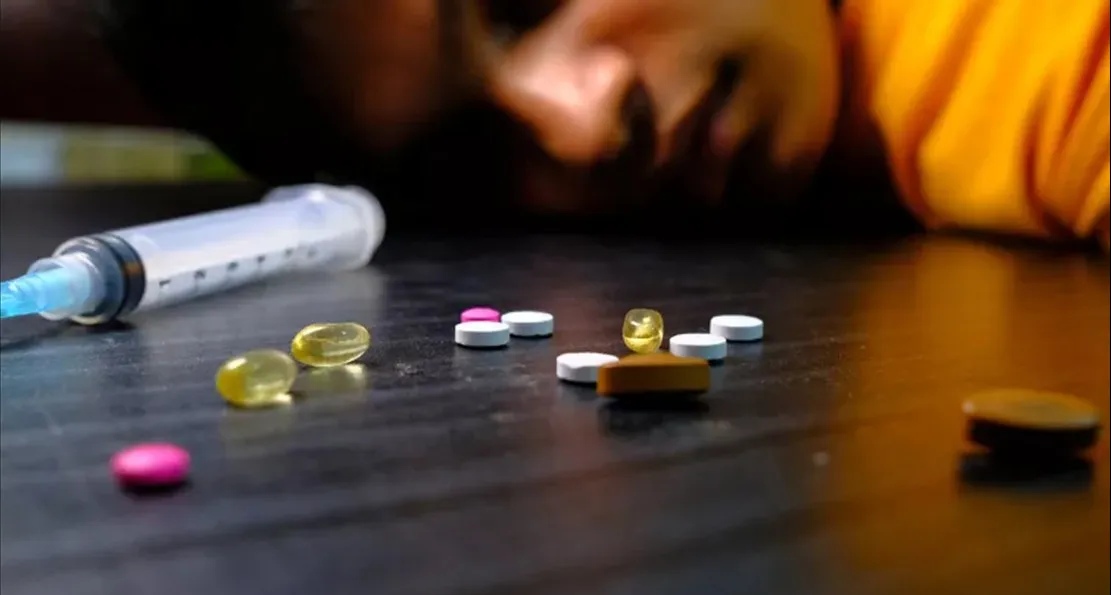
The ongoing issue of substance abuse in Baltimore is very clearly an example of distributive injustice, which refers to the fair allocation of resources, opportunities, and protections across a population. In Baltimore, the communities most affected by addiction are the same communities with the least access to high-quality treatment, safe housing, economic opportunity, and consistent oversight of healthcare facilities. This is not just a coincidence; it is the result of decades of structural racism, economic neglect, redlining, and discriminatory housing policies. These historical injustices concentrate poverty and leave more people exposed to harm in specific neighborhoods, while neighborhoods that are wealthier (and predominantly White) have access to better resources and harm reduction. Additionally, legal frameworks have disadvantaged the citizens of Baltimore. Policies such as those challenged in Mayor & City Council of Baltimore v. Purdue Pharma L.P. show that certain decisions disproportionately expose marginalized communities to harmful conditions while limiting their access to recourse. In this case, the city sued opioid manufacturers, distributors, and prescribers because they allegedly marketed opioids deceptively and lacked monitoring for suspicious distributions. This contributed significantly to the disproportionate impact of Baltimore’s opioid crisis on certain communities. The defendants tried to move the case to federal court; however, the U.S. District Court for the District of Maryland ruled that they could not move it because the parties were all from the same state, so the case was moved back to state court [1]. This case shows not only that legal procedures can affect a community’s ability to seek justice but that the actions of the government and corporations contribute to widespread public health crises and harm in these communities. The harm is the byproduct of collective institutional failures across healthcare providers, corporations, government, and regulations that disproportionately impact marginalized communities. Therefore, the prevalence of addiction and substance abuse in Baltimore’s most dangerous neighborhoods is tied to systematic injustice, which causes these communities to bear a higher burden of negative outcomes, including higher overdose, incarceration, and mortality rates, as well as limited healthcare, education, and treatment.
In the 2024 article “They Entered Treatment. Drugs, Overdoses and Deaths Followed,” the New York Times documents how a government-funded drug-treatment program in Baltimore, Population Health Alliance (PHA) Healthcare, has resulted in fatal overdoses among people who had come to them for substance abuse and drug rehabilitation and addiction. 13 deaths occurred in this treatment program that was supposed to help people who were struggling with substance abuse [2]. This initiative, aimed at preventing overdoses, was implemented in drug-ridden buildings where many more overdoses occurred due to a lack of regulation and oversight. It specifically targeted vulnerable people looking for help and used their vulnerability against them. This failure is illustrative of structural injustice, where government-led efforts exploited those in need and put them at greater risk. The allocation of “help” to this community was both insufficient and inadequate. Findings from the Baltimore City Health Department concluded that though Baltimore makes up 9% of Maryland’s population, it accounts for 44% of overdose deaths. The opioid risk and death burden are not evenly distributed across Maryland: it is concentrated among those who are economically and socially disadvantaged in Baltimore [3].
There is a positively correlated relationship between poor neighborhood conditions and drug abuse [4]. Redlining practices created concentrated poverty in many communities, and these redlined neighborhoods have more vacant lots, fewer safe community spaces, and fewer clinics or pharmacies that distribute Naloxone, a life-saving opioid antagonist. Financial constraints make it difficult for many Baltimore residents to relocate, confining and essentially trapping them in neighborhoods without sufficient safety precautions. The lack of oversight and precautions set in place in redlined neighborhoods creates “hot spots” for the distribution of dangerous drugs where overdoses are common [5]. Historically redlined areas are also home to more environmental hazards, such as industrial waste sites and power plants, which lead to fewer green spaces and parks. This impacts physical and mental health and causes stress, a factor in substance dependency and abuse [6].
Additionally, there is a disproportionate amount of economic and labor instability among Baltimore’s residents. The unemployment rates are significantly higher in Baltimore than in other Maryland counties, and the federal job cuts in August 2025 have continued to increase these unemployment rates [7]. People from lower‐income households (<$30,000 a year) are more likely than people from higher-income households to know someone who died of overdose [8]. Economic instability increases a person’s likelihood to use substances while simultaneously hindering their likelihood to recover because higher unemployment, lower incomes, unstable housing, and reduced access to employment are all factors that decrease the likelihood of a person struggling with substance abuse seeking help or treatment [9]. Baltimore residents who use substances often delay or avoid medical treatment because of their lack of trust in healthcare professionals. The Public Health Core Value asserted by Nancy Krieger that “history is vital because we live our history embodied” is directly reflected in Baltimore’s substance-use crisis [10]. In the news article, overdose deaths occurred among people who were already enrolled in treatment, and the only way to understand this discrepancy is to recognize the long historical trajectory of structural oppression, racist housing policies, and economic neglect that has shaped Baltimore and its residents for generations.
Equality and equity are often confused, but they are unique concepts with distinct definitions relative to public health. Equality is when each individual or group of people is given the same resources or opportunities. Conversely, equity recognizes that each person has different circumstances and provides the exact resources and opportunities necessary to reach an equal outcome [11]. Equality alone often leads to injustice because equal allocation overlooks structural inequities that already exist. If treatment resources are distributed evenly across all areas (both rich and poor neighborhoods), the areas with the most need are still under-resourced, while the equal resources given to the rich neighborhoods are counter-productive. This has an adverse effect, as it widens the equality gap even more. Another example of equality contributing to injustice would be if Maryland policymakers only funded and oversaw a set number of treatment centers for substance abuse per county. In doing this, the wealthier counties, such as Howard and Montgomery County, that do not have a substance abuse problem, would be wasting resources, and the poorer counties with a higher prevalence of substance abuse issues, such as Baltimore City, may not have enough treatment centers compared to the amount of substance abuse crises they face. On the other hand, an equity-based approach would provide more resources: it would give Baltimore City as many treatment centers as it needs, which would be significantly more than wealthy counties like Montgomery and Howard County require.
To promote a more equitable society, a substance education and treatment program should be implemented. The initiative should have locations throughout Baltimore, targeting high-risk neighborhoods such as Penn-North, Sandtown-Winchester, and Cherry Hill. Its design should be similar to other education programs like Behavioral Health System Baltimore, which works with schools, communities, and organizations across Baltimore and Central Maryland to give young people and families information that will help prevent substance use and protect their emotional health [12]. This initiative will provide housing support and relocation assistance to those of low income, employment and job training help, harm reduction and relapse prevention (via the distribution and education of naloxone), and community-based outreach with mobile clinics visiting these neighborhoods with high overdoses. Education campaigns and the blanket prescription of Naloxone will help prevent opioid deaths from substance abuse [13]. This project will be funded by opioid settlements, which have yielded many billions of dollars for the city over the past few years [14]. Low health literacy is detrimental to understanding the risks of drug and substance use, as well as the signs of abuse and overdose. In educating and supporting the population of Baltimore residents in these predominantly Black neighborhoods, the substance abuse issue can be alleviated, or hopefully, eliminated, in the future.
End Notes
[1] Mayor & City Council of Baltimore v. Purdue Pharma L.P., No. 1:18-cv-00800, slip op. at 10–12 (D. Md. April 25, 2018).
[2] Amy Zhu, Jeanne Gallagher, and Meredith Cohn, "They Entered Treatment. Drugs, Overdoses and Deaths Followed," The New York Times, December 20, 2024.
[3] Johns Hopkins University, "Overdose Deaths Disproportionately Claim Baltimore's Poorest, Least Educated," The Hub, September 17, 2024.
[4] Sabriya L. Linton et al., “The Association between Neighborhood Residential Rehabilitation and Injection Drug Use in Baltimore, Maryland,” American Journal of Public Health 104, 28 (2014).
[5] Robert K. Nelson et al., "Mapping Inequality," University of Richmond, 2023.
[6] Sheree M. Grieb et al., "Understanding Housing and Health through the Lens of Transitional Housing Members in a High-Incarceration Baltimore City Neighborhood: The GROUP Ministries Photovoice Project to Promote Community Redevelopment," Health Place 21 (2013): 20–28.
[7] Maryland State Archives, "Maryland Unemployment Rates by County," 2023, https://msa.maryland.gov/msa/mdmanual/01glance/economy/html/unemployrates.html[8] Johns Hopkins University, "Overdose Deaths Disproportionately Claim Baltimore's Poorest, Least Educated."
[9] Chunqing Lin et al., "A Scoping Review of Social Determinants of Health's Impact on Substance Use Disorders over the Life Course," Journal of Substance Use and Addiction Treatment 166 (2024): 209484.
[10] Nancy Krieger, "Public Health, Embodied History, and Social Justice: Looking Forward," International Journal of Health Services 45, no. 4 (2015): 587–600.
[11] Milken Institute School of Public Health, "What's the Difference between Equity and Equality?" November 5, 2020
[12] Behavioral Health System Baltimore, "Prevention Resources," April 28, 2022, https://www.bhsbaltimore.org/prevention/.
[13] Leana S. Wen and Katherine E. Warren, "Combatting the Opioid Epidemic: Baltimore's Experience and Lessons Learned," Journal of Public Health 40, no. 2 (2018): e107–e111.
[14] Baltimore City Health Department, "Opioid Restitution Fund."
Works Cited
Behavioral Health System, Baltimore. “Prevention Resources.” April 28, 2022. https://www.bhsbaltimore.org/prevention/.
Grieb, Sheree M., et al. "Understanding Housing and Health through the Lens of Transitional Housing Members in a High-Incarceration Baltimore City Neighborhood: The GROUP Ministries Photovoice Project to Promote Community Redevelopment." Health & Place 21 (2013): 20–28. https://doi.org/10.1016/j.healthplace.2012.12.006
Krieger, Nancy."Public Health, Embodied History, and Social Justice: Looking Forward." International Journal of Health Services 45, no. 4 (2015): 587–600. https://doi.org/10.1177/0020731415595549.
Lin, Chunqing, et al. "A Scoping Review of Social Determinants of Health's Impact on Substance Use Disorders over the Life Course." Journal of Substance Use and Addiction Treatment 166 (2024): 209484. https://doi.org/10.1016/j.josat.2024.209484.
Linton, Sabriya. L., et al. (2014). "The Association between Neighborhood Residential Rehabilitation and Injection Drug Use in Baltimore, Maryland, 2000–2011." Health Place 28 (2014): 142–149. https://doi.org/10.1016/j.healthplace.2014.04.005.
"The Association between Neighborhood Residential Rehabilitation and Injection Drug Use in Baltimore, Maryland, 2000–2011." Health & Place 28 (2014): 142–149. https://doi.org/10.1016/j.healthplace.2014.04.005.
Mayor & City Council of Baltimore v. Purdue Pharma L.P., No. 1:18-cv-00800, slip op. at 10–12 (D. Md. Apr. 25, 2018).
Milken Institute School of Public Health. "What's the Difference between Equity and Equality?" November 5, 2020. https://onlinepublichealth.gwu.edu/resources/equity-vs-equality/.
Nelson, Robert K. (2024). “Mapping Inequality”. University of Richmond https://dsl.richmond.edu/panorama/redlining/map/MD/Baltimore/context#loc=11/39.2929 /-76.6331
Robbins, Hannah. "Overdose Deaths Disproportionately Claim Baltimore's Poorest, Least Educated." Johns Hopkins University, The Hub, September 17, 2024. https://hub.jhu.edu/2024/09/17/overdose-deaths-baltimore/.
Wen, Leana S., and Katherine E. Warren. "Combatting the Opioid Epidemic: Baltimore's Experience and Lessons Learned." Journal of Public Health 40, no. 2 (2018): e107–e111. https://doi.org/10.1093/pubmed/fdx093.
Zhu, Amy, Jeanne Gallagher, and Meredith Cohn. "They Entered Treatment. Drugs, Overdoses, and Deaths Followed." The New York Times, December 20, 2024. https://www.nytimes.com/2024/12/20/us/baltimore-overdoses-drug-treatment.html.