The Procedural Resilience of the Codified Rooney Rule After SFFA v. Harvard
Written by: Jada Cook
Edited by: Chastity Blair
Abstract:
The 2023 Supreme Court decisions in Students for Fair Admissions (SFFA) v. Harvard and SFFA v. University of North Carolina have fundamentally destabilized the legal framework of affirmative action, signaling a decisive shift toward constitutional colorblindness. This research paper examines the viability of state-level procedural mandates, specifically Oregon’s codified Rooney Rule—a former state law requiring public universities to interview at least one minority candidate for athletic coaching positions—under the strict scrutiny standard. By tracing the Rooney Rule’s architectural origins from the National Football League’s efforts to dismantle systemic exclusion to its eventual codification in Oregon House Bill 3118, this paper evaluates whether such mandates can withstand the Court’s current hostility toward race-conscious policies. This research argues that, unlike outcome-determinative admissions policies, a codified Rooney Rule is purely procedural and does not inherently disadvantage non-minority candidates. Consequently, the paper concludes that because the rule expands the applicant pool without dictating final hiring outcomes, it serves as a legally resilient mechanism for public institutions to combat closed-loop hiring cycles while remaining compliant with the Fourteenth Amendment’s Equal Protection Clause.
The legal landscape of American affirmative action has long swung between the pursuit of corrective justice and the constraints of Constitutional colorblindness. With the Supreme Court’s 2023 decisions, Students for Fair Admissions v. President and Fellows of Harvard College and Students for Fair Admissions (SFFA) v. University of North Carolina, that pendulum struck a definitive chord, casting doubt on nearly all race-conscious institutional policies [1][2]. At the heart of this shifting doctrine lies a critical question for State-level mandates, such as Oregon’s previous Rooney Rule. Oregon’s codified Rooney Rule is a law that requires public universities to interview at least one minority candidate for athletic coaching roles [3]. Although this rule sunset in 2020 and was not reinstated, programs like this might be a way for States to mandate consideration of minority hiring within public institutions without falling victim to the SFFA decision. This begs the question: to what extent could legislation like Oregon’s codified Rooney Rule survive the new application of the strict scrutiny standard imposed by SFFA? To answer this, one must first understand the rule’s architectural origins within the National Football League and the systemic exclusion it was designed to dismantle.
The National Football League’s history regarding race is one of profound and deliberate exclusion. The American Professional Football Association, which would later become the National Football League (NFL) that we know today, began in 1920, a time when the United States was plagued by racial oppression [4]. In the league's earliest years, Black players faced extremely visceral on-field hostility that continued after the whistle. One of the few Black players in the league at the time, Fritz Pollard, described a self-defense strategy where he would roll on his back immediately after he hit the ground and raise his feet in the air and wave them until he was able to propel himself upright to prevent anyone from attempting to hurt him after the play was over [5]. In the 1920s, Pollard faced a multitude of challenges in the league due to his race, yet he was able to rise through the ranks and become the first Black head coach in the NFL. He was the only Black head coach of his era.
Between the 1933 and 1934 seasons, however, Black players suddenly disappeared from all NFL teams [6]. Although this was never documented in meeting minutes or on paper, some legal scholars argue that this could not have been coincidental and attribute it to a meeting that occurred between all NFL team owners at the end of the 1933 season [7]. When Black Los Angeles residents threatened to boycott the Los Angeles Rams’ season if the club continued to field an all-white team in 1945, the Rams desegregated the League by signing two Black players [8]. Thus, while Black players slowly began to return to the League, coaching ranks remained only white for 70 years after Pollard’s retirement. The next Black head coach hired in the NFL was former offensive tackle of the Raiders, Art Shell. Shell was hired by the Los Angeles Raiders in 1989 [9].
The absence of Black coaches during those 70 years was not a matter of a lack of qualified candidates, but was instead rooted in deeply entrenched stereotypes regarding intellectual leadership and field generalship. There is much evidence of this sentiment in sports in the 1980s. For example, on an ABC Nightline production that intended to honor the 40th Anniversary of Jackie Robinson breaking the MLB color barrier, Al Campanis, General Manager and Vice President of the Los Angeles Dodgers, stated that African Americans do not have “the necessities to be, let's say, a field manager or perhaps a general manager” [10].
The historic 70-year vacuum for Black head coaches eventually led to the 2003 implementation of the Rooney Rule in the NFL, which mandates that clubs “conduct an in-person interview with at least two externally diverse — minority and/or female — candidates for any General Manager or head coaching position” [11]. However, the rule’s efficacy has been consistently undermined by sham interviews, a reality brought to the forefront by Brian Flores, a prospective NFL coach. Flores alleged teams often conducted sham interviews with Black candidates simply to satisfy the rule while having already internally selected a white candidate, highlighting the persistent gap between procedural requirements and substantive change [12].
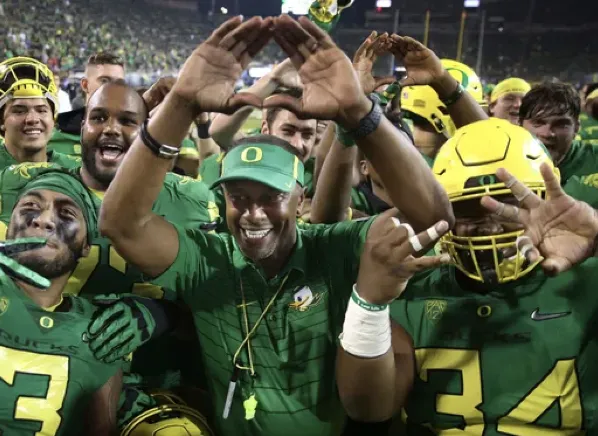
Oregon legislators admired the Rooney Rule’s mission and sought to bridge the hiring gaps in athletic coaching positions at public universities by passing House Bill 3118 in 2009. This legislation codified the Rooney Rule’s essence into state law, requiring Oregon’s public institutions of higher education to interview at least one qualified minority applicant when hiring a head coach or athletic director [13]. The law was careful to include an affirmative defense for institutions that, in good faith, were unable to identify a willing, qualified candidate. But the intent of Oregon’s Rooney Rule was clear: to usher in a diversification of the applicant pool in a state-sponsored setting. Although this specific rule has sunset, recent Supreme Court decisions could change the future of legislation that mimics the Rooney Rule.
The Supreme Court’s 2023 decisions in Students for Fair Admissions (SFFA) v. The President and Fellows of Harvard College and Students for Fair Admissions (SFFA) v. University of North Carolina both represent what legal scholars characterize as a seismic shift in equal protection law [14]. By striking down race-conscious admissions programs at Harvard and the University of North Carolina, the Court effectively overruled 45 years of precedent that began officially with University of California Regents v. Bakke, a case discussed in more detail below [15]. The SFFA ruling altered the legal landscape for affirmative action in higher education and signaled profound, potentially restrictive repercussions for public-sector initiatives, including codified diversity efforts like Oregon’s Rooney Rule.
This move can be understood through the lens of the "interest-convergence" dilemma, a theory proposed by Derrick Bell [16]. Bell argued that racial progress in the United States typically occurs only when the interests of Black citizens align with the self-interests of the white majority. Bell claims that the landmark Brown v. Board of Education decision was not chiefly motivated by moral progress; rather, he argues it came because it aligned with the interests of white policy makers. When Brown v. Board was decided, the U.S. was seeking to bolster its international reputation during the Cold War and desired to reduce domestic unrest among Black military veterans returning from Vietnam, and this decision did exactly that. The decision and its subsequent enforcement (or lack thereof) were limited, as evidenced by the slow pace of desegregation and the eventual decline of efforts to desegregate when those efforts ceased to serve white interests [17]. Although Bell’s article was published in 1980 and he focused mainly on how we see interest-convergence in post-Civil Rights era desegregation efforts, the lessons we take from his argument can be easily applied to the Supreme Court’s shifting stance on affirmative action. Clearly, this convergence no longer exists in the realm of higher education admissions [18].
The legal framework governing affirmative action in the United States has transformed, moving from an explicit tool for corrective justice to a more socially palatable, yet doctrinally fragile diversity rationale. Then, moving towards its resting place in the most recent rulings on affirmative action in SFFA v. Harvard and SFFA v. UNC. Affirmative action programs originally emerged in the 1960s as an attempt to "counteract racial discrimination and expand opportunities for racial minorities" [19]. In 1977, the U.S. Commission on Civil Rights defined the impetus for affirmative action programs as "to correct or compensate for past or present discrimination” [20]. This is rooted in a remedial focus that sought to provide meaningful redress for centuries of systemic, state-sanctioned oppression.
Federal courts began upholding affirmative action programs using this impetus. For instance, in 1971, the Eighth Circuit Court upheld an affirmative action program as “a method for presently eliminating the effects of past racial discriminatory practices… making meaningful in the immediate future the constitutional guarantees against racial discrimination” [21]. This era of remediation was characterized by a direct acknowledgement of racial injustice as the primary justification for state and institutional intervention. The remedial focus reflected the ideological currents in the 1960s and also the political interests of the white majority. Much like Brown v. Board of Education, the remedial focus was championed during the Cold War period, where the U.S. needed to repair its international reputation [22].
The first time that the Supreme Court explicitly endorsed diversity as the main rationale for affirmative action was in the 1978 decision University of California Regents v. Bakke [23]. In this case, the plaintiff brought an Equal Protection challenge to the University of California at Davis Medical School’s affirmative action program [24]. The program set aside 16 seats in a class of 100 applicants for minority students. Bakke claimed that he had fallen victim to reverse discrimination as his Medical College Admission Test (MCAT) scores were higher than those of Black, Latine, and Asian students who were admitted through the institution’s affirmative action program. The University of California justified their program on four remedial grounds: “(1) reducing the historic deficit of traditionally disfavored minorities in medical schools and in the medical profession, (2) countering the effects of societal discrimination, (3) increasing the number of physicians who will practice in communities currently underserved, and (4) obtaining the educational benefits that flow from an ethnically diverse student body” [25]. In a 5-4 decision, the Court decided that the use of quotas in affirmative action programs was constitutionally impermissible [26].
Justice Powell’s controlling opinion in University of California Regents v. Bakke shifted the legal focus from remedial racial justice to the diversity rationale [27]. This move opened the door to a convenient strategy designed to mitigate the deep resentment felt by white applicants who viewed race-conscious policies as a threat to their own status and opportunities. By reframing affirmative action programs as providing the "educational benefits that flow from an ethnically diverse student body," Powell was able to minimize the perceived costs to white nonbeneficiaries [28]. Under this new rationale, race became just one factor among many to assemble a student body that was diverse in ways broader than race.
As we can see with the transition to the diversity rationale, Derrick Bell’s interest-convergence comes into play. As exemplified in the case University of California Regents v. Bakke, the interests of Blacks and whites were beginning to no longer converge in the same way they did in the 1960s. In the late 1970s, we see “a reactionary shift by White America from the racial progress of the Civil Rights era”, the New Right [29]. This reactionary rightward political shift was exemplified by Former President Richard Nixon's appointment of William H. Rehnquist to the Supreme Court in 1971 amid rumors of Rehnquist's segregationist leanings [30].
The vulnerability of the diversity rationale was ultimately exposed in the Supreme Court’s recent decisions in SFFA v. Harvard and SFFA v. UNC [31]. The Court found that the longstanding race-conscious programs at Harvard and the University of North Carolina "cannot be reconciled with the guarantees of the Equal Protection Clause” [32]. Thus, the Court concluded the diversity rationale was no longer a viable impetus for having affirmative action programs. Chief Justice Roberts’s majority opinion emphasized that a student must be "treated based on his or her experiences as an individual—not based on race” [33]. This decision represents a seismic shift, as it effectively invalidates the modest consideration of race that the Court had previously sanctioned for decades.
The SFFA decisions had two prongs, relying on both the Equal Protection Clause of the U.S. Constitution’s Fourteenth Amendment (with respect to UNC) and Title VI of the Civil Rights Act of 1964 (with respect to Harvard) [34]. As a public university, “UNC is bound by the Equal Protection Clause, and that in considering an individual applicant’s race in making admissions decisions, UNC violated that clause” [35]. On the other hand, Harvard is a private university, and therefore not directly a state actor. Thus, the institution’s conduct is not governed by the Equal Protection Clause. Title VI, however, has historically been read “to require that all universities, whether public or private, receiving federal financial assistance must comply with the Equal Protection Clause” [36]. The court, therefore, held Harvard College to the same standard as UNC.
The legal and ideological shifts consolidated by SFFA have not merely altered the metrics of university admissions; they have sparked a radical transformation in how institutions communicate their commitment to diversity. This phenomenon is best understood through the lens of institutional overcompliance—a defensive posture where organizations preemptively dismantle diversity, equity, and inclusion (DEI) structures to avoid being characterized as a "litigation target” [37]. While the SFFA ruling technically applied only to the consideration of race in admissions, its effect has permeated all facets of institutional life, leading to a sweeping reduction in diversity-related messaging across the academic and corporate landscapes, in both the realms of hiring and admissions [38].
Nancy Leong’s 2025 empirical study provides concrete evidence of this retrenchment. In an analysis of law school communications in the five months following the SFFA decision, Leong found that a staggering number of law schools revised the diversity messaging in their application materials” [39]. This was not a minor recalibration but a systematic purge of race-conscious language: explicit references to race decreased by 73%, while explicit references to diversity dropped by 36% [40]. Furthermore, the trend extended to institutional hiring, where 44% of law schools revised their messaging and 50% of those schools eliminated language stating that they "actively seek or value diversity" in their faculty recruitment [41]. These statistics highlight a rapid decoupling of institutional identity from the diversity rationale that had defined American higher education for nearly half a century. Clearly, the fear for many academic institutions is that their diversity-focused hiring programs will be the Supreme Court’s next targets. The future of hiring programs, including legislation mimicking Oregon’s codified Rooney Rule, is definitively unsteady post SFFA.
Oregon’s Rooney Rule is a state law enacted by the state government on public universities that are state and federally funded, meaning their hiring procedures are subject to strict scrutiny. Strict scrutiny is the highest standard of judicial review by the Constitution, typically reserved for government actions that classify by race or national origin, and it requires that a law be “narrowly tailored” to achieve a “compelling government interest” [42]. Therefore, questions of Oregon’s Rooney Rule constitutionality would rely on the Fourteenth Amendment.
In the SFFA decisions, the Supreme Court articulated that race-conscious admissions programs often fail to satisfy the "twin commands" of the Equal Protection Clause by improperly utilizing race as both a negative factor and a basis for stereotyping [43]. The Court established first that because college admissions are inherently a zero-sum game, any preference or benefit granted to an applicant based on race inevitably functions as a detriment to others, thereby violating the constitutional requirement that race should never be used as a negative [44]. Secondly, the Court held that these programs frequently rely on the impermissible assumption that individuals of the same racial group share a singular characteristic or viewpoint [45]. By treating race as a proxy for specific qualities rather than evaluating the individual themselves, the Court reasoned that such programs engage in racial stereotyping and therefore fail to meet the strict scrutiny standard, which demands that admissions processes be tied to a student's unique character and specific experiences with discrimination rather than their mere membership in a racial category.
To address the first of the 14th Amendment’s twin commandments, the codified Rooney Rule does not cap the number of non-minority candidates who can be considered [46]. This stands in stark contrast to the Harvard and UNC programs, which the Court criticized for using race as a "negative" in a "zero-sum" environment [47]. In the Court's view, a "benefit provided to some applicants but not to others necessarily advantages the former at the expense of the latter" in a context where there are only a certain number of seats in a university admissions class [48]. However, the interview process is not inherently zero-sum. Oregon’s universities are not restricted in how many candidates they can interview, unlike universities that are in making final class admissions. Oregon’s public universities can interview twenty non-minority candidates alongside one minority candidate or interview one minority candidate alongside one non-minority candidate if they please. Both options would fall in accordance with their ability. The presence of a diverse applicant in an interview room does not, by definition, remove a non-minority applicant from that same room.
To address the second of the 14th Amendment’s twin commandments, the SFFA rulings expressed concern that race-based programs tolerate "stereotyping" by assuming all members of the same race think or act alike [49]. Procedural interview rules avoid this pitfall by focusing on the "qualified" nature of the applicant [50]. The Rooney Rule does not mandate that a candidate be hired because of their race; it mandates that a qualified person be heard. This allows the candidate to present their individual experiences, which could, in part, include “courage and determination”—the very qualities Chief Justice Roberts noted should remain central to any evaluation, even if the display of those characteristics is showcased through the lens of being a minority candidate in a white-dominated field [51].
Ultimately, the survival of Oregon’s Rooney Rule depends on the Court’s willingness to distinguish between classification to exclude and classification to include in processes. While the Rule mandates that minority candidates be included in the conversation, it does not force an institution to choose them. Much like the NFL’s original policy, Oregon’s law is designed to combat the closed-loop hiring cycles that historically excluded people of color. By bearing only on the interview process and not the final hiring decision, the rule avoids discrimination claims like those made in Bakke and SFFA. If the goal of the Fourteenth Amendment is to eliminate discrimination imposed by the government, then a law that mandates a more inclusive search process should be seen as a fulfillment of that goal, rather than a violation of it. By focusing on the procedural nature of the rule and its lack of zero-sum consequences, one can justify why Oregon’s mandate should survive the strict scrutiny that toppled affirmative action.
[1] Students for Fair Admissions, Inc. v. President and Fellows of Harvard College, 600 U.S. (2023).
[2] Students for Fair Admissions, Inc. v. University of North Carolina, 600 U.S. 181 (2023).
[3] H.B. 3118, 75th Leg., Reg. Sess. (Or. 2009).
[4] Jeremi Duru, “Forward Progress: The Rooney Rule and Its Post-SFFA Relevance Forward Progress: The Rooney Rule and Its Post-SFFA Relevance,” Harvard Journal of Sports and Entertainment Law 16 (2025): 181-233.
[5] Duru, “Forward Progress,” 188.
[6] Duru, “Forward Progress,” 191.
[7] Duru, “Forward Progress,”191.
[8] Duru, “Forward Progress,” 193.
[9] Las Vegas Raiders, “Art Shell, the first Black head coach in the modern NFL era,” Raiders, February 10, 2023.
[10] Murray Chass, “CAMPANIS IS OUT; RACIAL REMARKS CITED BY DODGERS,” New York Times, April 9, 1987.
[11] NFL, “The Rooney Rule encourages hiring best practices to foster and provide opportunity to diverse leadership throughout the NFL,” NFL Football Operations, n.d.
[12] Duru, “Forward Progress,” 215.
[13] H.B. 3118, 75th Leg., Reg. Sess. (Or. 2009).
[14] Students for Fair Admissions, Inc. v. President and Fellows of Harvard College, 600 U.S. (2023).
[15] University of California Regents v. Bakke, 438 U.S. (1978)
[16] Derrick Bell, “Brown v. Board of Education and the Interest-Convergence Dilemma.” Harvard Law Review 93, no. 518 (Jan. 18 1980): 518-533.
[17] Marcelle Brooks 2024. “The Balancing Act: Analyzing the Interest Convergence of Affirmative Action in Supreme Court Decisions,” The Journal of Intersectionality 8, no. 1 (October 2024): 63-90.
[18] Brooks “The Balancing Act,” 63-90.
[19] Yuvraj Joshi, “The Law of Racial Resentment,” UCLA Law Review 72, (September 2025): 424.
[20] Nancy Leong,“Diversity Messaging After Affirmative Action,” Minnesota Law Review 109, no. 3, (February 2025): 1072.
[21] Leong, “Diversity Messaging After,” 1073.
[22] Bell, “Brown v. Board,” 518-533.
[23] University of California Regents v. Bakke, 438 U.S. (1978)
[24] Oyez, “Regents of the University of California v. Bakke,” Oyez.
[25] Leong “Diversity Messaging After,” 1073
[26] Oyez, “Regents of the University of California v. Bakke,” Oyez.
[27] Leong, “Diversity Messaging After,” 1067.
[28] Joshi, “The Law of,” 443.
[29] Brooks “The Balancing Act,” 63-90.
[30] Brooks “The Balancing Act,”82.
[31] Students for Fair Admissions, Inc. v. President and Fellows of Harvard College, 600 U.S. (2023)
[32] Leong, “Diversity Messaging After,” 1068.
[33] Leong, “Diversity Messaging After,”1068.
[34] Duru, “Forward Progress,” 224.
[35] Duru, “Forward Progress,” 224.
[36] Duru, “Forward Progress,” 224.
[37] Leong, “Diversity Messaging After,” 1130.
[38] Leong, “Diversity Messaging After,” 1060.
[39] Leong, “Diversity Messaging After,” 1070.
[40] Leong, “Diversity Messaging After,” 1070.
[41] Leong, “Diversity Messaging After,” 1070.
[42] Cornell Law School, “Strict scrutiny,” Cornell Law School Legal Information Institute, n.d.
[43] Crowell & Moring LLP, “Supreme Court Holds That Considering Race in College Admissions Violates the Equal Protection Clause and Title VI of the Civil Rights Act,” Crowell Client Alert, June 30, 2023.
[44] Crowell, “Supreme Court Holds”.
[45] Crowell, “Supreme Court Holds”.
[46] Duru, “Forward Progress,” 229.
[47] Crowell, “Supreme Court Holds”.
[48] Crowell, “Supreme Court Holds”.
[49] Crowell, “Supreme Court Holds”.
[50] Crowell, “Supreme Court Holds”.
[51] Crowell, “Supreme Court Holds”.
Work Cited
Crowell & Moring LLP, “Supreme Court Holds That Considering Race in College Admissions Violates the Equal Protection Clause and Title VI of the Civil Rights Act,” Crowell Client Alert, June 30, 2023. https://www.crowell.com/en/insights/client-alerts/supreme-court-holds-that-considering-race-in-college-admissions-violates-the-equal-protection-clause-and-title-vi-of-the-civil-rights-act.
Derrick Bell, “Brown v. Board of Education and the Interest-Convergence Dilemma.” Harvard Law Review 93, no. 518 (Jan. 18 1980): 518-533.
H.B. 3118, 75th Leg., Reg. Sess. (Or. 2009). https://olis.oregonlegislature.gov/liz/2009R1/Downloads/MeasureDocument/HB3118.
Jeremi Duru, “Forward Progress: The Rooney Rule and Its Post-SFFA Relevance Forward Progress: The Rooney Rule and Its Post-SFFA Relevance,” Harvard Journal of Sports and Entertainment Law 16 (2025): 181-233.
Las Vegas Raiders, “Art Shell, the first Black head coach in the modern NFL era,” Raiders, February 10, 2023. https://www.raiders.com/video/art-shell-first-black-head-coach-modern-nfl-era-black-history-month-2023.
Marcelle Brooks 2024. “The Balancing Act: Analyzing the Interest Convergence of Affirmative Action in Supreme Court Decisions,” The Journal of Intersectionality 8, no. 1 (October 2024): 63-90. https://www.jstor.org/stable/pdf/48820468.pdf.
Murray Chass, “CAMPANIS IS OUT; RACIAL REMARKS CITED BY DODGERS,” New York Times, April 9, 1987. https://www.nytimes.com/1987/04/09/sports/campanis-is-out-racial-remarks-cited-by-dodgers.html#:~:text=Asked%20by%20Ted%20Koppel%2C%20the
Nancy Leong,“Diversity Messaging After Affirmative Action,” Minnesota Law Review 109, no. 3, (February 2025): 1072.
NFL, “The Rooney Rule encourages hiring best practices to foster and provide opportunity to diverse leadership throughout the NFL,” NFL Football Operations, n.d. https://operations.nfl.com/inside-football-ops/inclusion/the-rooney-rule/.
Oyez, “Regents of the University of California v. Bakke,” Oyez, n.d. http://oyez.org/cases/1979/76-811.
Students for Fair Admissions, Inc. v. President and Fellows of Harvard College, 600 U.S. (2023)
Students for Fair Admissions, Inc. v. University of North Carolina, 600 U.S. 181 (2023). University of California Regents v. Bakke, 438 U.S. (1978)
Yuvraj Joshi, “The Law of Racial Resentment,” UCLA Law Review 72, (September 2025): 424.