Artistic Autonomy and Legal Ownership: The Impact of Intellectual Property Law on Black Artists
Written by: Heba El Mouhssine
Edited by: Lana Muhagir
Abstract:
This article explores the legal and artistic struggles of Prince Rogers Nelson, also commonly known as “Prince,” focusing on his fight for ownership of his music and control over his artistic production, under strict contracts with Warner Bros. It highlights how even highly successful Black artists can be thoroughly marginalized within the music industry, due to contract practices denying them control and autonomy over their pieces. Furthermore, it examines Prince’s radical and heartfelt response, including his symbolic name change and public protests. They are acts of resistance against corporate corruption and an inspiration for other artists' rights movements to take place. Beyond Prince’s case, this piece serves as a broader observation for legal battles over music ownership faced by Black musicians, portraying the ongoing challenges artists tackle in establishing creative autonomy, as well as economic justice. The unequal structure in the music industry’s treatment of African American art finally calls for the recognition of artists’ rights, emphasizing them as essential to preserving artistic freedom and honor.
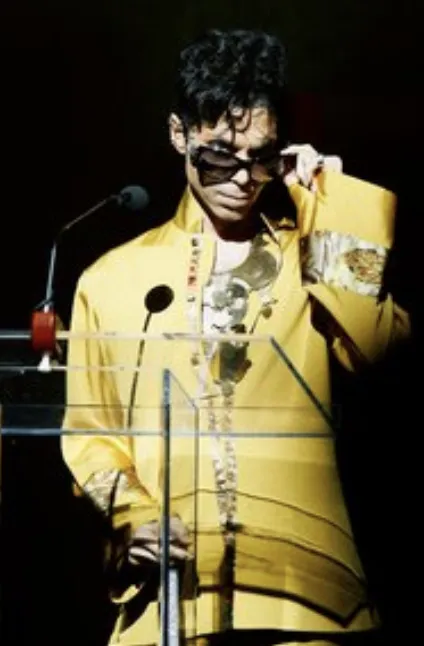
The circumstances of race, law, and culture often reveal harsh inequalities within American institutions. The music industry falls into this category, as African American artists often encounter systemic barriers to economic and creative autonomy. When Prince obtained a deal with Warner Bros at the age of 19, he experienced a prolonged legal battle with them, despite the reputation of being “the most friendly artist label” [1]. These disputes centered on his fight to gain control over his master recordings [2]. Despite Prince’s commercial success, his dispute with Warner Bros reveals deeper issues within U.S copyright and contract law, specifically with the U.S Copyright Act defining ownership and transfer of rights [3][4]. Many recording contracts operate under a “work made for hire” understanding defined in the Copyright Act, having artists not own their recordings from the moment they are created [5]. The standard model in many recording contracts allows labels to exploit their users and be in control of reproduction, distribution, and licensing, often for decades. While contract law enforces private agreements, courts have occasionally recognized the need to consider exceptions, particularly in cases involving financial status [6]. Termination rights also exclude works classified as “works made for hire,” a loophole heavily debated in intellectual property debates, because it allows companies, rather than creators, to retain permanent ownership. However, artists like Prince often face legal limitations due to not complying with the exceptional terms, or have different goals, which frequently underestimates the realities faced by minority artists.
The U.S Copyright Act includes a rule that allows artists to obtain rights to their work after 35 years [7]. While this may seem fair at the surface, this legal point is difficult for artists to use. The process involves strict deadlines, legal paperwork, and a deep understanding of copyright law, aspects that many artists don’t have access to. Although Prince was very successful, he still fought for years to gain control over his recordings [8]. His experience displays how the law often benefits record labels more than the actual artists who create the art, running their corporation.
Prince’s name change in the early 1990s was more than a personal rebranding and was a powerful act of legal and cultural protest against corporate control [9]. Rather than simply push contractual limitations aside, he chose to challenge the traditional routes that artists follow with their record labels. His name change entailed him adopting a symbol known as a “Love Symbol” that went against audible speech. Through this approach, he publicly went against the label’s ownership not only over his artistic identity, but even the claiming of this symbol. This action raised awareness about the broader systemic issues within the music business. Through the lens of the public, his struggle is understood not just as a contractual dispute but as a challenge to institutional structures that marginalize artistic measures [10]. Even though to many it was seen as “confusing,” it reflected how property struggles often confuse the very artists who create the work [11].
Leaving aspects of his fight for ownership aside, Prince also attempted legal action to protect his music from being shared or used without permission online [12]. In the early 2000s, Prince was one of the few artists who took action with the law to stop his work from being shared across the internet, to “reclaim his art on the internet,” as he said in 2007. While many artists ignored or accepted online piracy, Prince’s efforts revealed how copyright laws struggled to keep up with new technology over time, especially for Black artists who already face unfair treatment in protecting their work [13]. Additionally, he filed lawsuits against websites that shared his music without permission (YouTube, eBay, etc), even going as far as to sue fans for alleged misuse on Facebook [14]. This presents the challenges artists face in the digital era, even to this day. Prince’s decision to only allow streaming on platforms like Tidal, as it offered better artist compensation, was a legal and ethical move of his own accord [15].
Although copyright law is extremely important, it needs to adapt to the digital space for artists and those who consume their work. A change needed includes the creation of clearer rules for online platforms, specifically in monitoring copyrighted material. Through this circumstance, there will be faster and more accessible processes for artists in declaring takedown requests and obtaining fair results. Furthermore, there is a need for an update in fair use guidelines to reflect proper digital sharing and no erasure of the artist’s work. These points will improve compensation rates and also strengthen protections for artists’ digital identities, preventing unauthorized distribution. Prince stated, “But the system is old, and it doesn’t work anymore. It’s the past,” as he advocated for proper collaboration between the record label, the internet, and the artists themselves.
Beyond the fight for his master recordings, he also took steps to control his publishing rights, controlling his use of compositions that include writing, lyrics, and melodies. Through NPG Music Club, he would release his albums through a subscription service [16]. However, he still complained that he can’t fully be in control of publishing his work, as stated in Billboard, “The music just flows through me,” showcasing how even when he gained more flexibility in producing music on his own terms, he still lacked it in releasing work as he pleases. Additionally, his earlier publishing contracts still restricted how quickly he could publish new compositions. Even with a direct relationship to the fans, especially in being the first artist to directly sell albums to them, his label slowed down his desired process of being immediate and creative [17].
In the years after Prince’s legal fight, he returned to his partnership with Warner Bros in 2014. This relationship is a strategic compromise within the music industry that emphasizes marketing, financial gain, and reputation purposes. [18]. Prince’s decision to rejoin Warner Bros in 2014 was driven by specific terms, the main one included was the return of his master rights, which would lead to the ownership of all his albums like Purple Rain, 1999, etc [19]. These new conditions display how Prince’s decades of public protest and commercial success gave him bargaining power, like many artists through their fanbases. He reentered the partnership not out of dependence, but due to finally being offered ownership of his pieces. While Prince did gain support and change for his ownership of work, it’s clear that industries still treat minorities unfairly and will go to great lengths for a higher revenue. These circumstances present ongoing barriers in which there are legal points established, but change goes through a long process of protesting and fighting for said rights.
Prince’s battle over his musical autonomy also brought attention to the phrase “work for hire” statements distributed by the music industry. They often strip artists of their ownership rights by defining their work as owned by the label from the very beginning [20]. These contracts lead to difficulty for artists in gaining legal ownership or royalties, giving the artist less control of their work. Prince’s struggle also presents the impact that it has on Black artists in limiting their creative and financial autonomy, encouraging discussions on laws in protecting such rights.
His fight did more than gain rights for his music, but opened discussions about the imbalance of power in label contracts, especially towards Black creators. In another case, Jay-Z publicly stated that obtaining his master's was “the fight of my life” [21], as he negotiated for his master's from Def Jam. Beyoncé, through her label Parkwood Entertainment, also states how she owns many of her solo works, displaying her artistic ownership as a crucial role in her artistic expression. While there are mostly public debates on her works’ ownership, her statement still contributes to a broad point of artists owning their work. Additionally, these power struggles are a lot deeper than what’s seen on the surface. A BMG report argues that Black artists under specific labels received royalty rates up to 3.4% lower than non Black artists [22]. These findings display that the terms that underestimate master ownership disputes are not race-neutral, and in fact systematically disadvantage Black creators.
Prince’s long legal struggle has a lot more depth than a personal dispute with a record label; it is a symbol and inspiration of a large and ongoing battle for artistic autonomy, legal recognition, and economic justice. Especially in a system that often exploits Black creativity [23]. His hostility to contracts, use of protest through music and law, and his efforts overall in both the physical and digital world reflect the deep structural inequalities rooted in the legal field. Prince’s story will continue to push conversations around copyright reform, contract practices, and the need for better protection for artists. While his long-awaited victory of gaining ownership marked a turning point, it also displayed how difficult and harsh the fight for artistic control remains. Black artists should be honored and empowered, as they shape our culture and entertainment.
Works Cited
[1] Newman, Melinda. “Inside Prince’s Career-Long Battle To Master His Artistic Destiny
[2] Kielthy, Martin. “How Prince Won His Master Tapes Back From Warner Bros.”
[3] 17 u.s.c. § 204
[4] 17 u.s.c. § 203
[5] 17 u.s.c. § 101
[6] Bowdler, Janis. “Racial Inequality in the United States.”
[7] id at 4.
[8] id at 1.
[9] Forde, Eamonn. “Record breaker: a brief history of Prince’s contractual controversies.”
[10] id at 5.
[11] Donovan, Thom. “The Head-Scratching Story Behind Prince Changing His Name to a Symbol.”
[12] id at 2.
[13] Savage, Mark. “Black artists may have received unfair record contracts.”
[14] id at 9.
[15] id at 2.
[16] id at 9.
[17] id at 1.
[18] Sisario, Ben. “Years After a Bitter Fight, Prince and Warner Bros. Make a New Deal.”
[19] id at 2.
[20] id at 11.
[21] Fu, Eddie. ”JAY-Z Says Getting Rights to His Masters Was 'The Fight of My Life.”
[22] id at 13.
[23] id at 13.