Black Maternal Health Momnibus: Foundation and Success
Written by: Sophia Stoute
Edited by: Jasmine Merritt and Quadriyah Williams
Abstract:
In my article, I delve into the historical roots of racial disparities in black maternal health. My piece traces back to the era of slavery and its lasting impact on maternal mortality rates. My main focus showcases The Black Maternal Health Momnibus Act, highlighting the critical Social Determinants for Moms Act. The Act addresses key factors influencing maternal health, such as housing and nutrition, aiming to end disparities. I emphasized the bill’s challenges but also showcased its bipartisan support and public advocacy which are crucial for their success. I conclude with a call to action, arguing the public to engage policymakers and advocate for the passage of this vital legislation to address the ongoing disparities in black maternal health.
Society normally views slavery through the narrow lens of labor-intensive exploitation and its long-lasting ramifications of economical and educational disparities amongst racial groups. However, a life-threatening consequence of slavery often overlooked is the devastating intersection of childbirth and maternal mortality. From 1662, colonial leaders made black women's childbearing a paradigm of the institution of slavery by claiming that the racial, and therefore, enslavement status of children would be matrilineal- following the status of the mother. Following the ban on the transatlantic slave trade in 1807, slaveholders extensively exploited black mothers so that they continuously had an enslaved workforce. It is important to note the connection between American gynecology and slavery, as many of the concepts that we understand from gynecology come from testing done on black women without their consent.
Historically, there have been disparities between black and white maternal mortality rates. Furthermore, there is evidence that infant deaths hold disparities as well. For example, in 185, enslaved infants died before one year of age at a rate 1.6 times higher than white infants. Today, that disparity has increased to a rate of 2.3 [1]. The relationship between infant and maternal mortality is stark as children who experience maternal death are 46 times more likely to be at risk of dying compared to those whose mothers survive [2]. Additionally, black women are three times more likely than their white counterparts to die from pregnancy-related causes, and this statistic does not capture the women experiencing pregnancy complications [3].
In fact, the United States has the worst maternal death rate in the developed world. For every 100,000 births, there are 26.4 deaths, with an even higher rate of 40 deaths per 100,000 births among Black women [4]. “As many as 80% of maternal deaths are preventable with proper care and treatment,” says United States Representative Alma Adams [5]. As a result of the continuing disparity in maternal and infant mortality rates, the Black Maternal Health Momnibus and Caucus were initiated. Spearheading the motion to pass the Momnibus Act are Senator Booker (D-NJ) and Representatives Adams (D-N.C), and Underwood (D-Ili.)– with the support from the many other chairs of the Black Maternal Health Caucus. Launched in 2019, The Black Maternal Health Caucus was founded by Reps. Lauren Underwood and Alma Adams to, “elevate the Black maternal health crisis within Congress and advance policy solutions to improve maternal health outcomes and end disparities'' [6]. The caucus was formed with 53 founding members and has grown to be one of the largest bipartisan caucuses in Congress with 114 members to date. Further, the caucus has (see fig. 1) seen massive support from over 200 organizations and Black Maternal Health advocates such as Planned Parenthood. Moreover, esteemed professionals have affirmed that this issue is one of complete urgency such as Elizabeth Howell, MD, MPP, Professor and Director: Blavatnik Family Research Institute, Icahn School of Medicine at Mount Sinai, stating: "I am excited that the Black Maternal Health Caucus is committed to reducing the longstanding and unacceptably high rates of maternal mortality that Black and Native American women experience in this country. It will take action at all levels and a commitment to health equity and high-quality maternal health care if we are to lower the rates of preventable maternal death and morbidity for women in the United States. I applaud the Black Maternal Health Caucus for their energy and commitment to this important task.”
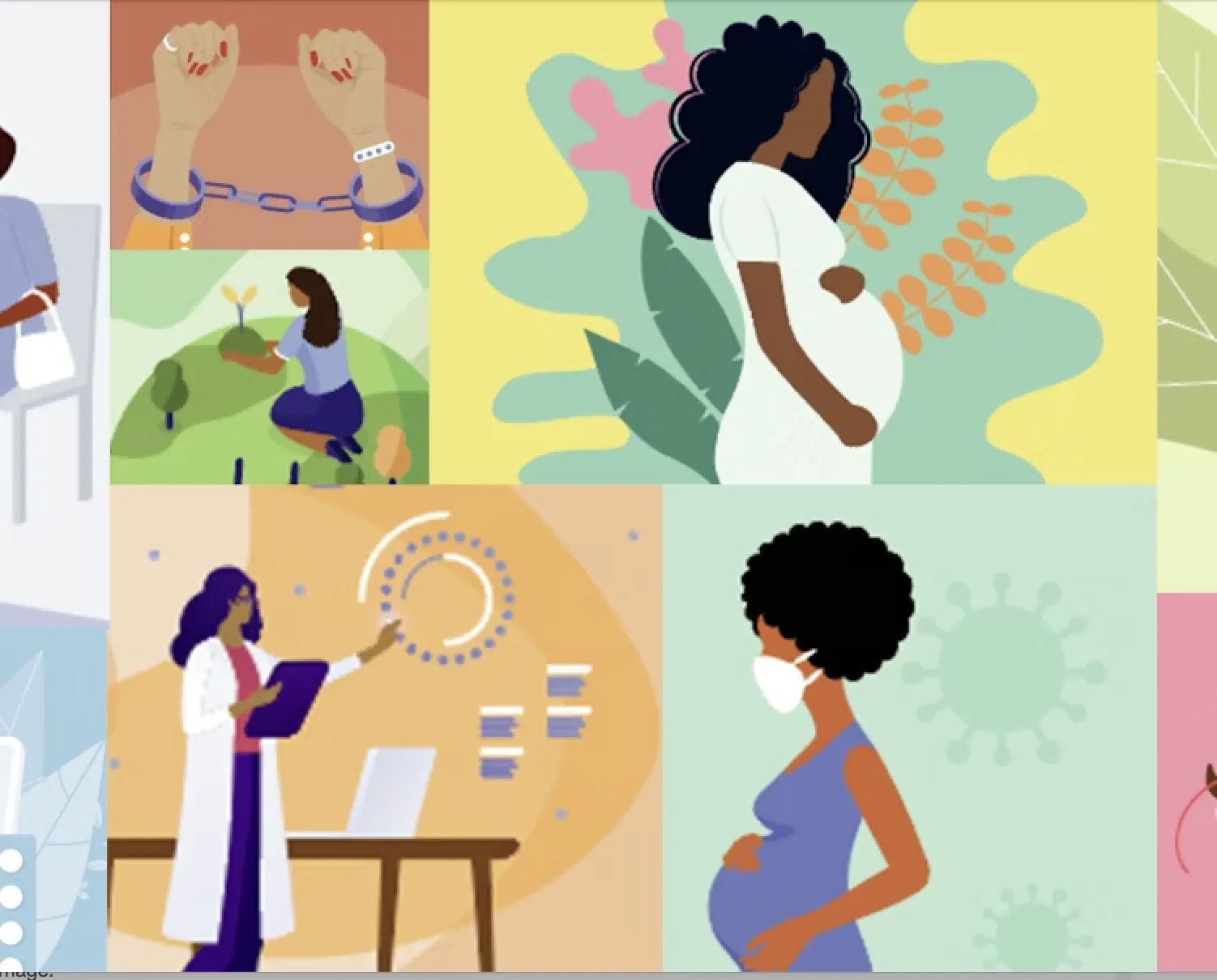
The Black Maternal Health Momnibus Act “will address this crisis through historic Investments that comprehensively address every driver of maternal mortality, morbidity, and disparities in the United States” [7]. Due to the history of slavery in America, racial disparities in maternal health must be addressed through multiple avenues which is why the S. 1606 - Black Maternal Health Momnibus Act is comprised of 13 individual bills. This act is encompassed of the following thirteen bills: (1) The Social Determinants for Moms Act which makes investments in social systems that have negatively impacted Black mothers like housing, (2) The Extending WIC for New Moms Act extends access to financial support for nutrition for low-income mothers through WIC, (3) The Kira Johnson Act which funds community organizations working to ameliorate maternal health and equity, (4) Maternal Health for Veterans Act (5) The Perinatal Workforce Act which diversifies the perinatal workforce, (6) The Data to Save Moms Act which works to better understand causes of maternal health cataclysm to properly address it, (7) The Moms Who Matter Act which provides support to mothers facing mental health and substance abuse conditions, (8) The Justice for Incarcerated Moms Act which works to support incarcerated mothers, (9) The Tech to Save Moms Act which works to invest in better medical infrastructure in low-income areas, (10) The IMPACT to Save Moms Act which works to incentivize high-quality maternity care, (11) The Maternal Health Pandemic Response Act “invest in federal programs addressing maternal and infant health risks during public health emergencies”, (12) The Protecting Moms and Babies Against Climate Change Act (13) The Maternal Vaccination Act which promotes maternal vaccinations [8]. The Maternal Health for Veterans Act is the only bill explicitly passed by the Momnibus. Several of the bills, excluding Tech for Moms, Moms Who Matter, and The Justice for Incarcerated Moms Acts, are included as provisions in Joe Biden's Build Back Better Act- to be further discussed.
Although all bills comprising the Momnibus positively impact the Black community, the Social Determinants for Moms Act, evidently, is the most influential. According to the Centers for Disease Control and Prevention, social determinants of health are the conditions where people live, learn, work, and play. Research from the Robert Wood Johnson Foundation found that these social determinants “can drive as much as 80 percent of health outcomes” [9]. Further stated by the National Perinatal Task Force, “focusing on the social determinants of health is an important step to addressing root causes for these unwavering gaps in maternal and infant health.” The Social Determinants for Moms Act makes climactic investments to increase vital research on social determinants to save moms and end disparities in maternal health outcomes. This comprehensive act will establish a governmental task force and establish a Social Determinants Maternal Health Fund. The fund will provide sustained financial support for community-based organizations missioned to alleviate social determinants and public health departments to address social determinants of health during and after pregnancy - such as housing, transportation, nutrition, environmental conditions, and other local needs.
In 2021, the 117th Congress overwhelmingly voted to pass the Protecting Moms Who Serve Act, one of the Momnibus’s 13 Acts, signed into law on November 30th, 2021 [10]. The Protecting Moms Who Serve Act invests 15 billion dollars in maternity care coordination programs at Veteran Affairs facilities that will: assist in the coordination of the delivery of maternity care and health services, ensure that pregnant and postpartum veterans receive whatever treatments are necessary, and offer classes in childbirth, parenting, nutrition, and breast pumping. This act also commissions the first of its kind GAO study to be submitted to Congress on maternal mortality among veterans emphasizing racial disparities in maternal health that will: recommend better data collection regarding maternal health and outline ways in which adverse health outcomes could be reduced among veterans across various health insurance plans [11].
While these bills lessen the severity of the black maternal health crisis, two of the bills within the Momnibus Act have yet to be passed. Today, in the 118th Congress, the Black Maternal Health Caucus is pushing to pass legislation protecting maternal mental health support and substance abuse disorders, and making the technological tools on the market available to moms across the country. The Acts are the Moms Matter Act and Tech to Save Moms Act respectively. The Moms Matter Act addresses that “mental health conditions are one of the leading causes of pregnancy-related death'' [12]. According to the Center for Law and Social Policy, over half of poor infants have a mother with some level of depressive symptoms. Consequently, The Moms Matter Act will establish a Maternal Mental Health Equity Grant Program to invest in community-based organizations that aim to support those with mental health disorders or substance abuse issues during or after pregnancy, and fund programs to diversify the maternal mental and behavioral health care workforce, expanding healthcare services. The Tech to Save Moms Act is missioned to expand remote patient observation and training according to The Centers for Medicare and Medicaid Services recommendations to improve maternal health outcomes. Technology is a powerful tool in assisting patients and providers and is not as present in underserved communities. Therefore, this act makes investments in digital tools that will reduce maternal mortality and health disparities. This act will require Medicare and Medicaid to assess models that can improve access to telehealth services in maternal healthcare care, fund technological models that address maternal mental and behavioral conditions, establish a grant program to promote the accessibility of digital tools and authorize a study on the use of technology in maternity care in reducing maternal mortality.
Now, why wouldn't these two pivotal bills be passed in Congress like the other bills comprising the Momnibus? Both acts are bipartisan, yet did not receive votes in congressional sessions. This may be the case because the nature of these bills is more detail-oriented in comparison to the other bills initiated by the Momnibus. Addressing mental health and expanding access to technology can both seem distant from the topic of maternal mortality, therefore, it comes as no surprise that these bills have not been signed into law. This creates a state of urgency for those spearheading the Momnibus to reiterate the connections between technology, mental health, and maternal mortality in this 118th congressional session.
Rep. Underwood told CBS News that she sees a pathway to bipartisan agreement on the remaining acts and believes that the package of Momnibus legislation will become law by the end of 2023. The congresswoman says that many bills within the package are bipartisan, especially the Protecting Mothers Who Serve Act, which is already signed into law. Underwood also comments that the package has Republican support as 80% of the Momnibus was passed in the house during the last Congressional session [13]. There has been immense support shown to this legislation by the public, especially from black mothers as they are eager to feel safe when giving birth and not fear the American healthcare system.
While it is predicted that this legislation will be passed by the end of 2023, it is also important to note that Joe Biden has worked towards advancing the goals of the Momnibus Act by passing The Build Back Better Act, pivotal progress toward the Momnibus’ goals. This Act takes action to reduce the daily costs that trammel working-class families, predominantly of color, concerning healthcare and childcare. This Act invests 390 billion dollars for childcare and universal preschool initiatives. Also, it provides 75 million to elevate healthcare and community support services for pregnant and parenting women. Further, the act makes public health investments to reduce inequities in maternal health outcomes by providing 100 million in funding to award grants to address social determinants of maternal health for pregnant and postpartum, providing 170 million in funding to award grants to accredited schools of nursing to diversify the perinatal workforce, with much other funding aimed at awarding grants to aid research, mental health support, and programs that address maternal mortality rates. The Build Back Better Act, “includes every eligible provision of the Black Maternal Health Momnibus Act,” [14] as well as expanding postpartum Medicaid coverage, in every state, by 1 year. Concerningly, the Build Back Better Act does not include provisions related to incarcerated mothers as desired by Bill 7 of the Momnibus. Also, this Act provides massive amounts of funding to be awarded as grants to community-based organizations rather than nationalizing solutions to this national problem, other than the extension of Medicaid services for one year postpartum.
Black maternal mortality rates are ridiculously high given the modernity of this country. In many political discussions regarding the disparities facing black Americans, there is the dissenting opinion that ‘since slavery was 400 years ago there's no way that impacts could still be seen today. However, it is abundantly clear that the history of this country has continuously impacted black people especially black women in health and legal spheres. Therefore, Congress must pass this package of legislation in the 118th session, especially as the impacts of COVID-19 have raised the mortality rates of black mothers [15]. The Maternal Health Momnibus addresses variables that impact maternal health rates outside of direct medical care, such as transportation, protecting mothers who serve in the military, and considering substance abuse and mental health. Being that this bill is so exhaustive and takes into account the many ways in which the United States perpetuates disparities amongst Black communities, it is understood why this bill was not passed in full when it was first introduced in 2020. Many of our legislators in Congress might not believe in the disparities amongst the black community. The passing of the Protecting Mothers Who Serve Act suggests that Congress prioritizes the lives of veterans more than Black mothers, especially because this bill was passed while other bills that directly impact Black mothers have not been passed. For this reason, I believe the Build Back Better Act introduced by President Joe Biden is extremely influential as it shows our president's solidarity with the issue of Black Maternal Health when we don't see the same level of support from members of Congress. Although the passing of this bill relies on our legislators, the public can get involved in supporting the passage of this historical and necessary legislation. To become an advocate, call or email your policymakers and request them to prioritize the maternal health of Black mothers by supporting the passage of the Black Maternal Health Momnibus.
Bibliography
[1] Owens, Deirdre C., and Sharla M. Fett. "Black Maternal and Infant Health: Historical Legacies of Slavery." American Journal of Public Health Vol. 109,10 (201, vol. 109, no. 10, 2019, pp. 1342-1345, https://doi.org/October.
[2] Moucheraud, C., Worku, A., Molla, M. et al. "Consequences of Maternal Mortality on Infant and Child Survival: A 25-year Longitudinal Analysis in Butajira Ethiopia (1987-2011)." Reproductive Health, vol. Supplement 1, no. S4, 2015, pp. 1342-1345, https://doi.org/May 6.
[3] Taylor, Jamila, and Anna Bernstein. "Tracking Progress of the Black Maternal Health Momnibus." The Century Foundation, 26 May 2023, tcf.org/content/data/black-maternal-health-momnibus-tracker/.
[4] "About Black Maternal Health." United States House of Representatives - Black Maternal Health Caucus, blackmaternalhealthcaucus-underwood.house.gov/about-black-maternal-health.
[5] "Booker, Underwood, Adams Reintroduce the Bicameral Momnibus Act to End America’S Maternal Health Crisis." Cory Booker Senate, 15 May 2023, www.booker.senate.gov/news/press/booker-underwood-adams-reintroduce-the-bicameral-momnibus-act-to-end-americas-maternal-health-crisis.
[6] "About Black Maternal Health." United States House of Representatives - Black Maternal Health Caucus, blackmaternalhealthcaucus-underwood.house.gov/about-black-maternal-health.
[7] "Black Maternal Health Momnibus." United States House of Representatives - Black Maternal Health Caucus, blackmaternalhealthcaucus-underwood.house.gov/Momnibus.
[8] Underwood, Lauren, and Cory Booker. "Black Maternal Health Caucus." Black Maternal Health Momnibus Act, 15 May 2023, drive.google.com/file/d/1-j4fkKAnSA7XkS9ITPv-So5rddXxTCE_/view.
[9] "Social Determinants for Moms Act H.R. 6132." Support Women's Health - Black Maternal Health Caucus, www.supportwomenshealth.org/uploads/2/0/5/4/20541726/social_determinants_for_moms_act_1-pager.pdf.
[10] “Collins, Duckworth’s Bipartisan Protecting Moms Who Served Act Signed into Law: U.S. Senator Susan Collins of Maine.” Collins, Duckworth’s Bipartisan Protecti... | U.S. Senator Susan Collins, 30 Nov. 2021, www.collins.senate.gov/newsroom/collins-duckworth%E2%80%99s-bipartisan-protecting-moms-who-served-act-signed-law.
[11] “Collins, Duckworth’s Bipartisan Protecting Moms Who Served Act Signed into Law: U.S. Senator Susan Collins of Maine.” Collins, Duckworth’s Bipartisan Protecti... | U.S. Senator Susan Collins, 30 Nov. 2021, www.collins.senate.gov/newsroom/collins-duckworth%E2%80%99s-bipartisan-protecting-moms-who-served-act-signed-law.
[12] Underwood, Lauren, and Cory Booker. "Black Maternal Health Caucus." Black Maternal Health Momnibus Act, 15 May 2023, drive.google.com/file/d/1-j4fkKAnSA7XkS9ITPv-So5rddXxTCE_/view.
[13] Czachor, Emily M. "Rep. Lauren Underwood Says There's a "Pathway" for Maternal Health Bills to Pass Congress." CBS News, 14 May 2023, www.cbsnews.com/news/lauren-underwood-maternal-health-bills-congress-pathway-face-the-nation/.
[14] "Black Maternal Health Caucus Celebrates Historic Passage of ‘Momnibus’ in Build Back Better Act." United States House of Representatives - Black Maternal Health Caucus, blackmaternalhealthcaucus-underwood.house.gov/media/press-releases/black-maternal-health-caucus-celebrates-historic-passage-momnibus-build-back#:~:text=Every%20eligible%20provision%20of%20the%20Momnibus%20was%20included%20in%20the,disparities%20in%20outcomes%2C%20and%20advance.
[15] Simpson, Kathleen Rice. “Effect of the COVID-19 Pandemic on Maternal Health in the United States.” MCN. The American journal of maternal child nursing vol. 48,2 (2023): 61. doi:10.1097/NMC.0000000000000895
[16] Czachor, Emily M. "Build Back Better Act." Congresswoman Jan Schakowsky, 14 May 2023, schakowsky.house.gov/build-back-better-act.