The Color of Crimmigration
Written by: Kevin Hernandez
Edited by: Kianna Victor and Emma Farley
Abstract:
This paper reviews how the Immigration and Naturalization Service used fast, restrictive procedures on Haitian asylum seekers in Sannon v. United States and Haitian Refugee Center v. Civiletti. In Sannon, the agency relied on rushed interviews with no counsel and weak translation. Haitians received no notice and no fair chance to present asylum evidence. Immigration judges limited hearings to missing documents and refused to consider fear of persecution. These steps ignored the Immigration and Nationality Act and the Refugee Protocol. The INS used Part 108 to defend its approach, but the court ruled that asylum claims require full exclusion hearings before immigration judges. The same pattern appeared in Civiletti. The Haitian Program in 1978 sped up deportations, denied work visas, detained arrivals, and reduced review to fast screenings. Over four thousand denials came from this process. The court ruled that these procedures violated the INA, the Refugee Protocol, and due process. Both cases show early forms of crimmigration, as described by Juliet Stumpf, where immigration enforcement took on criminal features and limited fair access to asylum protections.
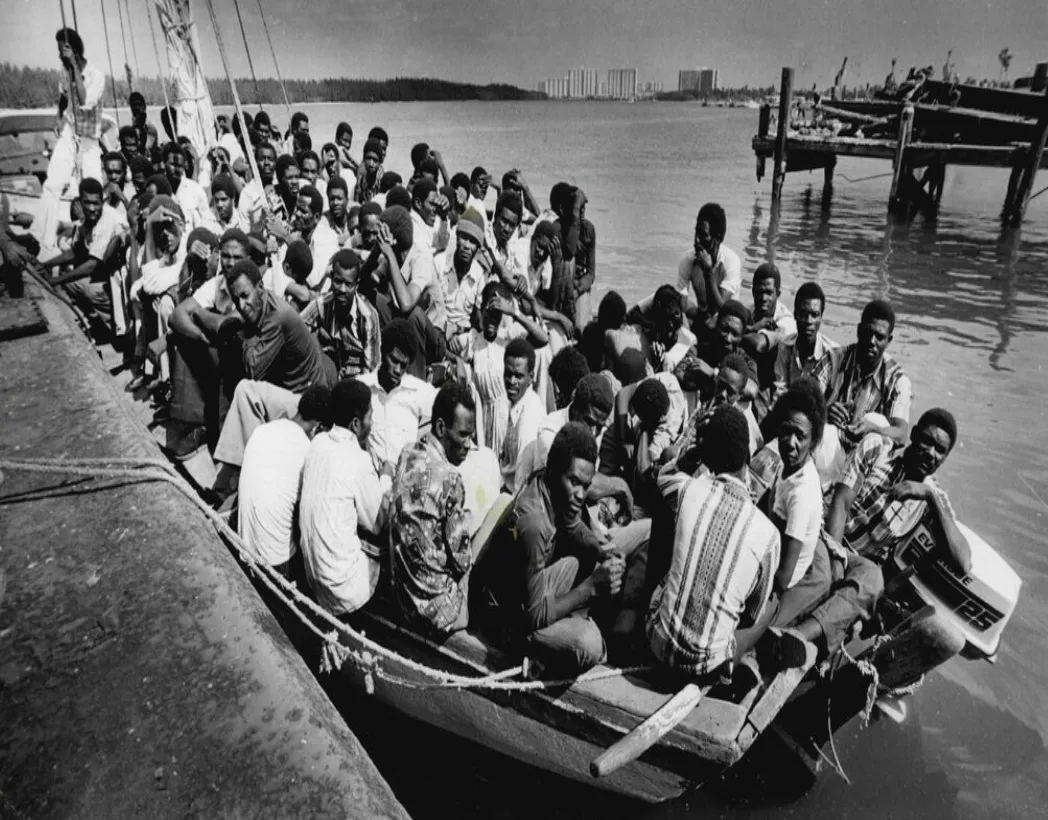
In 1977, approximately 300 Haitian citizens allegedly seeking political asylum entered the South Florida District via boats and were intercepted by the Immigration and Naturalization Service (INS). The agency detained them, blocked access to full hearings, and pushed their cases through fast screenings that denied them a chance to present asylum evidence. This led to the introduction of Sannon v. United States. In Sannon v. United States, the plaintiffs challenged the INS for using procedures that removed asylum claims from exclusion hearings and placed full power in the hands of the District Director. During the proceedings, the INS conducted rushed, non-evidentiary interviews without counsel, translation, or proper notice, despite refugees' entitlement to due process on the basis of the Immigration and Nationality Act and the Refugee Protocol [1]. Unfortunately, this was the norm. Between the 1970s and 1980s, the INS often used rushed and criminal-like procedures toward Haitian asylum seekers. This treatment became systemically ingrained and laid the early foundations for what is now recognized as crimmigration—the merging of immigration and criminal law where immigration processes are framed as criminal—a concept developed by legal scholar Juliet Stumpf [2].
The Immigration and Nationality Act (INA) requires exclusion hearings before immigration judges, allows presentation of evidence, and mandates consideration of issues related to the right to enter the United States. The upholding of the INA, or lack thereof, can be detrimental to a refugee staying in or being deported from the country. Additionally, the 1967 Refugee Protocol extends the 1951 Convention's protections for refugees beyond 1951, including the prohibition on returning refugees to places where they face persecution and the requirement to give meaningful consideration to asylum claims [3]. In order to be granted asylum and be recognized as a refugee, an individual must present a real fear of persecution and be granted the chance to display evidence of it. In the Sannon case, the court made clear the difference between an excludable alien and a deportable alien, holding that "excludable aliens neither enjoy the protection of the United States Constitution, nor are they vested with any substantive rights by the Protocol." [4] Deportable aliens are treated as individuals already in the country with more procedural rights. During Sannon v. United States, the INS treated the Haitian arrivals as excludable aliens and conducted rushed interviews with no counsel, no translation, and no chance to present asylum evidence, denying them the procedural protections required under the INA and the Refugee Protocol. Thus, the INS was in clear violation of both of these statutes.
These interviews gave Haitians no chance to explain their fear of persecution. The immigration judges then limited the hearings to missing visa documents and refused to hear the asylum claims. This choice went against the INA, which gives judges broad authority to take evidence on any issue tied to entry. The INS relied on Part 108 to defend its actions. Part 108 conflicted with the statute and with the goals of the Refugee Protocol. The INS showed institutional failure in the way it handled these cases. The agency ignored the statute and the treaty obligations that protect refugees. The process appeared designed to deny asylum rather than evaluate the claims. The INS treated Haitians with suspicion and used tactics that resembled criminal enforcement.
What is significant is that not only was the INS in violation of both domestic and international law, but it also clearly tried to exercise authority above it. INS Regulations 8 C.F.R. Part 108 "directs that application for asylum must be made to the District Director of INS, who 'may approve or deny the application in the exercise of discretion.'” [5] Part 108 attempted to remove asylum claims from exclusion hearings and place full power in the hands of the District Director. The Immigration and Nationality Act does not support this limitation, as the INA gives immigration judges the duty to review any evidence that affects entry and does not permit the District Director to block that review. Immigration judges have authority to hear evidence that affects the right to enter. The Protocol expects equal treatment for all refugees. However, Part 108 attempted to block both during the Sannon v. United States case and failed. During the case, the court found no legal basis for the procedure the INS used. The court held that asylum claims must be heard in full exclusion hearings and that the INS process was unlawful. Thus, the Immigration and Naturalization Service violated the Immigration and Nationality Act in Sannon v. United States. The law requires exclusion hearings where immigration judges review evidence tied to the right to enter the United States. However, the agency used quick interviews with no counsel and no translation.
Despite the precedent that Sannon v. United States established, Haitian refugees still faced repeated institutional failures in the immigration system. In Haitian Refugee Center v. Civiletti (1980), the plaintiffs were five thousand Haitians seeking political asylum. The INS was accused of practicing the same unlawful practices addressed in Sannon v. United States. The agency repeated the same rushed procedures and blocked full review. The Haitian Refugee Center challenged the actions of Attorney General Benjamin Civiletti and the INS in the Southern District of Florida before Judge James Lawrence King. The plaintiffs argued that the INS used procedures that ignored the INA and the Refugee Protocol. Over four thousand people received denials under the Haitian Program. The steps taken by the agency matched the failures in Sannon. Interviews were rushed, counsel was limited, translation was weak, and judges refused to hear claims. These actions broke the INA requirement for a full hearing. The Haitian Program in 1978 formalized these practices. It sped up deportations, denied work visas, detained arrivals, and blocked real review. Many people were interviewed without knowing their rights. Translation was unreliable. The INS recorded statements without explaining the purpose or the effect of those statements. The court ruled that these procedures violated the INA, the Refugee Protocol, and due process, and ordered the INS to halt the program and reopen the cases [5].
Juliet Stumpf describes how immigration law took on the substance, enforcement, and procedures of criminal law. The actions of the INS in Sannon v. United States fit those traits, as the agency acted like a criminal enforcement body. They did this by rushing interviews and blocking legal review—consistently trying to make immigration procedures criminal. Similarly, Haitian Refugee Center v. Civiletti shows the same pattern on a larger scale. The agency created a system that resembled crime control. Haitians were detained, rushed, and denied fair process. Both cases show early crimmigration that displays agencies' failures to follow civil immigration procedures and instead using criminal procedures to control the outcome of denying refugee status. Stumpf claims that in the United States, criminals are excluded from society on the basis of their treatment as "lesser," while immigrants are alienated [2]. Both cases display Haitians being treated as excludable aliens and lacking fair hearings for asylum claims.
Overall, Sannon v. United States and Haitian Refugee Center v. Civiletti revealed how the INS failed to follow the rules that govern asylum. Sannon revealed the first layer of this failure, while Civiletti provided depth to the same failure on a wider scale. The agency used procedures that blocked full hearings and limited the evidence Haitians were allowed to present. The process looked like criminal enforcement instead of civil review. The actions in both cases match this pattern. Haitians seeking asylum were processed through institutions built on control, detention, and speed, not a system built on complete hearings, evidence review, and meaningful consideration of asylum claims. Crimmigration grows when immigration agencies use tools designed for policing instead of diligent reviews of refugee cases. Haitians were treated as excludable and given few protections. Thus, these cases present how early decisions by the Immigration and Naturalization Service shaped enforcement systems and treated asylum as a threat to manage rather than a claim to review.
In Sannon v. United States, the INS conducted rushed, non-evidentiary interviews without counsel, translation, or proper notice—all of which refugees are entitled to under fair due process. If the INS deemed that the individual lacked entitlement to remain as a refugee, they would stand before an immigration judge to determine whether they could stay based on whether the individual had a reasonable fear of persecution in their country due to religion, race, nationality, or political opinion. In addition, immigration judges would refuse to hear refugee asylum evidence and not allow individuals to present their persecution claims. Individuals were also considered excludable aliens due to their lack of valid documents like visas, entry documents, and basic identification that was left behind in Haiti or lost during travel. The INS's refusal to provide Haitians in Sannon v. United States with fair, evidentiary asylum hearings demonstrates a fundamental institutional failure. Haitian Refugee Center v. Civiletti later confirmed that this unlawful pattern continued, revealing how INS practices laid early foundations for what is now recognized as crimmigration—the merge of immigration and criminal law where immigration processes are masked behind criminal processes.
[1] Sannon v. United States. 427 F. Supp. 1270 (S.D. Fla. Feb. 15, 1977).
[2] Stumpf, Juliet. “The Crimmigration Crisis: Immigrants, Crime, and Sovereign Power.” American University Law Review 55 (2006): 367–419.
[3] Convention Relating to the Status of Refugees, adopted July 28, 1951, United Nations Treaty Series 189, no. 2545
[4] Sannon v. United States, 460 F. Supp. 458, 460 (S.D. Fla. Oct. 11, 1978). [5] Haitian Refugee Center v. Civiletti, 503 F. Supp. 442, (S.D. Fla. 1980).
Works Cited
Justia Law. “Haitian Refugee Ctr. V. Civiletti, 503 F. Supp. 442 (S.D. Fla. 1980),” 2025. https://law.justia.com/cases/federal/district-courts/FSupp/503/442/1467096/.
Justia Law. “Sannon v. United States, 427 F. Supp. 1270 (S.D. Fla. 1977),” February 15, 1977. https://law.justia.com/cases/federal/district-courts/FSupp/427/1270/1482319/.
Justia Law. “Sannon v. United States, 460 F. Supp. 458 (S.D. Fla. 1978),” 2025. https://law.justia.com/cases/federal/district-courts/FSupp/460/458/2093369/.
Stumpf, Juliet. The Crimmigration Crisis: Immigrants, Crime, and Sovereign Power.” American University Law Review 56, no. 2 (December 2006): 367-419.
United Nations. “UNTC.” Un.org, 2009. https://treaties.un.org/Pages/ViewDetailsII.aspx?src=TREATY&mtdsg_no=V-2&chapter =5&Temp=mtdsg2&clang=_en.