The Constitutional Implications of a TikTok Ban
Written by: Teniola Adedire
Edited By: Monette Scipio
Abstract:
This paper examines the ongoing legal and political controversy surrounding TikTok in the United States across multiple administrations. It analyzes how national security concerns stemming from TikTok's connection to ByteDance and China's National Intelligence Law have prompted legislative action culminating in the Protecting Americans from Foreign Adversary Controlled Applications Act. The research traces the evolution of governmental approaches from Trump's initial ban attempt through Biden's regulatory efforts and back to Trump's unexpected enforcement delays in 2025. The analysis considers constitutional challenges based on First Amendment rights, economic impacts on American content creators, and the Supreme Court's application of intermediate scrutiny in upholding the divestiture requirement. The paper reveals inconsistencies in policy implementation and questions whether targeted action against a single platform effectively addresses broader data security concerns or potentially serves alternative political agendas. These developments illustrate the challenges of balancing national security interests with free speech protections and economic considerations in an increasingly interconnected digital landscape.
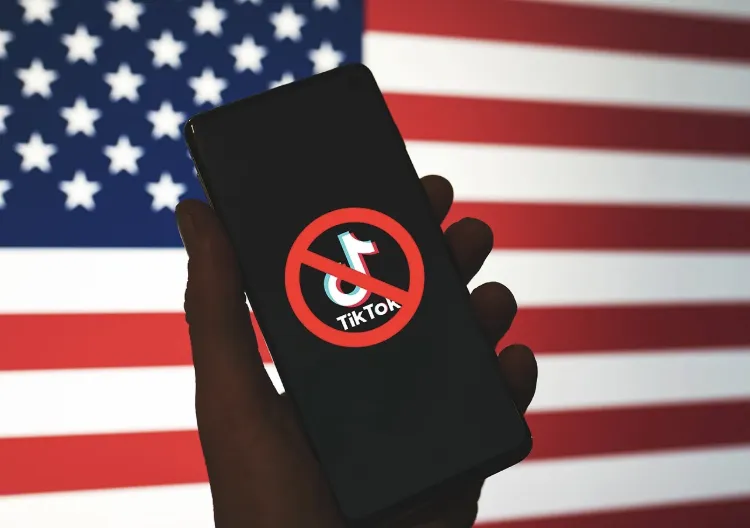
Over the span of the two most recent administrations, the nature of TikTok's operations has been subject to ongoing scrutiny regarding potential national security concerns. TikTok, which acquired and subsequently rebranded Musical.ly (operational from 2014-2018), emerged as a significant social media platform in early 2019, prompting insight into its data practices and foreign ownership structure. As of today, the platform has amassed a user base of over 170 million monthly U.S. users who interact with the platform by creating and watching short video clips [1]. Though there have been numerous apps that have gained public traction (Instagram, Snapchat, etc.) and quickly, what makes TikTok's niche is the algorithm, which enables it to generate videos catered to a person's exact interest rapidly. The platform’s individualized content track is made possible by “a recommendation engine” originally developed by Byte Dance, a Chinese-based company that operates as TikTok’s “parent company” or “owner”[2]. However, the ability of TikTok to so accurately cater to the interest of the users is mainly in part due to the overt access the app has to user data.
This fact has raised concerns from US legislators about the national security breach that TikTok potentially imposes. The connection between TikTok and ByteDance indirectly subjects American user data to the will of a foreign adversary – the Chinese government. This thought is rooted in the emergence of China’s 2017 National Intelligence Law, which requires Chinese companies to assist in intelligence gathering if it is requested by the government [2]. More specifically, Article Seven of the law states that “all organizations and citizens shall support, assist, and cooperate with national intelligence efforts in accordance with the law, and shall protect national intelligence work secrets they are aware of ”[3]. Although Chinese laws with similar obligations do not explicitly penalize failure to cooperate with the government, it shows that legislators can include them when desired [3]. This means that it is possible for companies such as ByteDance and TikTok to be criminalized and subjected to government investigation should they refuse to share information that they believe is pertinent to national security or foreign interests. The ambiguity that China’s National Intelligence Law holds has been the foundation of conversation surrounding fears about the possibility of the Chinese government pressuring ByteDance to leak American user data or easily manipulate the platform to be a weapon for propaganda and espionage, impacting a vast user base in the United States.
Though much of the government sees this legal battle as a necessary act to protect American citizens, it is widely unsupported by the general population. The US banning TikTok alone fails to address the broader issues of international and online security and the relationship it has with foreign influence. Many other social media platforms collect American data and have been exploited for disinformation campaigns [2]. Thus, if the true interest at hand is to protect national security, yet the government specifically restricts the use of one singular app, it begs the question of whether the attempts to ban TikTok serve as an attempt to censor the spreading of new ideas, such as socialism and activism (i.e. pro-Palestinian protests)? In recent years, TikTok has become a platform for more than entertainment —it has become home to education sectors, news, and many jobs. Consequently, the proposed TikTok ban threatens the economic livelihood of a substantial American workforce who rely on the platform not as a critical revenue stream. This includes content creators, small business owners, freelancers, and advertisers who have built their financial stability around the platform's ecosystem. The potential economic disruption to these millions of Americans raises significant concerns about whether governmental intervention constitutes an overreach that disproportionately impacts legitimate commercial interests while addressing perceived security threats [4].
Both the Trump and Biden administrations have participated in legal battles surrounding the safety of TikTok, though in different ways. In 2020, Trump initially called for the ban of TikTok on the account of “communist invasion” as well as their mishandling of the Coronavirus pandemic, calling their actions “disgraceful” [6]. On August 6th, he held to his promise by signing the Executive Order on “Addressing the Threat Posed by TikTok,” in which he declared that TikTok’s excessive data collection “threatens to allow the Chinese Communist Party access to Americans’ personal and proprietary information — potentially allowing China to track the locations of Federal employees and contractors, build dossiers of personal information for blackmail, and conduct corporate espionage” [7]. These claims culminated in a final broad decree directing BYTE Dance to divest or sell off its U.S. operations/interests in TikTok, or face broad sanctions (penalties or restrictions) that would prevent the company from conducting business in the United States [6]. Shortly thereafter, the signing, Trump’s efforts to ban the app were blocked by a federal judge who ruled that he had overstepped his constitutional powers. U.S. District Court Judge Carl Nichols (a Trump-appointed official) in Washington found that Trump had gone beyond the scope of his emergency economic powers in trying to put TikTok out of business [8]. The legal team for TikTok in this battle highlighted the lack of foresight and consideration put into finding a solution or compromise before banning the app, which made the attack on TikTok very arbitrary and irrational on the part of the Trump administration.
Afterward, in 2021, the Biden administration revoked Trump’s ban as they entered into a new administration, meanwhile, Congress considered new legislation. Many legislators agreed that TikTok required government oversight and regulation, but did not support an outright ban. However, a year later on December 30th, 2022, President Joe Biden signed the No TikTok on Government Devices Act, a bill which originated in the Senate and passed overwhelmingly with a bipartisan vote of 79-18 [9]. This bill prohibited TikTok and any successor application from being downloaded on any government-issued devices, citing fear of TikTok being a Trojan horse for the Chinese government [10].
In present times, the efforts to combat these persisting fears surrounding national security have become a bipartisan effort in Congress, though it is important to note these efforts are widely unpopular. Despite the wishes of the general public, both chambers started their work by investigating the leadership of TikTok and attempting to come up with an accommodating but firm solution to mitigate the risks. Even with extensive conversations and proposed compromises over TikTok’s proposed National Security Agreement, legislators found that the solutions offered were insufficient [2]. TikTok failed to offer agreements that would effectively protect American user data and prevent the Chinese government from taking advantage or pushing an agenda on the platform. These unsuccessful discussions led to Congress passing the Protecting Americans from Foreign Adversary Controlled Applications Act, which explicitly prohibits the use of any app that is directly or indirectly operated by ByteDance (i.e TikTok) or “is controlled by a foreign adversary and has been determined by the President to present a significant threat to national security”[12]. The legislation also includes a provision that states that to maintain access to US citizens online, “foreign adversary controlled applications” (specifically including TikTok) [must] divest from foreign ownership” [1]. In other words TikTok leadership must sell the app within a nine-month deadline to another “parent” company that is run or based in America, or the app will be banned forever. This act establishes a legal framework for addressing foreign-controlled applications beyond just TikTok, creating a mechanism that could be applied to other platforms from "foreign adversary" nations. The forced divestiture requirement also raises questions about government intervention in private business operations and the impact on American civil liberties.
In retaliation against the Protecting Americans from Foreign Adversary Controlled Applications Act, three sets of petitioners (ByteDance/TikTok, Based Politics, and eight individual TikTok content creators) filed constitutional challenges against the act in May of 2024 based on a violation of the First Amendment. They argued that in banning the app from app stores and American citizens, they were depriving them of the right to free speech and expression. The legal team for these petitioners failed to emphasize the economic impact that the ban on TikTok would impose on many American small businesses and families who rely on it for income. Thus, when the trial was held in the U.S. Court of Appeals for the D.C. Circuit, the bench concluded that the Act was just and survived constitutional scrutiny [1]. Shortly thereafter, the case was appealed for a second time and brought before the Supreme Court in January 2025. The major question the court set out to answer in this decision was whether or not the Protecting Americans from Foreign Adversary Controlled Applications Act, as applied to TikTok, violated the First Amendment rights of American users. Looking at the case, there is no public evidence of TikTok being subjected to the mercy of ByteDance and being forced to release American data into the hands of the Chinese government [11].
Regardless, in a per curiam or unsigned unanimous decision, the court held that the act does not violate TikTok’s First Amendment rights. The reasoning behind this decision was based on the standard of intermediate scrutiny, due to the content of the case having close relations with issues of First Amendment rights. Under this test, judicial officers determine the constitutionality of a law, observing whether or not the law in question was enacted to further a government interest and if it does so by means that are substantially related to that interest [13]. In this case, the law banning TikTok was sufficiently constitutional as it served the government’s interest in preventing a foreign adversary from collecting massive amounts of sensitive user data. The Justices made clear that the law did not attack TikTok based on the content or speech being shared on the platform, but rather because of its data security issues [1]. The court argued that because of China’s readily available access to sensitive data from such a vast number of American users and the massive scale on which TikTok operates, the law is justified in treating it differently from other social media platforms.
The court ruling has now left the fate of TikTok back into the hands of Congress, but still holds firmly to the principle that TikTok must divest from ByteDance or be bought by an approved company, an American-operated entity is most preferred. To continue to be legal in the United States. Thus, the app was set to be banned effectively on January 19th, 2025, yet the evening of January 18th, TikTok users in the United States were unable to watch or post videos just hours before the midnight deadline. As users opened the app, a message would read “A law banning TikTok has been enacted in the U.S.,” followed by “Unfortunately, that means you can’t use TikTok for now” [14]. In addition, the app was removed from prominent app stores such as Apple and Google Play, while its website was found to be completely unavailable. Though this ban only lasted for less than 24 hours, as Donald Trump entered his second term as President the following morning, he reinstated TikTok with an executive order. In this legislation, Trump instructed the Attorney General not to take any action to enforce the Supreme Court’s ruling for 75 days to allow his Administration an opportunity to determine an appropriate course forward [4]. This action taken by the Trump administration is unexpected and antagonistic to their previously held views about the act in 2020. The complete reversal in opinions about the app in regards to its safety and impact on national security seems to have completely vanished. It forces Americans to wonder if the true motive behind the introduction of a ban was to truly protect Americans from “communist espionage” or data leakage.
Recently, on April 5th, 2025, this executive order extending the operations of TikTok in America for 75 days came to an end as no agreements have been made to sell the app. Though major companies such as Microsoft, Meta, and Oracle had expressed interest in acquiring the platform, negotiations failed to produce a viable solution that satisfied both regulatory concerns and ByteDance's valuation expectations. However, the Trump administration has swiftly set in place another executive order: Extending the TikTok Enforcement Delay [15]. This legislation promptly extended the deadline for the leadership of TikTok to negotiate until June 19th, 2025. Though Trump’s action may seem favorable to the eyes of the public, who are largely supportive, as only 32% of Americans support a ban on the app, his actions set a worrisome precedent [16]. This continuous extension of deadlines without resolving the underlying national security concerns could undermine the credibility or power of government branches (such as the courts) and leave many who depend on the app for their livelihood and income in a grey area.
As the fate of TikTok continues to unfold, it highlights the complex intersection of national security concerns, international relations, constitutional rights, and economic interests. The Trump administration's surprising reversal and continued deadline extensions create uncertainty for both the platform's future and the precedent it sets for executive power concerning judicial decisions. While the government's stated objective remains protecting Americans from potential data exploitation by foreign adversaries, the inconsistent approach raises legitimate questions about political motivations and the proportionality of the response. Moving forward, a more transparent, consistent policy framework is needed—one that addresses legitimate security concerns while respecting constitutional rights, supporting the economic livelihood of American content creators, and acknowledging the platform's cultural significance. Without such balance, any resolution risks appearing arbitrary, undermining public trust in governmental institutions and processes designed to protect both national security and civil liberties.
[1] TikTok Inc. v. Garland, 604 U.S. (2025)
[2] "National Security and the TikTok Ban", American University School of International Service, 2025
[3] "What the National Intelligence Law Says and Why It Doesn't Matter", China Law Translate, n.d.
[4] "Where Things Stand with TikTok Less Than a Month Before Its Next Sale Deadline", PBS NewsHour (2025)
[5] "Banning TikTok is Unconstitutional; The Supreme Court Must Step In", ACLU (2025)
[6] "Trump TikTok Ban", The New York Times, 2024
[7] "Executive Order Addressing the Threat Posed by TikTok", Trump White House Archives (2025)
[8] "U.S. Judge Halts Trump's TikTok Ban, The 2nd Court to Fully Block the Action", NPR, 2020
[9] "S.1143 - 117th Congress", Congress.gov, n.d.
[10] "Senate Passes Bill That Bans TikTok on Government Devices", New York Post, 2022
[11] "House Vote TikTok Ban", NPR, 2024
[12] "H.R.7521 - 118th Congress", Congress.gov n.d.
[13] "Intermediate Scrutiny", Cornell Law School Legal Information Institute, n.d.
[14] "TikTok Timeline Ban Biden India", Associated Press n.d.
[15] "Extending the TikTok Enforcement Delay", White House Presidential Actions, 2025
[16] "Support for a US TikTok Ban Continues to Decline and Half of Adults Doubt It Will Happen", Pew Research Center, 2024