The Cost of Censorship: Race, Education, and the Uncostitutionality of Executive Order 14190
Written by: Olivia Sterling
Edited by: Teniola Adedire
Abstract:
This article evaluates the constitutionality of Executive Order 14190, “Ending Indoctrination in K-12 Schooling,” issued by President Trump earlier this year. It highlights the order’s inconsistencies and reliance on false claims, and examines the potential consequences for students in public schools. Ultimately, this article demonstrates that Trump enacted this order unconstitutionally, basing it on inaccurate information in ways that reinforce a system that disproportionately harms people of color. This paper argues that suppressing historical information about minority groups violates the Equal Protection Clause described in the 14th Amendment, echoing principles established in the landmark case Brown v. Board of Education. Furthermore, this article critiques assumptions that discussing racial inequities places the blame on white students. Instead, confronting historical truths is imperative in fostering an understanding of societal systems and civic engagement.
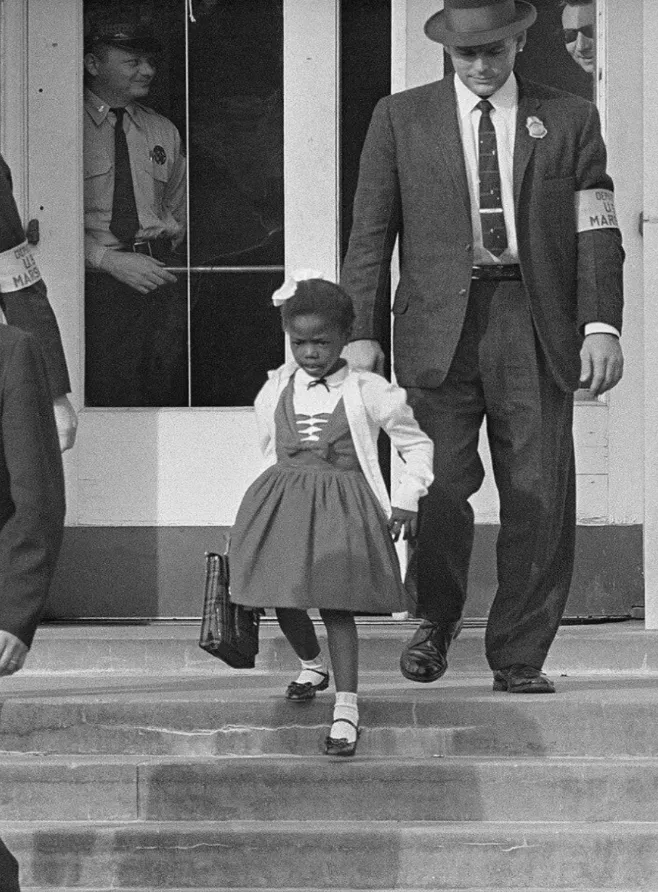
On January 29, 2025, President Donald Trump passed Executive Order 14190 with the aim of ending indoctrination in K-12 Schooling. This order seeks to foster “patriotic education,” which he defines as presenting a history of “America [that is] grounded in accurate, unifying, inspiring, and ennobling characterization of America’s founding principles” [1]. However, this order fundamentally contradicts its stated purpose. What fostering a “patriotic education” truly means is advocacy for withholding accurate information from school curricula. Education should be factual and historical, regardless of whether it inspires patriotism. Trump’s order is especially interesting because his justification for passing it was to ensure that no student felt guilt or shame because of their race, ethnicity, or sex. Yet, how can a society claim to teach accurate history while censoring parts of it to spare the feelings of those who benefit from that very history? Executive Order 14190 is unconstitutional because the censoring of lessons regarding race, racism, and systemic inequalities disproportionately harms students of color and inherently promotes a message that says their history is insignificant.
Learning about factual, unaltered history isn’t a privilege; it is a right guaranteed to all people through the 14th Amendment. The Equal Protection Clause of the 14th Amendment states, “nor shall any State.. deny to a person within its jurisdiction the equal protection of the law.” [2] This clause ensures that individuals in similar situations are to be treated equally under the law, and it prohibits discrimination against individuals on various bases, such as race and gender. It served as the foundation for cases such as Brown vs Board of Education (1954), which ruled against segregation in public schools. In 1954, in a unanimous decision, the Supreme Court ruled that the segregation of students by virtue of race causes feelings of inferiority within Black students and affects their success within the education system, which therefore violates the Equal Protection Clause [3]. Separate education institutions by nature cannot be equal, and this clause mandates that all individuals, no matter the race, must be treated equally.
Despite the eventual success of this landmark ruling, students of color today aren’t being treated in the same manner as their non-poc counterparts, as under Executive Order 14190. By excluding accurate historical information that directly impacts their lived experiences, the education system perpetuates inequality. For instance, the legacy of slavery and Jim Crow laws continues to affect Black communities through systemic poverty, which limits access to opportunity and quality education. While the Trump administration works to prevent feelings of guilt amongst white students who may feel negatively about their racial history, students of color live in a society where they are treated as inferior systematically. An exclusion of accurate history only further perpetuates this system, which therefore makes the effects of Brown v. Board of Education (1954) disproportionate.
A 2022 Quinnipiac University poll (conducted before the effects of the 2025 executive order) found that only 27% of Americans felt as though their history education in school accurately and fully represented the experiences of African Americans [4]. What these findings show is that the vast majority of people know they weren’t taught the full history of what happened to African Americans in this country. If most students already receive a watered-down version of American history, it’s worth questioning why their reactions to that limited information are treated as a problem. This is especially important when we consider who is doing the teaching. In 2018, roughly 79% of history teachers in the United States were white [5]. If these educators, who belong to the racial group most implicated in the historical narratives being softened or omitted, are responsible for teaching aspects of racism, inequality, or privilege, why assume they would present information that may potentially harm the perception of their own group unless there was truth behind it? If even a majority-white teaching workforce does not completely erase education on racism from their curriculum entirely, that suggests the problem is not “anti-white bias” in education but the opposite: that much of the truth still fails to make it into the classroom. So if students take this already-filtered history and come away feeling privileged or oppressed, why do we assume that these reactions are inherently negative? While Trump states that “White privilege” or “unconscious bias” actually promotes racial discrimination and undermines national unity, this simply isn't true. In reality, these reactions are both appropriate and necessary. When individuals fully confront and internalize historical truths, they become better equipped to advance the “ennobling characteristics” that America claims to hold.
Acknowledging the truth isn’t an accusation. Teaching about racism isn’t saying that white students or teachers themselves did something wrong. Instead, it’s saying something wrong happened, and here’s how to make sure this doesn’t happen again. The idea that public schools in teaching a diverse curriculum were “blaming students for racism” cannot be true, especially considering that the majority of the people teaching these lessons are white. It’s unreasonable to assume that they are collectively targeting their own students or pushing a narrative that unfairly blames them. And we certainly can’t assume that the remaining 24% of teachers are doing so either. It is widely understood that white people alive today did not participate in slavery. That isn’t what’s being taught. The issue is that many of the laws, policies, and institutions created long after slavery continue to disproportionately harm people of color. Acknowledging this reality isn’t “blaming”; it’s a historical and social fact.
Moreover, we cannot forget about the benefits that come from teaching people accurate history. Knowledge of true history teaches us about the past to be better equipped in the future, and without this understanding, we can’t begin to form the values and pride in our country that President Trump seeks to protect with his order. This is because without history, we cannot be politically and civically informed. History allows us to engage in lessons about integrity, bravery, and courage as well as loss, struggle, and resilience. These lessons are inseparable. Black history is American history, and because the legacies of slavery, segregation, and discrimination remain embedded in contemporary institutions, understanding this history is essential to understanding America itself.
Executive Order 14190 also places an unconstitutional burden on educators. Anthony Crawford, writing for the ACLU, notes that "teachers who are afraid to talk about these issues because they could lose their teaching licenses if someone complains" are now operating under a chilling effect that directly undermines academic freedom [6]. A history teacher's job is to teach history—accurately and completely. No educator should fear professional consequences for fulfilling that responsibility, especially in a nation founded on the protection of civil liberties like free speech. Teaching Black history does not imply racial indoctrination; in fact, it's quite the opposite. However, deliberate whitewashing and sanitization of history constitute indoctrination. American history encompasses far more than sanitized references to slavery, Rosa Parks, Martin Luther King Jr., and the Civil Rights Movement. Students have both the right and the need to learn the full scope of that history—including the systems of oppression that were built, maintained, and evolved over centuries.
It is clear that Trump’s Executive Order 14190 does not address educational inequity; it only deepens it. When states ban or restrict lessons—e.g., AP African American studies—about race under the guise of “protecting” white students from discomfort, they create a new and insidious form of inequality. Students of color are taught the truth of their lived experiences and history, while white students are denied the lessons to understand it and the world they inherit. This dual harm violates the original purpose of the Equal Protection Clause of the 14th Amendment. Both parties are given a limited, distorted education that ends up benefiting no one but those who wish to perpetuate existing racist frameworks. If we are serious about fostering a society built on mutual understanding, justice, and genuine protection for all, we must demand the teaching of complete, unvarnished history. Anything less is not patriotism. It is erasure.
[1] The White House, “Ending Radical Indoctrination in K‑12 Schooling,” Executive Order 14190, January 29, 2025
[2] National Constitution Center, “Fourteenth Amendment” (n.d)
[3] Brown v. Board of Education, 347 U.S. 483 (1954).
[4] Malloy Tim, “66% Say History Lessons Fell Short On Role Of African Americans, Quinnipiac University National Poll Finds; Nearly 4 In 10 Have Family Or Friends They Consider Racist,” February 17, 2022
[5] Katherine Schaeffer, “America’s Public School Teachers Are Far Less Racially and Ethnically Diverse Than Their Students,” December 10, 2021
[6] Anthony Crawford, “Making Space for Black History in the Classroom”, February 1, 2022
Works Cited:
Crawford, Anthony. 2022. “Making Space for Black History in the Classroom”, American Civil Liberties Union, February 1, 2022 \https://www.aclu.org/news/free-speech/making-space-for-black-history-in-the-classroom
JUSTIA. 2006. “Brown v. Board of Education of Topeka, 347 U.S. 483 (1954).” Justia Law. 2006. https://supreme.justia.com/cases/federal/us/347/483/.
Malloy, Tim. 2022. “66% Say History Lessons Fell Short On Role Of African Americans, Quinnipiac University National Poll Finds; Nearly 4 In 10 Have Family Or Friends They Consider Racist,” Quinnipiac University, February 17, 2022, https://poll.qu.edu/poll-release?releaseid=3836
National Constitution Center, n.d. “Fourteenth Amendment”, constitutioncenter.org, accessed November 30, 2025, https://constitutioncenter.org/the-constitution/amendments/amendment-xiv.
Schaeffer, Katherine. 2021. “America’s Public School Teachers Are Far Less Racially and Ethnically Diverse Than Their Students,” Pew Research Center, December 10, 2021, https://www.pewresearch.org/short-reads/2021/12/10/americas-public-school-teachers-are-far-less-racially-and-ethnically-diverse-than-their-students/
Trump, Donald. 2025. “Ending Radical Indoctrination in K-12 Schooling.” The White House. January 29, 2025. https://www.whitehouse.gov/presidential-actions/2025/01/ending-radical-indoctrination-in-k-12-schooling