Educational Discipline Law: Psychological Harm and Pipeline Risks
Written by: Symphony Devine
Edited by: Sophia Jackson
Abstract
This article examines the negative psychological effects of specific behavior modification policies within New York City and New York State school systems, as well as their contribution to active prison pipelines. By initially outlining the transition from corporal punishment to the reliance on exclusionary discipline policies through amendments made to Education Law 3214 following the Supreme Court’s precedent in Goss v. Lopez, this article seeks to illustrate how these practices can disproportionately affect Black students, resulting in a decline of public health outcomes. Examining current practices of restorative justice framework and the “Solutions Not Suspensions Act” under consideration by the New York State assembly allows for a review of potential solutions to the harmful effects on Black communities proposed by exclusionary behavior policy models.
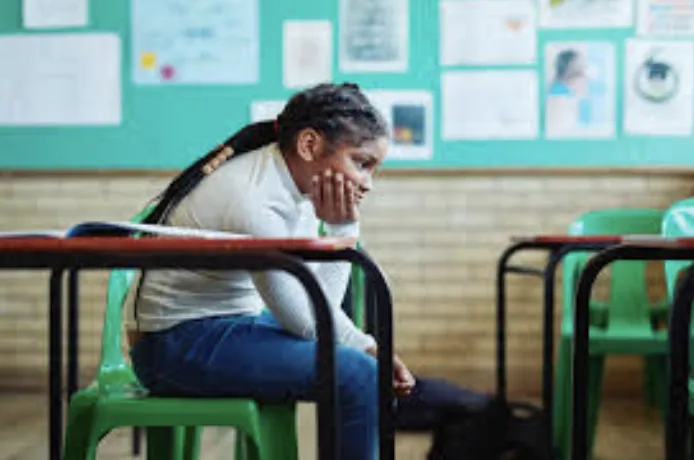
For an abundance of the 20th century, New York City and New York State school discipline heavily depended on corporal punishment – the deployment of discipline via physical force. Beginning in the early 1970s and 1980s, the topic of corporal punishment in schools was brought to court but, ultimately, outlawed due to concerns that violence and education were incompatible. Certain advocacy groups, such as the National Association for the Advancement of Colored People (NAACP), called attention to the disproportionate effect of corporal punishment on Black students, which strengthened the argument against its use [1]. While this benchmarked progressed from physical discipline, it catalyzed an educational climate in which “zero tolerance” frameworks and school suspensions could thrive as the primary forms of discipline.
In both New York City and the broader state, Education Law 3214 was crafted primarily to outline the criteria governing suspensions and school removals [2]. Following the decision in Goss v Lopez (1975), Education Law 3214 was amended to further expand upon these suspension statutes. Goss v. Lopez is a legal precedent that follows the case of nine students from local schools in Columbus, Ohio who were issued 10-day school suspensions for behavioral misconduct. The families brought the case to the Burger District Court, arguing that Ohio state law violated the children's rights. Ultimately, the court ruled in favor of the students asserting that their Fourteenth Amendment rights had been violated by school officials, who subsequently petitioned the Supreme Court to appeal this decision. The Supreme Court reviewed the constitutional question: was the implementation of suspensions without a preliminary hearing a violation of students’ Fourteenth Amendment rights? In a 5-4 decision, the court ruled in favor of the students, holding that state law does not authorize the withdrawal of a student’s right to education without due process. This case established that a hearing must be conducted before a student may be suspended because entitlement to education is covered by the Due Process Clause of the Fourteenth Amendment. Following this precedent, the standards for suspensions and school removal have continued to be refined in Education Law 3214, with the most recent update in 2017 outlining permissible lengths of suspensions for specific infractions, the authorities authorized to suspend a student, and the types of suspensions that may be imposed [3].
In the 2023–2024 school year, New York State public schools reported a total of 137,511 suspensions, raising concerns about whether suspensions and the guidelines around them are effective or equally distributed amongst student populations. While suspensions are often used to increase order and accountability, research suggests they may reinforce existing disparities. The U.S. Department of Education's Civil Rights Data Collection (CRDC) found that Black boys with disabilities are two times more likely to be suspended than any other demographic. Additionally, Black children lost around 47 days of school per 100 students due to out-of-school suspensions, double the overall rate [4]. Furthermore, students who are suspended once are at a greater risk of being suspended again in the future. Specifically, within special education, 24% of black males in sixth grade were suspended anywhere from three to five times [5].
Disproportionately high rates of exclusionary discipline have been identified as a large contributing factor to what scholars refer to as the school-to-prison pipeline. The school-to-prison pipeline can be defined as policies and practices in public school systems regarding school discipline that decrease the probability of success in school and increase the probability of negative life outcomes – more specifically, involvement in the juvenile justice system [6]. As opposed to addressing the underlying causes of behavioral issues, exclusionary measures can contribute to a greater likelihood of becoming involved with the juvenile justice system, increasing their likelihood of incarceration in adulthood [7]
In addition to the affirmation of the school-to-prison pipeline, suspension and exclusionary discipline policies have adverse effects on the psychological well-being of young students. Suspensions and other exclusionary processes can mistakenly be perceived as beneficial to the school environment through the removal of children perceived as disruptive to academic engagement. However, they have been found to create negative perceptions of the school’s climate amongst the students. The UChicago Consortium on Chicago School Research found that higher suspension rates are strongly associated with reports of weaker peer relationships and self-esteem amongst students [8]. Likewise, in a recent study, the Center for Disease Control (CDC) found a strong relationship between students who believed they had been unfairly disciplined in school and multiple adverse cognitive effects. These effects included negative self-image, feeling unsafe at school, declining grades, persistent feelings of sadness, contemplation of suicide, thoughts of carrying a weapon to school, or prescription opioid misuse [9]. Building upon this research, a 2024 study by the National Health Library of Medicine examined the long-term mental health effects of school suspension and removal. The results concluded that exclusionary disciplinary practices contributed to an increase in depressive symptoms that can become most apparent in early adulthood [10].
A solution proposed to combat the school-to-prison pipeline and the adverse psychological effects is the methodology known as restorative practices, or restorative justice. Restorative justice focuses on both prevention and intervention, aiming to transform how students and adults interact, thereby creating a more positive school climate [11]. One specific restorative justice policy proposed for implementation in the NYC Department of Education is known as the “Re-entry Circle” [12]. The “Re-Entry Circle” program is designed to assist students after long absences, typically due to suspensions or other disciplinary actions. The goal is to facilitate a positive environment where students feel encouraged to have a smooth reintegration into their school environment. This is achieved by overseeing the restoration of relationships damaged by conflict or harmful behavior, fostering understanding, and promoting accountability and healing [13]. Restorative justice programs such as this were supported in the NYC disciplinary code for the 2025-26 school year [14].
In New York State, the “Solutions not Suspensions” bill is being proposed as an amendment to the aforementioned Education Law 3214. Similar to what is at work for the upcoming school year in the NYC Department of Education, this bill would require school codes of conduct to include restorative approaches to discipline. Additionally, the “Solutions not Suspensions” bill would: shorten the maximum length of suspension from 180 to 20 school days (except when required by federal law) and prohibit suspensions for minor infractions [15]. As of October 2025, the “Solutions not Suspensions Act” is still under consideration in the New York State legislature. The next phase for the bill will involve additional committee deliberation and advocacy efforts aimed at rallying enough support for a floor vote; upcoming months will be critical for the bill’s advancement. The passing of the “Solutions not Suspensions Act” would be a monumental stride for the broader New York State to benefit public health through the diminishment of school-to-prison pipelines and the protection of the psyche of young, Black scholars.
[1] Civil Rights Project, “The Striking Outlier,” 2019
[2] New York State School Boards Association, Legal Update: A Recap of Selected New Laws and Regulations, 2024
[3] id at 2.
[4] New York State Board of Regents, “Recommendations for Reducing Disparities in and Reforming School Discipline in New York State,” 2022
[5] Raffaele Mendez & Knoff, Who Gets Suspended from School and Why, 2003
[6] Gregory, Anne; Clawson, Kathleen; Davis, Alycia; & Gerewitz, Jennifer. “The Promise of Restorative Practices to Transform Teacher‑Student Relationships and Achieve Equity in School Discipline.” 2016.
[7] Wolf & Kupchik, School Suspensions and Adverse Experiences in Adulthood, 2017
[8] Steinberg, Matthew P.; Allensworth, Elaine; & Johnson, David W., What Conditions Jeopardize and Support Safety in Urban Schools? The Influence of Community Characteristics, School Composition and School Organizational Practices on Student and Teacher Reports of Safety in Chicago (2013).
[9] Centers for Disease Control and Prevention, Report of Unfair Discipline at School and Associations with Health Risk Behaviors and Experiences — Youth Risk Behavior Survey, United States, 2023, 2024
[10] National Library of Medicine, “School Suspension, Expulsion, and Mental Health Outcomes,” 2024.
[11] Gregory, A., Clawson, K., Davis, A., & Gerewitz, J., The Promise of Restorative Practices to Transform Teacher-Student Relationships and Achieve Equity in School Discipline, 26 J. Educ. & Psychol. Consult. 325 (2016)
[12] NYC Department of Education, Overview of Changes to the Discipline Code for Grades K-12 (2019)
[13] Panorama Education, Re-Entry Circle Guide (n.d.)
[14] New York City Council, “Restorative justice programming in NYC schools,” March 13, 2025
[15] New York State Senate, A118 (2025)
Works Cited:
Human Rights First, et al. NGO Shadow Report on Anti‑Black U.S. Immigration Practices. 2022. https://humanrightsfirst.org/library/ngo-shadow-report-on-anti-black-us-immigration-practices-submitted-to-the-committee-on-the-elimination-of-racial-discrimination/
New York State School Boards Association. Legal Update: A Recap of Selected New Laws and Regulations. Albany, NY: New York State School Boards Association, 2024. https://www.nyssba.org/clientuploads/nyssba_pdf/Events/summer-law-2024/albany/04.pdf
New York State Board of Regents. Recommendations for Reducing Disparities in and Reforming School Discipline in New York State. Albany, NY: New York State Education Department, 2022. https://www.regents.nysed.gov/sites/regents/files/P-12%20-%20Recommendations%20for%20ATT%20-%20Recommendations%20for%20Reducing%20Disparities%20in%20and%20Reforming%20School%20Discipline%20in%20New%20York%20State.pdf
Gregory, Anne, Kathleen Clawson, Alycia Davis, and Jennifer Gerewitz. “The Promise of Restorative Practices to Transform Teacher‑Student Relationships and Achieve Equity in School Discipline.” Journal of Educational and Psychological Consultation, vol. 26, no. 4 (2016): 325‑353. PDF available at https://www.antoniocasella.eu/restorative/Gregory_RJ_2015.pdf
Steinberg, Matthew P., Elaine Allensworth, and David W. Johnson. What Conditions Jeopardize and Support Safety in Urban Schools? The Influence of Community Characteristics, School Composition and School Organizational Practices on Student and Teacher Reports of Safety in Chicago. Los Angeles: The Civil Rights Project/Proyecto Derechos Civiles, 2013. https://consortium.uchicago.edu/publications/suspending-chicagos-students-differences-discipline-practices-across-schools
Raffaele Mendez, Linda M., and Howard M. Knoff. Who Gets Suspended from School and Why: A Demographic Analysis of Schools and Disciplinary Infractions in a Large School District. Education and Treatment of Children 26, no. 1 (2003): 30‑51. https://eric.ed.gov/?id=EJ678680
Wolf, Kerrin C., and Aaron Kupchik. School Suspensions and Adverse Experiences in Adulthood. Justice Quarterly, vol. 34, no. 3 (2017): 407‑430. https://doi.org/10.1080/07418825.2016.1168475
Krause, Kathleen H., Charles Bell, Bajha Jordan, Michelle Carman‑McClanahan, Carmen Ashley, Izraelle I. McKinnon, Desmond Banks, Jorge V. Verlenden, Ari Fodeman, Loredona Arrey, Connie Lim, Sherry Everett Jones & Jonetta J. Mpofu. Report of Unfair Discipline at School and Associations with Health Risk Behaviors and Experiences — Youth Risk Behavior Survey, United States, 2023. MMWR Supplements, Vol. 73 (Supp. 4): 69–78, October 10 2024. https://www.cdc.gov/mmwr/volumes/73/su/su7304a8.htm
National Library of Medicine. 2024. “School Suspension, Expulsion, and Mental Health Outcomes Across Adolescence into Adulthood.” PubMed. U.S. National Library of Medicine. https://pubmed.ncbi.nlm.nih.gov/39068708/
Gregory, A., Clawson, K., Davis, A., & Gerewitz, J. (2016). The Promise of Restorative Practices to Transform Teacher-Student Relationships and Achieve Equity in School Discipline. Journal of Educational and Psychological Consultation, 26(4), 325-353. https://doi.org/10.1080/10474412.2014.929950
NYC Department of Education. 2019. Overview of Changes to the Discipline Code for Grades K-12. New York City Department of Education. https://www.schools.nyc.gov/docs/default-source/default-document-library/proposed-discipline-code-changes1.pdf
Panorama Education. n.d. Re-Entry Circle Guide. Panorama Education. https://go.panoramaed.com/hubfs/Re-Entry%20Circle%20Guide_Fillable.pd
New York City Council. “Restorative justice programming in NYC schools.” Committee on Education, March 13, 2025. https://citymeetings.nyc/meetings/new-york-city-council/2025-03-13-1000-am-committee-on-education/chapter/restorative-justice-programming-in-nyc-schools/
New York State Senate. A118 (2025). Albany, NY: New York State Legislature, 2025. https://www.nysenate.gov/legislation/bills/2025/A118