Enforcement And Policing: Immigration Authority and Its Impact on Racialized Communities
Written by: Joseph De Jesus Bravo | Borough of Manhattan Community College (CUNY)
Edited by: Jessica Nwosu
Abstract:
This paper analyzes the constitutional and social implications of modern immigration enforcement practices in the United States. While Immigration and Customs Enforcement (ICE) derives its authority from the Immigration and Nationality Act (INA), particularly 8 U.S.C. §§ 1357 and 1226, that authority is not unlimited. It remains subject to the Fifth Amendment’s guarantee of due process. Recent court challenges and enforcement incidents have raised questions about whether these powers are consistently exercised within their intended legal bounds. Drawing on statutory analysis, federal case law, detention statistics, and research on community impacts, this paper argues that when civil immigration enforcement begins to resemble punitive policing, it creates tension between the authority granted by Congress and the constitutional principles meant to restrain it. Particular focus is given to racially diverse urban communities, including Black and Afro-Latino populations, where enforcement practices intersect with longstanding histories of disproportionate policing. Ultimately, this paper considers whether enforcement that strays from procedural integrity risks undermining public confidence in the law itself.
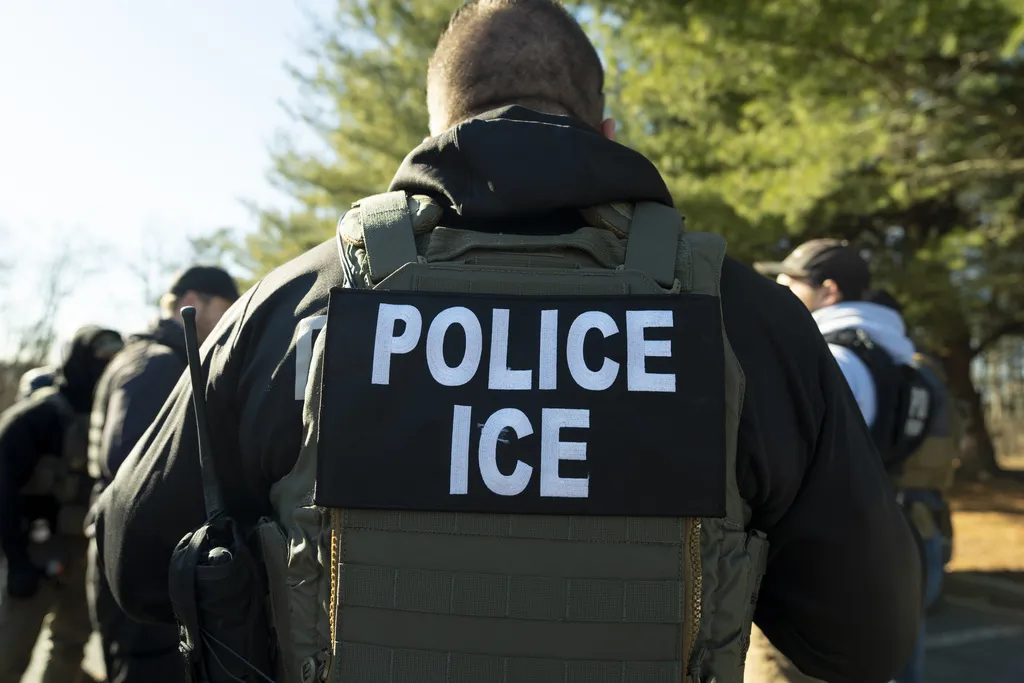
Officially, U.S. immigration enforcement is meant to regulate unauthorized entry into the country. In today’s political climate, however, agencies like Immigration and Customs Enforcement (ICE) and the Department of Homeland Security (DHS) have carried out operations whose effects extend beyond that mission, including the deaths of multiple U.S. citizens and the injury or deportation of many others, in addition to actions taken against targeted noncitizens. ICE has also been documented engaging in racial profiling, increasing insecurity, and discouraging institutional engagement among mixed-status communities, particularly in diverse urban areas. These actions have added strain to an already longstanding historical distrust between many marginalized communities and the policing institutions meant to serve them.
Though immigration enforcement has evolved since ICE’s establishment in 2003, operational changes carried out under the current presidential administration represent a significant shift in both scale and aggression, especially in communities where they consider themselves more likely to apprehend those who live here without authorization. Reports from legal analysts and civil rights organizations have raised concerns about the controversial use of these immigration enforcement strategies. They argue that these practices carry broader social implications, particularly for Black and Afro-Latino individuals in mixed-status households and the communities connected to them.
To understand the current operations executed by ICE, we must first understand the premise that allows their powers to be executed. In 1952, the enactment of the Immigration and Nationality Act (INA) became the groundwork from which immigration agencies like ICE and the DHS derive their statutory authority presently [1]. Namely, under section 8 U.S.C. § 1357, immigration officers gained the authority to stop, interrogate, and arrest (under specific conditions) those they suspect of being removable, all without necessarily requiring a judicial warrant to perform these functions [2]. Officers also gained the ability to carry firearms and execute the warrants they do receive. Critically, under section 8 U.S.C. § 1226, officers are also granted the ability to detain noncitizens, pending removal proceedings [3].
Although the INA gives these agencies authority to enforce immigration law, the U.S. Constitution limits how they can exercise that power. In particular, the Fifth Amendment guarantees due process to all persons in the United States and its territories, including noncitizens [4]. Under due process, those detained possess many rights, including notice, the opportunity to be heard, a meaningful hearing, and the ability to challenge government action. These measures, along with others, are taken to maintain procedural integrity. The Supreme Court has affirmed that immigration detention, though civil in nature, is still subject to constitutional limitations, particularly where prolonged detention is concerned [5].
While these arrest and detention mechanisms are defined legally, their implementation, or lack thereof, in recent years has received significant judicial scrutiny. Since the introduction of the current presidential administration in January 2025, multiple lawsuits and federal court rulings have raised concerns regarding the adequacy of procedural guidelines and the constitutional limits governing immigration enforcement. In J.G.G. v. Trump, immigrant detainees challenged deportation actions executed under extraordinary executive authority, inciting renewed examination of habeas review and due process protections in federal court [6]. Recent developments, including highly publicized incidents in Minnesota during Operation Metro Surge, in which federal immigration agents fatally shot U.S. citizens Renée Nicole Good and Alex Pretti, illustrate a persistent tension between statutory enforcement authority and the consistent protection of constitutional rights in practice [7][8].
These concerns gain even more credibility when paired with data that suggests that, outside of traditional criminal paradigms, the authority exercised by immigration enforcement agencies is expanding beyond what is typically associated with criminal law enforcement. Recent detention statistics show that a majority of individuals currently held in ICE custody do not have criminal convictions, adding to the concern that many are being detained primarily based on immigration status rather than on actual criminal conduct [9][10]. When this is combined with the overall increase in immigration detainees and the construction or expansion of large detention compounds such as those in Florida, it raises legitimate questions about the nature of these arrests. By definition, civil immigration detention is supposed to serve as a regulatory mechanism to ensure appearance at proceedings or to facilitate removal. By contrast, however, the conditions within many modern detention facilities operate at levels that resemble criminal incarceration, where confinement feels more punitive in structure, even though immigration violations are civil, not criminal, in nature [11].
This inconsistency carries consequences beyond the courtroom, particularly for those who are not themselves formal targets of immigration enforcement. Approximately five million United States citizen children live in households with at least one undocumented parent, demonstrating that immigration enforcement actions routinely implicate individuals beyond their intended targets [12][13]. Research has also documented measurable declines in crime reporting and public service engagement in neighborhoods experiencing increased immigration enforcement activity, particularly in cases involving domestic violence and emergency assistance [14]. When enforcement activity enters these racially diverse and often racialized communities, the data makes it clear that there’s a high probability that it may reduce trust in law enforcement, silence victims who might otherwise seek protection, destabilize household dynamics, and interrupt the educational trajectory of children affected by the detention or removal of a parent or caregiver [15][16][17][18][19].
This deduction not only magnifies the potential risks for stereotypical Latino individuals, but also for Afro-Latino and Black community members that often share the same networks of community diversity and racialization, both historically and contemporarily. Urban immigrant communities are rarely racially separated within themselves[20]. Residents in these neighborhoods frequently share schools, transportation routes, hospitals, and increasingly, policing institutions. It is precisely because of this shared geography that immigration removal operations impact the broader social environment, whether that intent is explicitly present or not. Afro-Latinos find themselves uniquely positioned at the intersection of this sociogeographical dynamic. In many instances, Afro-Latinos are racially perceived as Black while ethnically categorized as Latino, which may subject them to heightened vulnerability in both racial profiling and immigration-status suspicion[21].
This vulnerability is even more layered and significant when contextualized to the historical relationship between Black communities and law enforcement institutions in the United States. Decades before these modern immigration enforcement agencies ever set foot into these communities, racial profiling and increased/disproportionate surveillance had historically been built into the framework for policing [22]. Even in the present day, recent evidence demonstrates persistent disparities in police stops, so-called “random” searches, and use-of-force incidents involving Black Americans [23]. So when ICE and other agencies enter these neighborhoods, they are carrying out additional orders to conduct behavior that matches the treatment that has and is fostering the climate of unequal suspicion and increased surveillance. For Afro-Latinos perceived as Black, the increased presence of immigration agents in their communities reinforces longstanding patterns of suspicion and unequal treatment by law enforcement, while intensifying existing constitutional and social concerns linked to both their presence and documented procedural irregularities.
It is for this reason that the question must be raised: at what point do these enforcement practices begin to affect the legitimacy of the state that governs them? The statutory powers given to immigration agencies, however clearly defined, are not sufficient on their own. Authority is legitimate only so long as it is exercised both consistently and with integrity within the constitutional framework that defines it. If this isn’t done, then it becomes unreasonable to expect the public, particularly the communities such laws are said to protect, to maintain confidence in its application. This is especially observable in communities where trust in policing institutions is already historically fragile. When removal operations start looking like suspicion-based policing models or cause collateral harm within mixed-status households, the federal laws authorizing such enforcement become increasingly difficult to reconcile with the due process and equal protection principles they are meant to uphold.
References:
[1] Immigration and Nationality Act of 1952, Pub. L. No. 82–414, 66 Stat. 163 (1952).
[2] 8 U.S.C. § 1357.
[3] 8 U.S.C. § 1226.
[4] U.S. Const. amend. V.
[5] Zadvydas v. Davis, 533 U.S. 678 (2001).
[6] J.G.G. v. Trump, No. 1:25-cv-00766 (D.D.C. 2025).
[7] Associated Press. “Woman Shot by ICE Agent Was a U.S. Citizen.” January 8, 2026.
[8] Associated Press. “The Man Killed by a Federal Officer in Minneapolis Was an ICU Nurse, Family Says.” January 25, 2026.
[9] TRAC Immigration. “Immigration Detention Quick Facts.” Syracuse University. Accessed February 2026.
[10] Hesson, Ted. “ICE Has Detained a Growing Share of People with No Criminal Record or Charge.” Reuters, February 27, 2026.
[11] Zadvydas v. Davis, 533 U.S. 678 (2001).
[12] Pew Research Center. “Most Unauthorized Immigrants Live with Family Members.” November 27, 2018.
[13] American Immigration Council. “Mass Deportation.” October 2, 2024.
[14] Muchow, Andrew N. “The Effect of Immigration Enforcement on Domestic Violence Reporting.” Journal of Urban Economics, 2020.
[15] U.S. Department of Justice, Civil Rights Division. Investigation of the Ferguson Police Department. March 4, 2015.
[16] American Civil Liberties Union. “New ACLU Report Shows Fear of Deportation Is Deterring Immigrants from Reporting Crimes.” May 3, 2018.
[17] Kaiser Family Foundation (KFF). “Potential Impacts of Increased Immigration Enforcement on School Attendance and Funding.” April 3, 2025.
[18] Amuedo-Dorantes, Catalina, et al. “Safe-Zone Schools and the Academic Performance of Children of Unauthorized Migrants.” (2022).
[19] Logan, John R., and Weiwei Zhang. “Global Neighborhoods: New Pathways to Diversity and Separation.” Brown University, 2010.
[20]Hwang, Jackelyn, and Tyler W. McDaniel. Racialized Reshuffling: Urban Change and the Persistence of Segregation in the Twenty-First Century. 2022.
[21]Taking Account of Blackness among Latinos: Afro-Latino Experiences
Talbert, Michelle D. “Taking Account of Blackness among Latinos: Afro-Latino Experiences.” PS: Political Science & Politics, Cambridge University Press.
[22] U.S. Department of Justice, Civil Rights Division. Investigation of the Ferguson Police Department. March 4, 2015.
[23] Bureau of Justice Statistics. Contacts Between Police and the Public, 2020. U.S. Department of Justice, 2022.
Work Cited:
American Immigration Council. 2024. “Mass Deportation.” October 2, 2024. https://www.americanimmigrationcouncil.org/report/mass-deportation/.
Associated Press. 2026. “Woman Shot by ICE Agent Was a U.S. Citizen.” January 8, 2026. https://apnews.com/article/ice-shooting-minneapolis-minnesota-9aa822670b705c89906f2c699f1d16c5.
Associated Press. 2026. “The Man Killed by a Federal Officer in Minneapolis Was an ICU Nurse, Family Says.” January 25, 2026. https://apnews.com/article/immigration-enforcement-minnesota-protester-alex-pretti-15ade7de6e19cb0291734e85dac763dc.
Bureau of Justice Statistics. 2022. Contacts Between Police and the Public, 2020. U.S. Department of Justice. https://bjs.ojp.gov/library/publications/contacts-between-police-and-public-2020.
Hesson, Ted. 2026. “ICE Has Detained a Growing Share of People with No Criminal Record or Charge.” Reuters. February 27, 2026.
Immigration and Nationality Act of 1952, Pub. L. No. 82–414, 66 Stat. 163 (1952).
Muchow, Andrew N. 2020. “The Effect of Immigration Enforcement on Domestic Violence Reporting.” Journal of Urban Economics.
Pew Research Center. 2018. “Most Unauthorized Immigrants Live with Family Members.” November 27, 2018. https://www.pewresearch.org/race-and-ethnicity/2018/11/27/most-unauthorized-immigrants-live-with-family-members/.
TRAC Immigration. 2026. “Immigration Detention Quick Facts.” Syracuse University. https://tracreports.org/immigration/quickfacts/.
U.S. Const. amend. V.
U.S. Department of Justice, Civil Rights Division. 2015. Investigation of the Ferguson Police Department. March 4, 2015.
Zadvydas v. Davis, 533 U.S. 678 (2001).
J.G.G. v. Trump, No. 1:25-cv-00766 (D.D.C. 2025).