An Environmental Shutdown
Written by: Kai Alexandria Franklin
Edited by: Rafaela Drake
Abstract
The October 2025 federal government shutdown has exposed the fragility of the United States’ environmental regulatory system. The government shutdown has halted critical enforcement, delayed environmental reviews, and weakened protections for already over-burdened communities. This article examines how shutdown-driven barriers, particularly within the Environmental Protection Agency (EPA) and Department of the Interior (DOI), create a de facto form of deregulation. This enables fossil-fuel expansion while delaying or suspending environmental safeguards. Legal provisions such as the Anti-Deficiency Act restrict agency activity during shutdowns, resulting in major pauses in monitoring, inspections, and enforcement. Simultaneously, fossil-fuel permitting has been classified as “essential,” allowing drilling activity to accelerate with reduced oversight. Drawing on evidence from federal documents, environmental community watch reports, and peer-reviewed research, this piece argues that shutdown disruptions disproportionately harm environmental justice communities and weaken the long-term foundations of environmental law. The analysis concludes with the need for structural reforms and highlights emerging community-based legal efforts responding to these regulatory gaps.
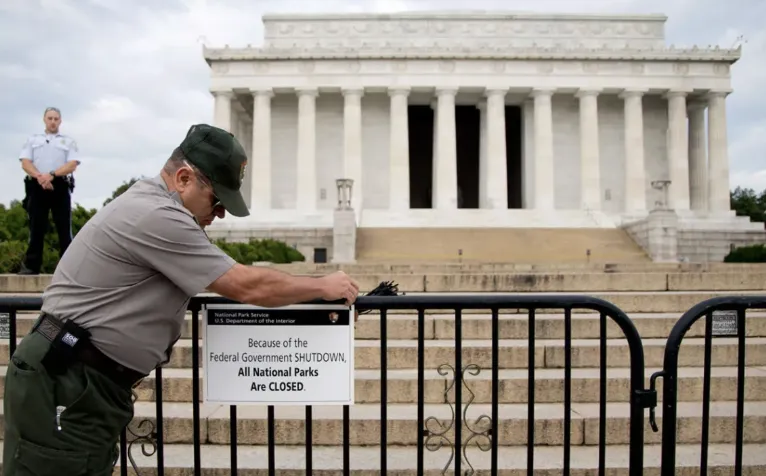
The current shutdown—beginning October 1, 2025—has intersected with a broader policy shift that privileges fossil-fuel development even as environmental oversight stalls [1]. The recent government shutdown exposes how fragile environmental protection is when legal and administrative structures are delayed or stopped even temporarily. Federal environmental agencies like the Environmental Protection Agency (EPA) and the Department of the Interior are obligated to regulate pollution, enforce environmental standards, and oversee projects requiring federal permits. With over seven hundred thousand government workers affected and at risk of being laid off, it is only natural to see under our current administration that environmental advocacy takes a hit. Additionally, over two-hundred federal employees within environmental protection agencies have been informed their job positions no longer exist and as such they will be let go. With the introduction of this shutdown, the obligation of these agencies and these government workers are drastically limited, which raises profound legal and ecological consequences. According to EPA’s official contingency plan, if fully implemented “nearly 90 percent” of the agency’s workforce would be furloughed, leaving only a skeleton crew for “excepted” work under the Anti-Deficiency Act [2].
The Anti-Deficiency Act (ADA) is a federal law prohibiting agencies from spending funds or employing personnel without congressional authorization and only allows work that protects human life or property. Under the Anti-Deficiency Act, agencies cannot spend funds or employ personnel during a shutdown unless their work is deemed “essential”. This results in most environmental monitoring, regulatory enforcements, and public review processes being on-pause entirely. On the contrary, the Department of Interior (DOI) explicitly designated staff members working on oil and gas permits as “essential” workers ahead of the shutdown, ensuring that drilling approvals could continue even as environmental regulation capacity shrank [3]. Legally, this creates a gap in compliance oversight. According to federal guidance, only narrowly defined “excepted” operations can continue, which typically excludes most environmental enforcement. This directly enables companies to continue environmentally harmful operations without the same level of monitoring by these environmental agencies. Specifically, this allows for companies to increase fossil fuel extraction and emissions under the radar of normal enforcement. Additionally, projects that require environmental impact statements under the National Environmental Policy Act (NEPA) are delayed, while fossil fuel driven energy development, which is often backed by existing leases, now face fewer barriers and can harm the environment at a faster rate. This legal stagnation can have long-term structural effects on top of very severe short-term implications. Many temporary or contract employees within the EPA and other environmental offices lose their income and their positions all together. Additionally, the Bureau of Land Management (BLM) approved 600+ new drilling permits and issued 37 new public-land leases in the first month of the shutdown alone [4]. In parallel, the Department of Energy canceled $7.56 billion in clean-energy awards on October 2, 2025, constraining the very projects designed to reduce emissions [5]. This causes even less environmental regulation and protections for environmental areas that are most threatened.
Not only are oil companies given a significant advantage with this shutdown, but staff are being removed at drastic rates due to the sheer lack of funding allocated. The administration has also pursued targeted layoffs during the shutdown period—planning to eliminate 20–30 EPA positions and 187 at the Department of Energy, on top of earlier staff reductions—further eroding future enforcement capacity even after funding is restored [6]. These staffing cuts are significant because enforcements, inspections, and settlements are all labor intensive, meaning these cuts will reduce the number of cases the EPA can review. In the first eight months of Trump’s presidency, the Justice Department has only initiated nine major civil cases, that is down from 46 major cases within that same time frame under President Biden (Environmental Integrity Project). The removal of staff capacity undermines the future enforcement and policy making that occurs within these environmental agencies.
This burden from reduced investigations and enforcement affects under-resourced communities much more drastically. According to peer-reviewed research, Black and Hispanic communities already bear 56% and 63% more pollution exposure, respectively, than their consumption generates—a structural disparity that widened over decades [8]. People of color breathe higher levels of fine particulate pollution (PM2.5) across regions and income brackets [9]. When inspections are slow, these communities that are often disproportionately located closer to highways and industrial areas, experience health implications through the potential contaminants present in the air and water in the community.
The shutdown also benefits fossil-fuel interests that are politically connected. According to campaign finance disclosures analyzed by the watchdog group, major oil and gas political action committees donated more than $17 million to the president’s allied political committees during the 2024 election cycle [10]. This financial alignment strengthens concerns that the administration’s decisions, such as declaring fossil-fuel permitting “essential” while furloughing environmental regulators, reflect donor influence rather than public interest. Futhermore, the government shutdown functions as a form of environmental deregulation by default. Not necessarily through legislation repeal but also by delaying bureaucracy. The legal framework for Environmental Protection depends not only on statutes but on the continuous operations of these agencies that enforce them. When those agencies are silenced, fossil fuel industries gain leverage while climate progress loses momentum. This has essentially served as a major win for the fossil fuel industry, which under the current administration can allude to a connection because these industries have ties to funding the current president’s campaign. Shutdown-induced deregulation is not theoretical; communities have sued over it before. During the 2018–2019 shutdown, for example, the State of New Mexico and Navajo communities challenged the ongoing approval of oil and gas drilling in the Greater Chaco region while environmental reviews were paused, arguing that BLM violated NEPA by processing permits without adequate analysis [11]. This case demonstrates how communities directly harmed by deregulation seek legal remedies when shutdowns enable unchecked drilling or insufficient environmental review.
This is especially alarming considering federal workers who issue permits for oil, gas, and mining operations and those who repeal pollution limits are deemed essential workers,
meaning they can continue their operations. On the contrary, environmental protection agencies have not been able to and have been consistently losing workers. Overall, the shutdown demonstrates the environmental law’s effectiveness is contingent on political and physical stability, where each interruption not only delays the immediate protections of certain environmental areas, but weakens the long-term legal architecture designed to safeguard the environment in the United States. A previous shutdown offers a clear legal parallel. During the 2018–2019 lapse in federal funding, Navajo (Diné) residents filed New Mexico v. U.S. Bureau of Land Management in 2019 after BLM continued approving oil and gas drilling permits while environmental reviews were stalled [11]. The plaintiffs argued that BLM violated the National Environmental Policy Act (NEPA) by issuing permits without conducting updated environmental impact assessments or adequately consulting tribal communities already burdened by pollution. The case highlighted how shutdown conditions create a regulatory loophole where fossil-fuel development continues, while the very legal processes designed to protect affected communities are frozen. The lawsuit emphasized that shutdown-induced lapses do not simply pause environmental protections. They actively endanger communities who rely on timely reviews and enforcement to safeguard their land, air, and water. This precedent underscores that administrative interruptions are not neutral; they structurally and disproportionately harm marginalized communities, echoing the same patterns unfolding in the current shutdown.
The bottom line is that each day the shutdown continues, the delays to our immediate environmental protections ensue, resulting in a damaging of the long-term legal framework meant to safeguard our access to clean and regulated air, water, and climate. This is especially true for under-resourced communities already overexposed to pollution and environmental degradation. The Sierra Club, Earthjustice, and several tribal nations, including those in the Greater Chaco region, have initiated rapid-response legal actions to challenge shutdown-enabled drilling and demand the restoration of environmental reviews. Their efforts reflect a growing recognition that environmental rights depend on stable governance and that communities most impacted by pollution cannot afford regulatory silence. For the sake of environmental justice, the status quo must change.
[1] New York Times. “Trump Administration Leans on Fossil Fuel Development During Shutdown.” October 17, 2025.
[2] U.S. Environmental Protection Agency. EPA Contingency Plan for Lapse in Appropriations. September 29, 2025.
[3] POLITICO Pro. “Interior Department Designates Oil and Gas Permitting Staff as Essential.” n.d.
[4] Center for Western Priorities. Shutdown Watch: BLM Approvals Surge During Federal Closure. Nov. 2025.
[5] Reuters. “U.S. DOE Cancels $7.56 Billion in Clean-Energy Awards During Shutdown.” October 2, 2025.
[6] Roll Call. “EPA, DOE Plan Targeted Layoffs Amid Shutdown.” 2025.
[7] Environmental Integrity Project. Environmental Enforcement Under the Trump Administration. n.d.
[8] Tessum, Christopher et al. “Inequity in Consumption-Based PM2.5 Exposure in the United States.” PNAS, 2021.
[9] U.S. Environmental Protection Agency. Science Matters: PM2.5 Exposure and Environmental Justice. n.d.
[10] OpenSecrets. “Oil & Gas Contributions to 2024 Presidential Election Committees.” 2024 Cycle Data.
[11] New Mexico v. U.S. Bureau of Land Management (Greater Chaco Case). Legal Filings, 2019.
Works Cited:
Center for Western Priorities. 2025. “Shutdown Watch: BLM Approvals Surge During Federal Closure.” Center for Western Priorities. https://westernpriorities.org.
Environmental Integrity Project. n.d. “Environmental Enforcement Under the Trump Administration.” Environmental Integrity Project.
https://www.environmentalintegrity.org.
New Mexico v. U.S. Bureau of Land Management. 2019. “Greater Chaco Drilling Litigation Filings.” U.S. District Court for the District of New Mexico. https://www.doi.gov or https://earthjustice.org (depending on which you want to cite).
New York Times. 2025. “Trump Administration Leans on Fossil Fuel Development During Shutdown.” New York Times.
OpenSecrets. 2024. “Oil & Gas Contributions to 2024 Presidential Election Committees.” OpenSecrets. https://www.opensecrets.org.
POLITICO Pro. n.d. “Interior Department Designates Oil and Gas Permitting Staff as Essential.” POLITICO. https://www.politico.com.
Reuters. 2025. “U.S. DOE Cancels $7.56 Billion in Clean-Energy Awards During Shutdown.” Reuters. https://www.reuters.com.
Roll Call. 2025. “EPA, DOE Plan Targeted Layoffs Amid Shutdown.” Roll Call. https://rollcall.com.
Tessum, Christopher W., et al. 2021. “Inequity in Consumption-Based PM2.5 Exposure in the United States.” Proceedings of the National Academy of Sciences. https://www.pnas.org.
U.S. Environmental Protection Agency. 2025. “EPA Contingency Plan for Lapse in Appropriations.” U.S. EPA. https://www.epa.gov.
U.S. Environmental Protection Agency. n.d. “Science Matters: PM2.5 Exposure and Environmental Justice.” U.S. EPA. https://www.epa.gov.