The Historical Legacy of Black Intellectual Property in Comic Books
Written by: Ayomide Ajakaiye
Edited by: Monette Scipio & Anneliese McDaniel
Abstract:
This paper seeks to explore Black intellectual property (IP) in comic books from a historical perspective, understanding why they have typically not become “sustainable.” Historically, for a comic book or publishing initiative to become “sustainable IP,” it has to have support from the comic book industry, the IP owner must retain their copyright and receive financial compensation, and the IP must have an enduring fanbase. Using several case studies that explore each of these three requirements for sustainable IP, this essay will evaluate both formal and informal legal structures that have regulated Black IP over time.
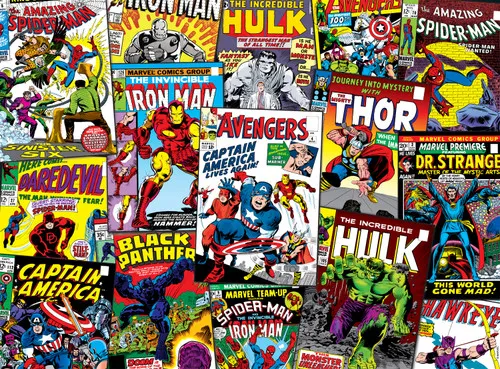
Since the beginning of modern comics in the 1930’s and 40’s, Black comic creators were not hired by mainstream white-owned publishing initiatives such as Timely (now known as Marvel Comics) and DC Comics. Even when Black creators tried to make their own publishing initiatives to counteract discriminatory hiring practices, newsprint vendors would not promote their content [1]. In fact, it was this exclusion that led to the premature termination of the Black publishing initiative All Negro Comics in 1947, only after releasing a single issue [2]. This discontinuity illustrates the historical limitations of Black intellectual property (IP) in comic books.
The Intellectual Property Center at McDowell Rice recognizes copyright and trademark as the two major forms of intellectual property within comics [3]. Principally, copyright is concerned with the creator’s ability to retain ownership over their “story, characters, textual and graphical elements of [their] work” while giving “artists the power over the way their artwork is reproduced, displayed or adapted”[4]. Further, trademarks “build customer loyalty to the characters through licensing and merchandising of characters,” allowing the IP owner’s works to transcend their original authorship and effectively become marketable enterprises on their own accord [5]. For instance, the “Batman” IP was created by white creators Bill Finger and Bob Kane in 1939 [6], but remains a financially profitable enterprise to this day through several film, gaming, and other comic adaptations. Batman notably also qualifies as a piece of “sustainable” intellectual property in comics, as it satisfies these three requirements: (1) the IP receives industry support, (2) the owner of the intellectual property owns the rights and is financially compensated for it, and most importantly, (3) the IP has an enduring fanbase. Batman is one of DC Comics’ most promoted characters [industry support]. DC owns the Batman IP [cemented in Wozniak v. Warner Bros] [7], controls the character’s media usage, and receives the revenue for the character [control over IP]. Finally, Batman is one of the most popular DC IPs [enduring fanbase].
However, there is a lack of comparable or semi-comparable examples of Black intellectual property in comics. These three requirements for intellectual property are entangled such that, in most cases, they are mutually dependent. In the same manner that one requirement can precipitate the others, the absence of a requirement can detract from the others as well. Explaining each requirement in tandem with demonstrative examples can help us understand why Black IP has struggled to become sustainable historically.
To understand “industry support,” it is important to acknowledge what institutional structures regulated Black IP in the 20th century. In the American comic book industry, large publishers such as Marvel and DC received the most visibility and published comics to a wider audience. However, regardless of the size of a publisher, all comic publishers up until the early 2010s were subject to the Comics Code Authority (CCA) [8]. A decade after the dissolution of All Negro Comics, a desire for pure storytelling for young readers and avoiding implicit government regulations on the comic book industry led to several prominent publishers uniting to form a self-regulatory group known as the CCA [9]. The group, which was formally established after a 1954 Congressional investigation, was designed to purify comics [10]. While the Code condemns racial discrimination in the Religious section (1) as impermissible [11], the CCA’s belief that comics should follow the law and should not critique institutional systems' limited Black expression and storylines critiquing institutional discrimination. For instance, the Code insisted that “the excessive use of [slang] should be discouraged and wherever possible good grammar shall be employed”, limiting African American English Colloquialisms [12]. In addition, each comic must present good triumphing over evil, heavily connoting that being good meant obeying all laws [13]. Comics that did not follow these standards did not receive the CCA Seal of Approval, and many shops would refuse to sell such comics [14]. For example, in the 1953 comic Judgement Day, writer Al Feldstein presents an experimental reality where astronaut Tarlton journeys to the planet Cybrinthia, populated by orange and blue robots. Tarlton’s task is to determine if the planet should integrate into human civilization. Seeing that the orange robots forced the blue to live in the “Blue Town on the South Side of the city”, the astronaut decided that the planet was not ready, given that “mankind on Earth [had now] learned to live together.” At the end of the comic, Tarlton removes his helmet and reveals that he is Black, underscoring Feldstein’s criticism of segregation practices. Consequently, “Exceeding his legal authority, the Code Authority’s administrator, Judge Charles Murphy, bristled at the progressive impact comics could have, and in this politicized context, he ordered EC Comics to change the race of the 'Judgment Day!' astronaut before the comic was reprinted” [15].
Further, Black creators working for mainstream companies in the industry did not own or were not attributed to their copyright/contribution to comic intellectual property. Under work-for-hire contracts, which were cemented after the Copyright Act of 1976, companies determine whether creators earn residuals for their creations since the IP belongs to the company [16].
This additional mechanism of “industry support” acted as a gridlock to prevent creators from receiving the financial compensation essential to the second requirement of sustainable comics. For example, DC owns the Batman IP instead of Finger and Kane [Wozniak v. Warner Bros] [17], showing how work-for-hire affected and currently affects POC creators working for mainstream publishing. Even though American comics storylines evolve due to a rotating list of contributing writers who add significant marks on character IP, DC and Marvel still own the rights and make a profit off of these characters. This is not to say that these two leading publishers do not compensate creators who have made significant contributions to a character, but there is a significant margin between these extra residuals and the extent of a creator’s contributions.
According to the New York Times, Billy Graham was the first Black artist to draw popular Marvel superheroes Black Panther and Luke Cage in the 1970s [18]. As a Harlem native, the artist was able to infuse his cultural upbringing when creating the art. Yet, at the end of the live-action television and film adaptations of these characters, his name was excluded from the credits [19]. While working for Marvel allowed Graham’s work to gain mainstream attention, “industry support” further explains the discrepancy that does not lead to lasting Black intellectual property.
The decline of comics as a prevalent medium in the 50s [20] can largely be attributed to the censorship of the CCA, underscoring why free will is essential when it comes to Black intellectual property. Case in point, comics books sold better and were more culturally relevant before the CCA [21]. For those seeking to escape such restrictions entirely, these creators established a creator-owned “underground comix” industry defined by freedom and complete creative control and where niche subgroups such as “geek feminists” and “civil activists” could produce content to their discretion [22].
However, for creators who moved to underground comics, gaining copyright ownership was exchanged for a lack of resources and mainstream promotion. When pioneering Black comix creator Larry Fuller published Ebon (1969), the first comic starring a Black superhero, he used his G.I. Bill to attend art school because he could not find a professional artist [23]. While he was able to tackle racial issues not yet explored in mainstream comics, the lack of promotion meant he could only publish 100 copies of his comic, leading the book to fall into obscurity [24]. In fact, Fuller retired, citing fatigue, and left independent publishing after his last comic, "The Dreamer," in 1992 [25]. Ultimately, gaining creative control and copyright depiction alone cannot guarantee the sustainability of Black intellectual property.
The previous examples may seem to indicate that having industry support or copyright retention cannot exist simultaneously. Consider the possibility that a Black IP was able to receive both protections. In that situation, the last requirement, “public affection,” may seem like the inevitable corollary. In reality, it is helpful to think of the public as the ultimate regulatory force, where underground comix was an attempt to solve the trade-off between “industry support” and creative control, the black publishing initiative Milestone Comics represented a genuine effort to guarantee a Black IP both support and control.
Derek T. Dingle, Dwanye McDuffie, Denys Cowan, and Michael Davis created Milestone Comics to give themselves and other Black creators the opportunity to create their own characters [26]. However, in order to compete, Milestone integrated their publishing line with DC, becoming the latter’s subsidiary [27]. A subsidiary is “any company that is owned or controlled directly or indirectly by another company” [12 USC § 1813(w)(4)] [28]. As described in Jeffrey A. Brown’s Black Superheroes, Milestone Comics, and Their Fans: Studies in Popular Culture, it is important to emphasize that Milestone was able to avoid the work-for-hire relationship by insisting upon total creative control, copyright retention for all Milestone characters, and sole discretion on merchandising and licensing agreements [29].
[T]he Milestone-DC contract, which was finalized in May of 1992, is comparable to the standard relationship between independent film production companies and major Hollywood studios. Much like large film studios who pay small independent production companies a creative service fee and a share of the royalties in exchange for the distribution rights of a movie, DC Comics has in effect licensed the characters, editorial services, and creative content of the Milestone books for an annual fee of $500,000 to $650,000 and a share of the profits [30].
Milestone gained the benefits of having DC promote their characters alongside titular heroes such as Batman and Superman. Additionally, DC was responsible for Milestone printing and distribution. Moreover, while they allowed their books to be reviewed by the Comics Code Authority, DC still published Milestone Comics regardless [31]. Readers craved this new era of comic books that was unafraid to defy the Comics Code and explore controversial topics such as sex, violence, and social commentary [32]. However, this desire for more controversial topics did not extend to the racial themes emblematic of Milestone Comics, leading to a gradual decline in readership [33]. In 1997, this initial publishing line ceased [34].
While the decline of Milestone Comics in the late 90’s may seem to indicate that Black IP is unsustainable, it is important to identify the way in which this Black publishing initiative was significant. Up until this point, contractual structures had cemented a pattern of Black authorial expression being controlled and regulated by an industry: Milestone differed because their parent company, DC, supported their autonomy as Black publishers, despite the regulations of the CCA. Moreover, they were able to publish their comics alongside prominent white characters, retain copyright, and profit from their work.
Ultimately, public affection was the ultimate factor contributing to Milestone’s decline. Industry support only works if the public is receptive to the work promoted by the industry. If DC publishes a comic, it is much more likely to get eyes on that comic than for a small publisher. However, the public decides if that comic will sell well or not. However, due to brand loyalty, there will always be some individuals who will buy such comics, which is why Milestone did sell initially. For small publishers, where creators retain their copyright, they may not have the resources to promote their comics as effectively, unless part of the public enjoys their comics. In this sense, niche audiences can sustain IP regardless of whether the IP comes from a mainstream or independent publisher. For an IP to become truly sustainable, the audience niche has to either become large enough or have enough purchasing power to create a longstanding franchise.
There is still an argument that Black intellectual property can become sustainable. In the post-cancellation Milestone era, years after the publishing initiative’s termination, DC released the television series Static Shock (2000) [35], recapitulating the teenaged-Milestone hero back into mainstream comic fandom attention. Subsequently, several Milestone characters, such as Static Shock [36], Icon [37], and Rocket [38], began to appear in popular DC television shows such as Justice League Unlimited (2004) and Young Justice (2010), which further gave exposure to these characters. As a result, Milestone characters began appearing in DC comics in the 2010s. Further, with the official relaunch of Milestone in 2021 [39], a pathway was created for sustainability for Black intellectual property.
While nearly every historical example of black intellectual property in comics could not fulfill the three requirements, Milestone Comics provides a pathway for more Black IP to become truly sustainable.
References
[1] Davis, All-Negro Comics and Lion Man, 2019.
[2] Arthur, Stan Lee Copyrights, 2018.
[3] DC, Batman: A History of Heroics, 2019.
[4] Wozniak v. Warner Bros., 2024.
[5] Nyberg, Comics Code History, n.d.
[6] O’Brien, Revisiting Comics History, 2019.
[7] CBLDF, The Comics Code of 1954, n.d.
[8] Commander, The Space for Race, 2016.
[9] Saval, Copyrights, Trademarks, and Terminations, 2014.
[10] Howe, Black Panther & Luke Cage Article, 2018.
[11] Hajdu, The Ten-Cent Plague, 2008.
[12] O’Brien, Comic Creators: A Cultural Workers’ History, 2024.
[13] Wolf, ‘70s Comix Pioneer Article, 2022.
[14] Milestone Media, The Milestone Story, n.d.
[15] U.S. Code, Title 15 §1060, n.d.
[16] Brown, Black Superheroes, Milestone Comics, and Their Fans, 2001.
[17] Static Shock, 2000–2004.
[18] Justice League Unlimited, 2004–2006.
[19] Young Justice, 2010–present.
[20] DC Publicity, Milestone Return Announcement, 2020.
Works Cited
Davis, Blair. “All-Negro Comics and the Birth of Lion Man, the First African American Superhero.” Inks: The Journal of the Comics Studies Society 3, no. 3 (2019): 273–97. https://dx.doi.org/10.1353/ink.2019.0023
Arthur. “Stan Lee Copyrights: Protecting the Legacy of a Comic Book Legend.” Intellectual Property Center, November 15, 2018. https://theipcenter.com/2018/11/stan-lees-copyrights-and-work-for-hire/
DC. “Batman, a History of Heroics: The Beginning.” DC Blog, March 19, 2019. https://www.dc.com/blog/2019/03/19/batman-a-history-of-heroics-the-beginning
Christopher Wozniak v. Warner Bros. Entertainment Inc. 22 Civ. 8969 (PAE), U.S. District Court, S.D.N.Y., opinion and order, March 27, 2024.
Nyberg, Amy Kiste. “Comics Code History: The Seal of Approval.” Comic Book Legal Defense Fund. Accessed December 2, 2025. https://cbldf.org/comics-code-history-the-seal-of-approval/
O’Brien, Sean. Revisiting Comics History: Creative Labor and Capitalism. PhD diss., Wayne State University, 2019. https://ezproxy.cul.columbia.edu/login?url=https://www.proquest.com/dissertations-theses/revisiting-comics-history-creative-labor/docview/2304962712/se-2
Comic Book Legal Defense Fund. “The Comics Code of 1954.” CBLDF. Accessed November 26, 2025. https://cbldf.org/the-comics-code-of-1954/
Commander, Michelle D. “The Space for Race: Black American Exile and the Rise of Afro-Speculation.” ASAP/Journal 1, no. 3 (2016): 409–37. https://dx.doi.org/10.1353/asa.2016.0039
Saval, Joshua. “Copyrights, Trademarks, and Terminations: How Limiting Comic Book Characters in the Film Industry Reflects on Future Intellectual Property Issues for Character Law.” FIU Law Review 9, no. 2 (2014): 405–. https://doi.org/10.25148/lawrev.9.2.15
Howe, Sean. “Black Panther, Luke Cage and the First Black Artist to Draw Both.” The New York Times, March 7, 2018. https://www.nytimes.com/2018/03/07/movies/black-panther-luke-cage-artist-billy-graham.html
Hajdu, David. The Ten-Cent Plague: The Great Comic-Book Scare and How It Changed America. New York: Farrar, Straus and Giroux, 2008. Internet Archive. https://archive.org/details/tencentplaguegre00hajd/page/n463/mode/2up
O’Brien, Sean. Comic Creators: A Cultural Workers’ History of the Comics Industry, 1937–2024. PhD diss., Wayne State University, 2024. https://ezproxy.cul.columbia.edu/login?url=https://www.proquest.com/dissertations-theses/comic-creators-cultural-workers-history-comics/docview/3157829527/se-2
Wolf, Olivia. “‘70s Comix Pioneer Who Created the First Titular Black Superhero Gets His Due.” Artbound, PBS SoCal, June 14, 2022. https://www.pbssocal.org/shows/artbound/larry-fuller-ebon
Milestone Media. “The Milestone Story.” Milestone Media. Accessed November 25, 2025. https://milestone.media/legacy-history/the-milestone-story/
U.S. Code, Title 15, Section 1060. Legal Information Institute, Cornell Law School. Accessed November 25, 2025. https://www.law.cornell.edu/definitions/uscode.php?width=840&height=800&iframe=true&def_id=12-USC-1060924179-1626177225&term_occur=999
Brown, Jeffrey A. Black Superheroes, Milestone Comics, and Their Fans. Jackson, MS: University Press of Mississippi, 2001.
Static Shock. Produced by Warner Bros. Animation. Aired September 23, 2000 – May 14, 2004, on WB Television.
Justice League Unlimited. Produced by Warner Bros. Animation. Aired July 31, 2004 – May 13, 2006, on Cartoon Network.
Young Justice. Produced by Warner Bros. Animation. Aired November 26, 2010 – present, on Cartoon Network/DC Universe.
DC Publicity. “DC Confirms Milestone Return to Publishing in February 2021!” DC Comics Blog, August 22, 2020. https://www.dc.com/blog/2020/08/22/dc-confirms-milestone-return-to-publishing-in-february-2021