ICE Detention and Racial Disparities
Written by: Aqsa Ahmed
Edited by: Brett Fisher and Emma Farley
Abstract:
Every year, millions of people in the United States are being influenced by immigration enforcement, yet not everyone has the same experience. Black immigrants are more likely than other groups to be detained, spend more time in ICE custody, and be deported more frequently. These findings indicate profound racial discrepancies in the immigration system, raising serious civil rights issues. This article explores ICE incarceration by using a civil rights perspective, focusing on how racism affects enforcement, the impact on Black immigrants, and why change is so necessary. Understanding all of this can help people realize the injustice of the system and the efforts needed to defend the rights of Black immigrants in the United States.
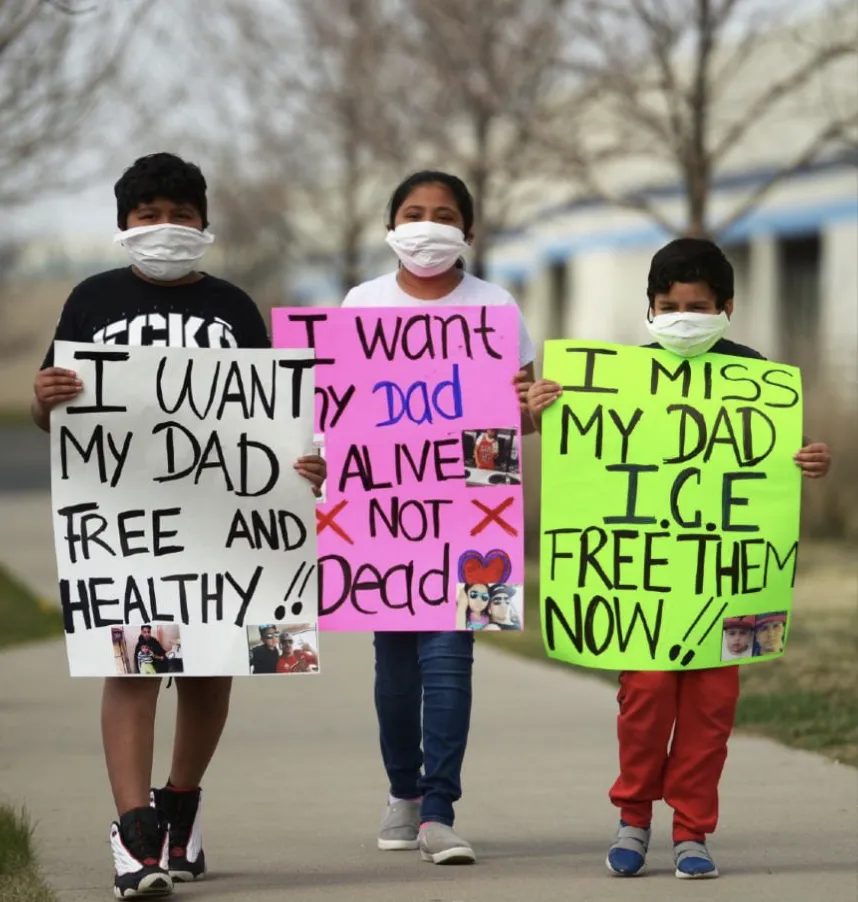
The immigration detention system in the United States has grown dramatically over the past few decades. Immigration and Customs Enforcement (ICE), was established in 2003 and now oversees hundreds of detention facilities across the country. Policies from the “tough on crime” era, combined with increased immigration enforcement, have led to more people being imprisoned for more extended periods. A nonprofit organization called Freedom for Immigrants keeps an eye on immigration detention facilities and reports any abuses that occur there. They highlight how the system frequently mistreats Black and Brown immigrants and help detainees in getting support. A survey conducted by the non-profit Freedom for Immigrants shows that Black migrants make up only 6% of ICE inmates but account for 28% of abuse allegations reported to the National Immigration Detention Hotline [1]. Many Black immigrants, especially those from Africa and the Caribbean, become entangled in this system even after living in the U.S. for years and having no criminal record. With that in mind, the report also highlights that detainees often face poor living conditions, limited access to legal representation, and a lack of transparency in detention decisions [2]. Understanding this background helps explain how racial inequities arise in ICE custody and why civil-rights concerns remain so urgent.
Black migrants are disproportionately affected by the United States’ immigration detention system, reflecting systemic racial biases. According to Freedom for Immigrants, Black migrants make up only 6% of the ICE prisoner population but account for 28% of abuse-related allegations reported to the National Immigration Detention Hotline [3]. This significant gap highlights the pervasive nature of racial prejudice within U.S. detention facilities. Black prisoners in Alabama, Georgia, and Louisiana are nearly twice as likely as their non-Black counterparts to experience abuse. Black non-binary migrants are more than 3.5 times likely to face abuse while in immigration custody. Furthermore, over 53% of the most serious cases mediated by Freedom for Immigrants over six years involved Black migrants. With that said, detainees frequently encounter inadequate housing, limited access to legal representation, and a lack of transparency in detention decisions.
According to the ACLU, immigrants incarcerated at the Louisiana State Penitentiary, commonly called Angola, face harsh conditions, including poor sanitation, insufficient basic supplies, and unsafe drinking water [4]. Angola’s name comes from its history as a former plantation where enslaved people worked, and it has long maintained a reputation for racially motivated punishment and harsh treatment [5]. This pattern of abuse is not isolated but reflects systemic anti-Black prejudice. Addressing these disparities requires structural reforms, including the abolition of immigration detention and the implementation of laws that protect the dignity and rights of all individuals, regardless of race.
In October 2025, the ACLU filed a lawsuit challenging the Biden administration’s decision to detain immigrants at Angola’s Camp 57, a facility reopened in 2025 after being closed since 2018 [6]. The lawsuit alleges that Angola is “notorious for its harsh conditions and history of solitary confinement” and that detaining immigrants there subjects them to “inhumane and punitive treatment” in violation of constitutional protections. It also claims that holding individuals at Angola constitutes unlawful double jeopardy, as many detainees had already served prior sentences [7].
The ACLU lawsuit highlights several serious issues at Angola. According to the filing, detainees are subjected to “poor sanitation, a lack of necessities, and unsafe drinking water,” which violates the Supreme Court’s mandate in Zadvydas v. Davis that immigration detention must be non-punitive [8]. The facility’s history as a maximum-security prison, combined with its continued use of solitary confinement, “exacerbates the risks of harm to detainees” and raises significant civil rights concerns [9].
This case highlights the broader issue of racial disparities in ICE detention. Reopening a facility with a history of racially motivated punishment demonstrates how systemic racism continues to influence immigration policies. As the ACLU lawsuit emphasizes, such practices “highlight the urgent need for reform in how the U.S. handles immigration detention,” particularly for Black immigrants who are disproportionately affected [10].
The Angola lawsuit exposes racial injustices and civil rights violations occurring in ICE detention centers. Black immigrants, already at higher risk of detention and mistreatment, face even greater harm in such environments. The ACLU notes that conditions in Angola “increase the risks of harm to detainees,” showing a systemic problem that disproportionately affects Black immigrants [11]. This aligns with earlier research showing Black detainees are overrepresented in abuse claims: although they make up only 6% of ICE prisoners, they account for 28% of abuse reports [12]. They frequently encounter limited access to legal aid, poor living conditions, and opaque detention decisions.
According to Human Rights First, Black immigrants face significant discrimination within the U.S. immigration detention system, including harsher treatment, limited access to legal help, and longer detention times than other groups [13]. Understanding these racial disparities is important because they reflect larger civil rights problems affecting thousands of people every year. Evidence from Freedom for Immigrants, Human Rights First, and the Angola case shows that Black immigrants face disproportionate abuse, limited legal access, and extremely poor detention conditions. Reform is urgently needed, including stronger oversight of detention centers, closing facilities with abusive histories, increasing legal support for detainees, and creating alternatives to incarceration. These changes would help reduce racial disparities and protect civil rights.
In conclusion, the Angola lawsuit and the research connected to it show that Black immigrants face serious and unequal treatment in ICE detention, and this happens at much higher rates than for other groups. When we look at these problems through a civil rights lens, it becomes clear that the system needs major reform and long-term advocacy. Protecting the rights of Black immigrants is both a moral duty and a legal requirement. Recent actions from the Trump administration, such as increasing detention, reducing oversight, and weakening protections for vulnerable immigrants, are making these issues worse because they slow down or even reverse progress in prison and detention reform. Without strong reforms, racial injustice will continue and civil rights will continue to be violated [14].
[1] Freedom for Immigrants. Uncovering the Truth: Violence and Abuse Against Black Migrants in Immigration Detention. Freedom for Immigrants et al., October 2022. https://www.freedomforimmigrants.org/report-uncovering-the-truth.
[2] Ibid.
[3] Ibid.
[4] American Civil Liberties Union. “ACLU Says ICE Is Unlawfully Punishing Immigrants at a Notorious Louisiana Detention Center.” Associated Press, October 6, 2025. https://apnews.com/article/cab3e0e6f6936ed48505a7726eb8becd.
[5] Georgetown University. “The History of Angola.” Georgetown College News. Accessed November 25, 2025.
https://college.georgetown.edu/news-story/harbert-instrument-state/#:~:text=The%20History%2 0of%20Angola&text=In%201870%2C%20Samuel%20L.,am%20interested%20in%20that%20c hange.
[6] Ibid.
[7] Ibid.
[8] Zadvydas v. Davis, 533 U.S. 678 (2001).
[9] Ibid.
[10] Ibid.
[11] Ibid.
[12] Freedom for Immigrants. Uncovering the Truth: Violence and Abuse Against Black Migrants in Immigration Detention.
[13] Human Rights First. Anti-Black Discrimination within U.S. Immigration Detention and Enforcement Systems. Human Rights First, 2022.
https://humanrightsfirst.org/wp-content/uploads/2022/09/CERD-1pger_Anti-Black-Discriminati on-within-US-Immigration-Detention-and-Enforcement-Systems-1.pdf.
[14] Capital B News. “Black Migrants Face Higher Deportation Rates.” June 2025. https://capitalbnews.org/black-migrants-face-higher-deportation-rates.
Works Cited
American Civil Liberties Union. “ACLU Says ICE Is Unlawfully Punishing Immigrants at a Notorious Louisiana Detention Center.” Associated Press, 6 Oct. 2025, https://apnews.com/article/cab3e0e6f6936ed48505a7726eb8becd.
Capital B News. “Black Migrants Face Higher Deportation Rates.” June 2025, https://capitalbnews.org/black-migrants-face-higher-deportation-rates.
Freedom for Immigrants, et al. Uncovering the Truth: Violence and Abuse Against Black Migrants in Immigration Detention. Oct. 2022, https://www.freedomforimmigrants.org/report-uncovering-the-truth.
Georgetown University. “The History of Angola.” Georgetown College News, https://college.georgetown.edu/news-story/harbert-instrument-state/#:~:text=The%20Hist ory%20of%20Angola&text=In%201870%2C%20Samuel%20L.,am%20interested%20in %20that%20change. Accessed 25 Nov. 2025.
Human Rights First. Anti-Black Discrimination within U.S. Immigration Detention and Enforcement Systems. 2022, https://humanrightsfirst.org/wp-content/uploads/2022/09/CERD-1pger_Anti-Black-Discri mination-within-US-Immigration-Detention-and-Enforcement-Systems-1.pdf.
Zadvydas v. Davis, 533 U.S. 678. 2001.