ICE Profiling Doesn’t Add Up: A Numbers-based Approach to the Reasonable Suspicion Question
Written by: Justin James
Edited by: Cindy Owusu and Chastity Blair
Abstract:
This article argues that immigration officers should not be authorized to make stops based on the race or ethnicity of the person they intend to stop. The Noem v. Vasques Perdomo case brings this issue to the Supreme Court and to the forefront of American attention. While the 9th Circuit prepares to hear and decide on the case, the Supreme Court granted a stay application to the Federal Government, meaning immigration officials will temporarily continue applying the contested immigration measure, despite the ongoing appellate proceedings in the Ninth Circuit. This piece seeks to go beyond the arguments offered about the damage of such an allowance by revealing the practical deficiencies of using race to establish reasonable suspicion. In doing so, this article explores the meaning of race in U.S. law and its enforcement.
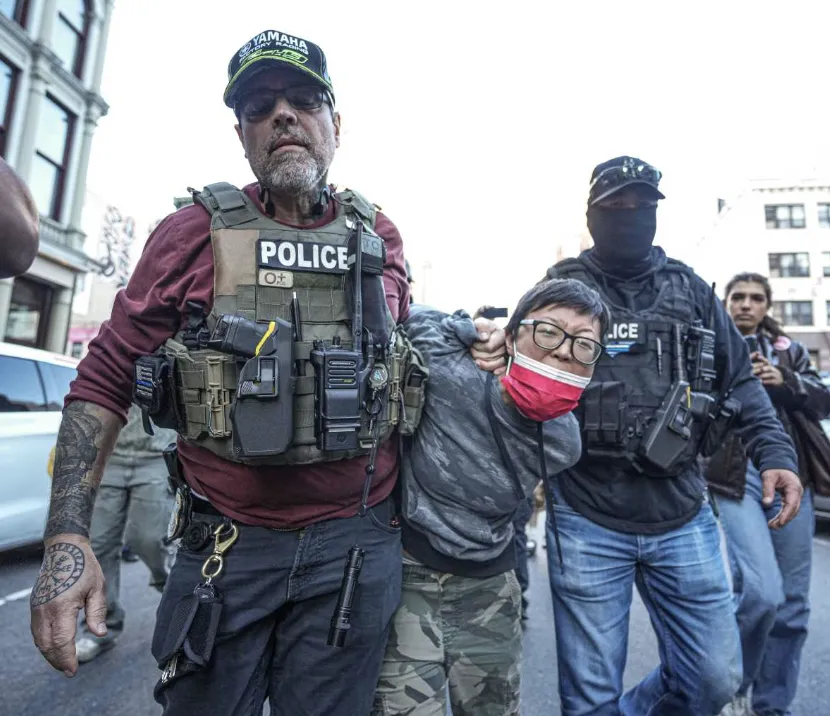
In October, ICE raided Canal Street in New York. Popular, self-described MAGA influencer Savanah Hernandez tweeted two days before the raid that, “the entire sidewalk is filled with illegals who state they are from Senegal and I watched as they fled police. [...] There were at least 20-30 illegals in the area,” and called on ICE to inspect the area [1]. The subtle jump from “stated they were from Senegal” to assuming they are illegal immigrants is representative of the justification utilized by ICE for their stops and arrests: that ethnicity or race is tied to legal immigration status. It can thus provide reasonable suspicion of unauthorized presence. This same microaggressive practice is central to the Noem v. Vasquez Perdomo case. Filed after ICE performed immigration stops based on race, ethnicity, spoken language, or job type, the plaintiffs argued that such stops were a violation of Fourth Amendment rights. There is such immense diversity among United States citizens that stopping suspected undocumented immigrants based on their race or ethnicity is unconstitutional because those identities are not enough to establish reasonable suspicion of “illegal” immigration.
While many liberal justices who argued the case stated that race is inadequate to signify immigration status for granted, a lack of universal agreement persists. Noem v. Vasquez Perdomo (2025) arose from large-scale immigration raids conducted in Los Angeles, in which plaintiffs alleged that federal officers unlawfully detained individuals based on race, ethnicity, language, and location in violation of the Fourth Amendment. The Supreme Court granted the federal government’s request to pause the lower court’s injunction, lifting a lower-court order that had prohibited such stops. This allowed immigration officers to resume detaining individuals under those profiling-based factors while the case proceeds. Yet, the Fourth Amendment protects people from unreasonable searches and seizures by the government, meaning that law enforcement must have a valid legal justification, such as a warrant supported by probable cause or a recognized exception, to stop, detain, search, or arrest someone. Justice Sotomayor, dissenting from the 6-3 Court decision to grant a stay on ICE’s use of race and ethnicity, explains, “they are seizing people using firearms, physical violence, and warehouse detentions. Nor are undocumented immigrants the only ones harmed by the Government’s conduct. United States citizens are also being seized, taken from their jobs, and prevented from working to support themselves and their families” [2]. She argued that allowing the use of race creates unjust inequality in addition to inciting harm to those being searched and the people surrounding the scene.
While true, such an argument does not dismantle the crux of the conservative justification for allowing racial profiling: the belief that race can signify authorization of presence. In Justice Kavanaugh’s concurrence, he explains, “reasonable suspicion is a lesser requirement than probable cause and ‘considerably short’ of the preponderance of the evidence standard” [3]. Kavanaugh’s opinion implies that race, ethnicity, or other factors warrant profiling and fulfill less strict categories for “stop and frisk” since ICE operates under reasonable suspicion for stops. This belief that race and ethnicity provide insight into legal immigration status leads ICE officers to make arrests based on external traits in the first place. This is not the case, though, because race and ethnicity are not so simple.
Race is a social construct. Therefore, the government and courts must choose a definition. Before considering whether race can indicate immigration authorization status, it is essential to understand race itself. The Journal of the National Medical Association found a lack of evidence to justify race-based research. Eddie L. Hoover explains that there is no basis in the genetic code for race [4]. In the Noem v. Vasquez case, Kavanaugh does not define what race means in this context in his concurrence, nor does Sotomayor in her dissent. Much of the U.S. government, including the Census, uses a definition of race outlined by the Office of Management and Budget [5]. The OMB recognizes the minimum categories to be included in the Census as American Indian or Alaska Native, Asian, Black or African American, Hispanic or Latino, Middle Eastern or North African, Native Hawaiian or Pacific Islander [6]. This could be the definition that the government and courts intended to use in Noem v. Vasquez. However, based on the aforementioned scientific literature, these categories are largely abstract perceptions. In fact, the category “Middle Eastern or North African” was added only recently in a 2024 update [7]. The fact that the Census added a category only one year ago exemplifies that race is not fundamental to a biological reality, nor an objective fact. With there being no way to define race based on biology, the implication is that ICE will operate based on the US definitions of race.
Using race as a proxy for immigration status is inaccurate because race can be misleading. Most undocumented immigrants who immigrate to the US come from Mexico [8]. With this in mind, it is understandable why one may claim it is logical for ICE officers to be suspicious of people who look Mexican since there are proportionally so many unauthorized immigrants from there. This seems to be the reasoning that leads Kavanaugh to point out that reasonable suspicion is less strict than probable cause. Nevertheless, race and ethnicity are not linear. There is not one way to ‘look Mexican,’ which would need to be the case to justify the usage of race for reasonable suspicion. According to the CIA, Mexico is 62% Mestizo, 21% predominantly Amerindian, and 7% Amerindian, and 10% other (mostly European) [9]. Unlike the identifier “Mexican", these identifiers are directly tied to the race of the people who belong to them. For example, Mestizo means mixed, and the term comes from the hierarchy created by the Spanish based on a child’s percentage of whiteness (Spanish). This data indicates that there are at least four distinct racial groups that make up Mexico. Thus, there could never be a way for an ICE agent to establish reasonable suspicion because someone looks to be of Mexican origin. In reality, if an ICE officer claims they had reasonable suspicion because someone looked to be of Mexican origin, they must mean that the person looked like the officer’s idea of what someone of Mexican origin looks like.
The same is true for other immigrant populations in the United States. For example, in 2022, India was the country from which the third-most undocumented immigrants came [10]. Therefore, one might argue that appearing Indian can give an ICE official reasonable suspicion. However, India is composed of 72% Indo-Aryans, 25% Dravidians, and 3% others [11]. Again, the various racial groups present in the country make it impossible for an ICE officer to identify that someone “looks Indian.” Rather, when they believe they make such an identification, they instead identify someone who matches their idea of what an Indian looks like. In this way, to say that race provides ICE officers with reasonable suspicion of immigration status is to encode stereotyping into our government policy.
Apparent ethnicity also cannot grant reasonable suspicion. To defend ICE profiling, one may argue that if race cannot work as a proxy, ethnicity itself can be used instead. In practice, that argument would mean that ICE agents may not stop someone simply because they look Mexican. Still, if they were to know for certain that they had a Mexican ethnicity, then that would be cause for reasonable suspicion. This reasoning, however, is flawed because ethnicity does not signify legal immigration status. The United States v. Brignoni-Ponce case supports this fact. According to the Oyez database, border patrol stopped Brigoni-Ponce’s vehicle because of his apparent Mexican descent. The court explained that “in the context of border area stops, the reasonableness requirement of the Fourth Amendment demands something more than the broad and unlimited discretion sought by the government. Roads near the border carry not only ‘aliens’ seeking to enter the country illegally, but a large volume of legitimate traffic as well.” Thus, “to approve roving patrol stops of all vehicles in the border area, without any suspicion that a particular vehicle is carrying illegal immigrants, would subject the residents of these and other areas to potentially unlimited interference with their use of the highways, solely at the discretion of Border Patrol officers” [12]. This traffic argument could also be applied to ethnicity.
The Court simply asserts that there is a “large volume of legitimate traffic,” without quantifying it percentage-wise, and there are even numbers to back up the claim when talking about ethnicity. There were “an estimated 37.2 million Hispanics of Mexican origin [living] in the United States in 2021” [13]. Approximately 4.81 million Mexican undocumented immigrants are in the US [14]. Of that number, nearly 90% of people of Mexican ethnicity have United States government documents. Factually, the vast majority of ethnic Mexicans are documented. Similarly to how approving the government to set up roving patrols would unnecessarily subject all residents to potentially unlimited interference with their highway by the Border Patrol, approving the government to stop any ethnic Mexican would unnecessarily subject all ethnic Mexicans in the US to interference in their lives by ICE.
Once more, the same can be said for other immigrant populations with large numbers of undocumented immigrants. Undocumented immigrants from the Philippines make up the seventh largest population of undocumented immigrants, and there were 294,000 in 2023 [15]. As of 2023, there were 4.2 million Filipinos in the US [16]. That means that just 7% of people who are ethnically Filipino in the US are undocumented immigrants. Thus, enabling ICE to stop any people who are ethnically Filipino would unnecessarily subject all ethnic Filipinos in the US to interference in their lives by ICE. By the same token, ethnicity also does not work to establish reasonable suspicion of “illegal” presence, because the U.S. is so ethnically diverse, and the vast majority of ethnic minorities are documented.
Due to the racial diversity of the countries from which people immigrate, the ethnic diversity of the U.S., and the ambiguity of race, reasonable cause cannot be established based on race or ethnicity. Essentially, Kavanaugh’s argument that reasonable suspicion is a lesser requirement than probable cause is futile because profiling cannot provide information that fulfills either. While this fact may seem obvious to some, we must consider that it might not be for ICE. The officers simply cannot all be experts, given ICE’s need to be more lenient in recruiting due to hiring problems. Indeed, when it came time for the written exam about the Immigration and Nationality Act and the Fourth Amendment, “almost half of these recruits failed an open-book test” [17]. It is very possible that, to these inexperienced agents, race or ethnicity would seem like a valid way to establish reasonable suspicion for immigration status. But the courts must use their expertise to consider the complex reality of race and ethnicity, and take advantage of the Noem v. Vasquez Perdomo case to inform ICE that such factors do not establish reasonable suspicion.
[1] Hernandez, Savanah @Savsays. “WATCH: A huge group of African illegal immigrants are operating a black market on the corner of Broadway and Canal St in New York City. The entire sidewalk is.” X (formerly Twitter), 19 October 2025, 4:45 p.m., https://x.com/Savsays/status/1980012446422327410.
[2] Kristi Noem, Secretary, Department of Homeland Security, et al. v. Pedro Vasquez Perdomo, et al., No. 25A169 (U.S. Sept. 8, 2025) (Sotomayor, J., dissenting), 606 U.S. ____ (2025), 19.
[3] Kristi Noem, Secretary, Department of Homeland Security, et al. v. Pedro Vasquez Perdomo, et al., No. 25A169 (U.S. Sept. 8, 2025) (Kavanaugh, J., dissenting), 606 U.S. ____ (2025), 5.
[4] Hoover, Eddie L. 2007. “There Is No Scientific Rationale for Race-Based Research.” Journal of the National Medical Association 99, no. 6 (June): 690. https://pmc.ncbi.nlm.nih.gov/articles/PMC2574368/.
[5] “About the Topic of Race.” December 20, 2024. U.S. Census Bureau. https://www.census.gov/topics/population/race/about.html.
[6] “Updates to Race/Ethnicity Standards for Our Nation.” December 20, 2024. U.S. Census Bureau. https://www.census.gov/about/our-research/race-ethnicity/standards-updates.html.https://www.census.gov/about/our-research/race-ethnicity/standards-updates.html.
[7] “About the Topic of Race.” U.S. Census Bureau.
[8] Passel, Jeffrey S., and Jens M. Krogstad. July 22, 2024. “What we know about unauthorized immigrants living in the U.S.” Pew Research Center. https://www.pewresearch.org/short-reads/2024/07/22/what-we-know-about-unauthorized-immigrants-living-in-the-us/.
[9] “Mexico Country Summary.” December 19, 2023. CIA. https://www.cia.gov/the-world-factbook/about/archives/2023/countries/mexico/summaries/.
[10] Passel, 2024
[11] “India.” January 20, 2017. State.gov. https://2009-2017.state.gov/outofdate/bgn/india/93310.htm.
[12] "United States v. Brignoni-Ponce." Oyez. Accessed November 23, 2025. https://www.oyez.org/cases/1974/74-114.
[13] Moslimani, Mohamad, Luis Noé, and Sono Shah. August 16, 2023. “Facts on Hispanics of Mexican origin in the United States.” Pew Research Center. https://www.pewresearch.org/race-and-ethnicity/fact-sheet/us-hispanics-facts-on-mexican-origin-latinos/.
[14] Baker, Bryan, and Robert Warren. “Estimates of the Unauthorized Immigrant Population Residing in the United States: January 2018–January 2022.” Office of Homeland Security Statistics, April 2024. https://ohss.dhs.gov/sites/default/files/2024-06/2024_0418_ohss_estimates-of-the-unauthorized-immigrant-population-residing-in-the-united-states-january-2018%25E2%2580%2593january-2022.pdf
[15] Van Hook, Jennifer, Ariel G. Ruiz Soto, and Julia Gelatt. February 2, 2025. “The Unauthorized Immigrant Population Expands amid..” Migration Policy Institute. https://www.migrationpolicy.org/news/unauthorized-immigrant-population-mid-2023.
[16] Im, Carolyne. May 1, 2025. “Facts about Filipinos in the U.S.” Pew Research Center, (May). https://www.pewresearch.org/race-and-ethnicity/fact-sheet/asian-americans-filipinos-in-the-u-s/.
[17] Benen, Steve. October 23, 2025. “ICE’s efforts to recruit new agents run into some embarrassing setbacks.” MS Now From the Rachel Maddow Show. https://www.ms.now/rachel-maddow-show/maddowblog/ice-recruits-agents-standards-rcna239417.
Works Cited
“About the Topic of Race.” U.S. Census Bureau. December 20, 2024. https://www.census.gov/topics/population/race/about.html.
Baker, Bryan, and Robert Warren. Estimates of the Unauthorized Immigrant Population Residing in the United States: January 2018–January 2022. Office of Homeland Security Statistics, April 2024. https://ohss.dhs.gov/sites/default/files/2024-06/2024_0418_ohss_estimates-of-the-unauthorized-immigrant-population-residing-in-the-united-states-january-2018%25E2%2580%2593january-2022.pdf
Benen, Steve. “ICE’s Efforts to Recruit New Agents Run Into Some Embarrassing Setbacks.” MS Now from the Rachel Maddow Show, October 23, 2025. https://www.ms.now/rachel-maddow-show/maddowblog/ice-recruits-agents-standards-rcna239417.
Hernandez, Savanah (@Savsays). “WATCH: A Huge Group of African Illegal Immigrants Are Operating a Black Market on the Corner of Broadway and Canal St in New York City. The Entire Sidewalk Is…” X (formerly Twitter), October 19, 2025, 4:45 p.m. https://x.com/Savsays/status/1980012446422327410
Hoover, Eddie L. “There Is No Scientific Rationale for Race-Based Research.” Journal of the National Medical Association 99, no. 6 (June 2007): 690–694. https://pmc.ncbi.nlm.nih.gov/articles/PMC2574368/.
Im, Carolyne. “Facts about Filipinos in the U.S.” Pew Research Center, May 1, 2025. https://www.pewresearch.org/race-and-ethnicity/fact-sheet/asian-americans-filipinos-in-the-u-s/.
Kristi Noem, Secretary, Department of Homeland Security, et al. v. Pedro Vasquez Perdomo, et al., No. 25A169 (U.S. Sept. 8, 2025). (Kavanaugh, J., dissenting). 606 U.S. ____ (2025).
Kristi Noem, Secretary, Department of Homeland Security, et al. v. Pedro Vasquez Perdomo, et al., No. 25A169 (U.S. Sept. 8, 2025). (Sotomayor, J., dissenting). 606 U.S. ____ (2025).
“Mexico Country Summary.” Central Intelligence Agency, December 19, 2023. https://www.cia.gov/the-world-factbook/about/archives/2023/countries/mexico/summaries/.
Moslimani, Mohamad, Luis Noé, and Sono Shah. “Facts on Hispanics of Mexican Origin in the United States.” Pew Research Center, August 16, 2023. https://www.pewresearch.org/race-and-ethnicity/fact-sheet/us-hispanics-facts-on-mexican-origin-latinos/.
Passel, Jeffrey S., and Jens Manuel Krogstad. “What We Know About Unauthorized Immigrants Living in the U.S.” Pew Research Center, July 22, 2024. https://www.pewresearch.org/short-reads/2024/07/22/what-we-know-about-unauthorized-immigrants-living-in-the-us/.
State Department. “India.” January 20, 2017. https://2009-2017.state.gov/outofdate/bgn/india/93310.htm.
United States v. Brignoni-Ponce, 422 U.S. 873 (1975). Oyez. Accessed November 23, 2025. https://www.oyez.org/cases/1974/74-114.
“Updates to Race/Ethnicity Standards for Our Nation.” U.S. Census Bureau. December 20, 2024. https://www.census.gov/about/our-research/race-ethnicity/standards-updates.html.
Van Hook, Jennifer, Ariel G. Ruiz Soto, and Julia Gelatt. “The Unauthorized Immigrant Population Expands amid…” Migration Policy Institute, February 2, 2025. https://www.migrationpolicy.org/news/unauthorized-immigrant-population-mid-2023.