Intellectual Property Law and the Code Conundrum: How Current Software Patents and Copyrights Limit Innovation
Written by: Zoie Geronimi
Edited by: Monette Scipio
Abstract:
This legal review examines the challenges posed by applying traditional intellectual property (IP) frameworks—patents and copyrights—to software development. While patents incentivize innovation through exclusivity and copyrights protect creative expressions, their application to software often disrupts the collaborative and iterative processes that define the industry. Alice Corp. v. CLS Bank and Google v. Oracle highlight how patent thickets, lengthy approval processes, and restrictive copyright protections hinder technological progress. Patents and copyrights fail to address the unique nature of software as both a functional tool and an expression of creativity.
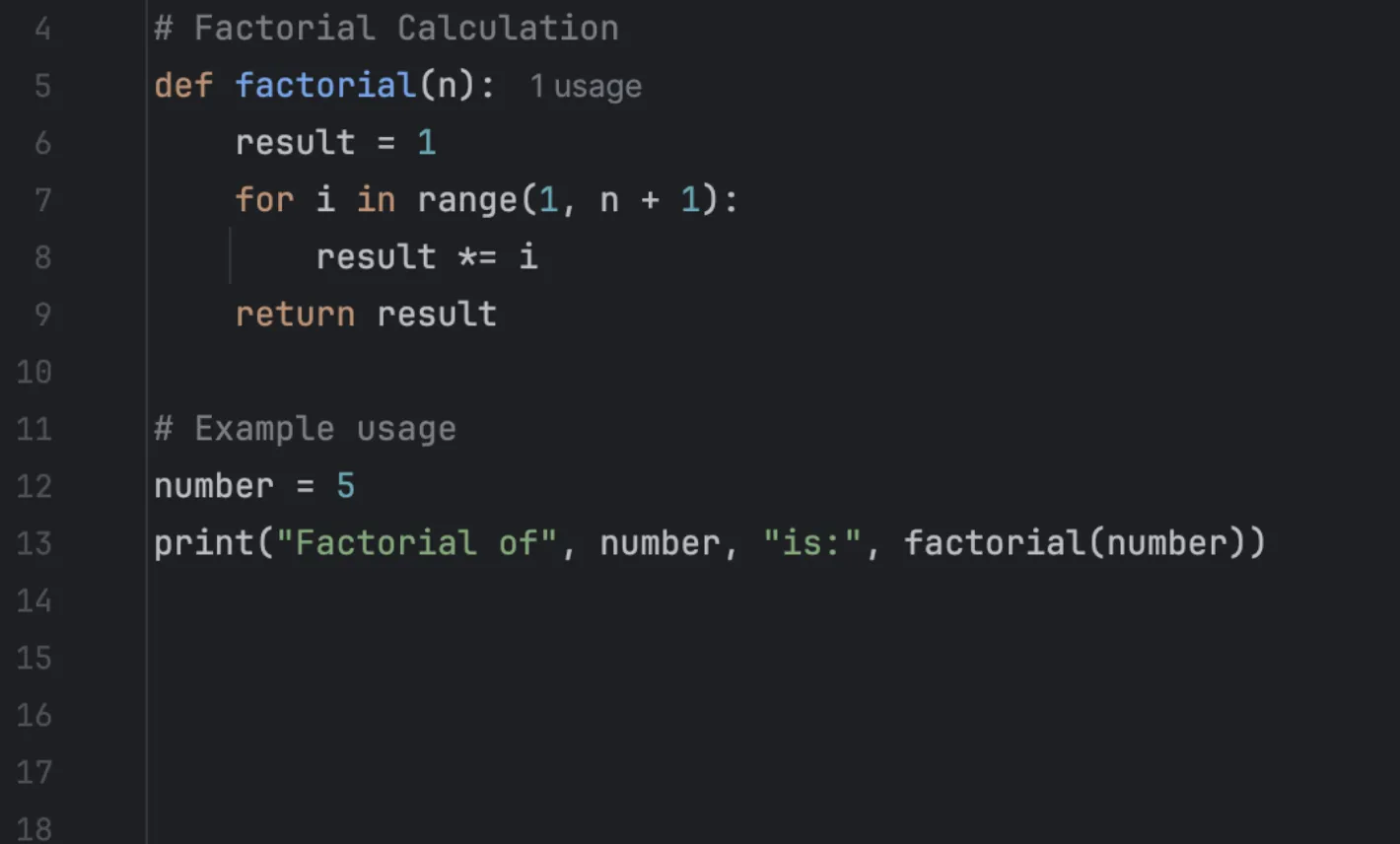
Intellectual property (IP) law, historically designed to protect physical inventions, creative works, and proprietary processes, has faced significant challenges in the realm of software development. [7] Patents and copyrights, the traditional cornerstones of IP protection, often disrupt the collaborative and iterative nature of software innovation. Rather than fostering creativity and technological advancement, these legal frameworks create barriers that undermine the progress they intend to protect.
Patents grant inventors exclusive rights to their inventions for a fixed period, requiring that the invention be novel, non-obvious, and useful. [11] Copyrights, in contrast, exclusively protect expressions of ideas (such as books or music) from unauthorized copying and do not extend to underlying ideas or methods. [12] For example, a novel, non-obvious, and useful algorithm for encrypting data could be patented because it represents a unique and useful method to solve a problem. The specific code implementing the algorithm would be protected by copyright, as it is considered an expression of the idea. While the patent prevents others from creating and using the algorithm without permission, the copyright prevents others from copying the exact lines of code written by the original developer.
Traditionally, these processes have included a level of physicality. Never before has it included business methods or a way of thinking. Thus, computer programs fall into a gray area between the traditional definitions of copyright and patents. It is not uncommon for computer programs today to contain thousands of separately patentable processes and algorithms. However, this reality may increase the risk of infringing patents that may already exist. This contributes to the proliferation of “patent thickets”—dense webs of overlapping patents that hinder innovation. [3] The average time to secure a patent ranges from 22 to 30 months, a period incompatible with the fast-paced nature of software development. [10] Unlike static inventions, software products become obsolete within months if not regularly updated.
In Alice Corp. v. CLS Bank (2014), the U.S. Supreme Court decided whether certain patents held by Alice Corporation were valid. These patents described a system meant to reduce “settlement risk” in financial transactions by using a computer to ensure that both parties fulfill their obligations. [1] The Supreme Court made two critical rulings: (1) abstract ideas cannot be patented, and (2) using computers to implement an abstract idea does not make it patentable. The Court ruled that Alice’s patents were based on an abstract idea. Ideas like this, which are basic economic principles, cannot be patented. On top of constituting a computer as a third party during financial exchanges, The Court held that adding a computer to a basic idea does not make it innovative or eligible for a patent. [1]
While the Court attempted to draw a line between patentable and non-patentable elements, the decision inadvertently exposed broader contradictions in software regulation. If abstract ideas are unworthy of patent protection, why does the legal system continue to grant patents on narrowly defined algorithms or techniques that are widely used across the industry? The Alice Corp. decision aligns with the need to curtail the use of broad software patents but does little to recognize the systemic issues caused by applying traditional IP frameworks to software. By addressing the symptoms of over-patenting without rethinking the regulatory structures themselves, the ruling falls short of creating a more innovation-friendly environment.
Copyright law presents a distinct set of challenges for software by treating code as artistic expression, despite its functional nature. Unlike books or songs, which are static and benefit from exclusivity, software thrives on the collaborative freedom to reuse, modify, and integrate other existing code. A key example is the use of libraries, application programming interfaces (APIs), and other components to create new programs. [4] APIs, in particular, are essential for enabling interoperability between systems, yet they have been the subject of significant legal battles. The case of Google v. Oracle highlights this tension.
In this case, Oracle argued that Google’s use of Java APIs in its Android operating system violated copyright law, referring back to the claim that APIs are creative expressions deserving protection. [2] Google countered that APIs are functional tools necessary for software systems to communicate effectively. The Supreme Court ultimately ruled in favor of Google, emphasizing that restricting access to APIs would stifle innovation and limit interoperability. [2]
This decision acknowledges the necessity of sharing code and utilizing APIs for technological progress. By ruling in favor of Google, the Court recognized that certain functional elements of software, such as APIs, must remain accessible to promote compatibility and innovation. However, if the Court can acknowledge the essential role of APIs, why does the legal framework still allow the copyright of code and patenting of algorithms—practices that are known to stifle innovation? In 2022, 63.5% of issued U.S. utility patents were software-related, despite mounting evidence that such protections complicate the development process and hinder collaboration. [9] While Google v. Oracle is seen as a “win” for those in favor of reduced restrictions on software development, it also highlights the contradictions within IP law. The decision draws attention to the broader issue: why do we continue to regulate software through frameworks that fail to account for its collaborative and iterative nature?
The dual regulatory framework for software underscores the inadequacies of traditional IP law in addressing the unique nature of software development. Policymakers often assume that increased IP protection benefits creators by incentivizing innovation. However, this assumption does not hold in software development. In response to constraints, open-source software has emerged as a compelling alternative to traditional IP frameworks. Open-source licenses—such as MIT, Apache, and GPL—enable developers to use, modify, and distribute code freely, fostering the kind of collaboration that drives innovation. [5] Open-source projects show the ideal form of software development, that creativity thrives when developers can freely build on each other’s work.
Software development thrives not through rigid protections, but through freedom to innovate, iterate, and collaborate. To truly “promote the progress of science and useful arts,” as mandated by the Constitution, IP law must evolve to meet the needs of a modern, interconnected, and rapidly advancing technological landscape. [8] Only then can we ensure that software remains a driving force for innovation and societal advancement.
[1] Alice Corporation v. CLS Bank International. (n.d.)
[2] Google LLC v. Oracle America Inc. (n.d.)
[3] “Are “patent thickets” smothering innovation?”
[4] “What is an API? (application programming interface)”
[5] “Open source licenses: Types and comparison.”
[6] “Patent trolls”
[7] “Intellectual property law”
[8] “United States Constitution, Article I, Section 8, Clause 8.”
[9] “Software-Related U.S. Patent Grants in 2022 Remained Steady While Chinese Software
Patents Rose 8%”
[10] “How long does it take to get a patent?”
[11] “Patent essentials”
[12] “Copyright and Fair Use”
Works Cited
Alice Corporation v. CLS Bank International. (n.d.). Oyez. Retrieved October 28, 2024, from
https://www.oyez.org/cases/2013/13-298
Google LLC v. Oracle America Inc. (n.d.). Oyez. Retrieved October 28, 2024, from
https://www.oyez.org/cases/2020/18-956
Wagner, S. (2015, April 22). Are “patent thickets” smothering innovation? Yale Insights.
https://insights.som.yale.edu/insights/are-patent-thickets-smothering-innovation
What is an API? (application programming interface). MuleSoft. (n.d.).
https://www.mulesoft.com/api/what-is-an-api
Open source licenses: Types and comparison. Snyk. (2020, July 16).
https://snyk.io/learn/open-source-licenses/
Mullin, J. (n.d.). Patent trolls. Electronic Frontier Foundation.
https://www.eff.org/issues/resources-patent-troll-victims
Intellectual property law. Georgetown Law. (n.d.).
https://www.law.georgetown.edu/your-life-career/career-exploration-professional-develop
ment/for-jd-students/explore-legal-careers/practice-areas/intellectual-property-law/
United States Constitution, Article I, Section 8, Clause 8.
Millien, Raymond. (2023, March 28). Software-related U.S. patent grants in 2022 remained
steady while Chinese software patents rose 8%. IPWatchdog.com | Patents & Intellectual
Property Law.
https://ipwatchdog.com/2023/03/28/software-related-u-s-patent-grants-2022-remained-ste
ady-chinese-software-patents-rose-8/id=158395
Goldstein, R. (2024, June 26). How long does it take to get a patent?. Goldstein
Patent Law | Patent and Trademark Experts for Individuals, Start-ups and Entrepreneurs.
https://www.goldsteinpatentlaw.com/how-long-does-it-take-to-get-patent/#:~:text=Overal
l%20Time%20Frame%20It%20Takes,a%20significant%20amount%20of%20time
Patent essentials. United States Patent and Trademark Office - An Agency of the Department of
Commerce. (2024, August 27). https://www.uspto.gov/patents/basics/essentials
Copyright and Fair Use. Copyright and Fair Use. (n.d.).
https://ogc.harvard.edu/pages/copyright-and-fair-use#:~:text=Copyright%20protects%20
only%20the%20form%20in%20which%20ideas%20or%20facts,work%20without%20vi
olating%20the%20copyright.