Intersectional Inequities: Legal and Feminist Disparities in the Treatment of Women of Color
Written by: Williana Serve | Boston University
Edited by: Steycie Louis, Kaleb Sy, and Sophia Stoute
Abstract:
Although the experiences of women of color have often been marginalized, the feminist movement in the United States has importantly advanced gender equality. This paper explores how mainstream feminism and the U.S. legal system battle to address intersectional discrimination and particularly confront difficulties at the intersections of race and gender. Analyzing landmark cases such as DeGraffenreid v. General Motors and Jeffries v. Harris County Community Action reveals how the legal system fails to recognize and address compounded forms of oppression while showing the need for more thorough legal protections. This paper zeroes in on the urgent need for intersectional frameworks in anti-discrimination law and feminist practice, and the work of scholars like Kimberlé Crenshaw is drawn on. People facing overlapping biases are urging for thorough legal protections and advocate for reforms to Title VII of the Civil Rights Act of 1964 to explicitly account for intersectionality. This call for reform supports broader efforts to create an all-embracing feminist movement and a legal system that addresses structural inequalities.
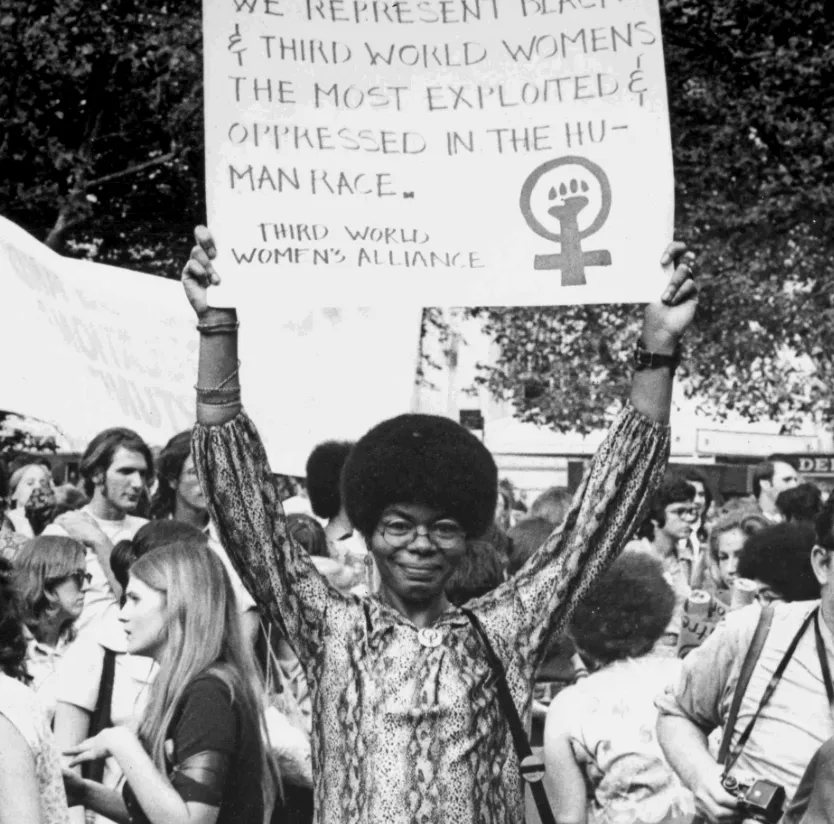
The feminist movement in the United States has been instrumental in advancing gender equality throughout the 20th century, achieving significant milestones such as women's suffrage, reproductive rights, and workplace equality. While mainstream feminism has largely been successful in advocating for the rights of white women, it has consistently fallen short in addressing the compounded struggles faced by women of color. As early as the 1960s and 1970s, scholars and activists like Kimberlé Crenshaw began to critique feminism's failure to engage with the intersection of race and gender, arguing that the movement's limited focus on gender alone often left women of color marginalized. These critiques laid the foundation for what is now known as intersectionality, a concept that underscores how various forms of discrimination, whether based on race, gender, class, or sexuality, intersect to create unique experiences of oppression.
The legal system reflects the same shortcomings present in mainstream feminism. Just as white feminists have historically overlooked the experiences of women of color, the U.S. legal system has similarly failed to provide adequate protections for these women, often forcing them to choose between pursuing race-based or gender-based claims rather than acknowledging the compounded nature of their discrimination. This paper will examine DeGraffenreid v. General Motors and Jeffries v. Harris County Community Action (1977) to explore how legal frameworks have marginalized women of color. This paper will analyze the broader implications of racial discrepancies within the court of law using the work of feminist scholars. This paper will emphasize the critical need for integrating intersectionality into legal, feminist practice, thus pushing toward true equality.
Historically, the feminist movement has roots in the mid to late 19th century, primarily led by white feminists advocating for suffrage. The Woman's Rights Convention of 1848 formulated the Declaration of Sentiments, a manifesto that aired the grievances and demands on women's rights, stating their rights to women's equality in "politics, family, education, jobs, religion, and morals." [1] Women gained voting rights in the 1920s through the 19th Amendment. [2] President John F. Kennedy later proposed that the country establish equal treatment for all American citizens in 1963, regardless of race or gender. His proposal culminated in Lyndon B. Johnson signing the Civil Rights Act of 1964 into law a few hours after Congress passed it. [3]
The U.S. women's movement faced many cultural achievements and changes during the 1960s and 1970s. The Equal Rights Amendment was passed in Congress in 1972, which states that "equality of rights under the law shall not be denied or abridged by the United States or by any State on account of sex," and many feminist organizations thrived. [4] That same year, Title IX of the Education Amendments of 1972 was implemented to protect people from sex-based discrimination under any education programs or activities receiving federal assistance. [5] These achievements were pushed through despite having an administration that passed legislation pushing back on gender inequality, which provides context for the eventual formation of the third-wave feminism movement. [6]
Many feminists are credited for naming and identifying this new "wave" of feminism, with its origins being from issues "made by women of color" in the second-wave feminism movement for its lack of racial and ethnic inclusivity. [7] However, the experiences of women of color were often marginalized throughout the movement. In Relf v. Weinberger (1973), the case exposed how black girls and women were coerced into being sterilized, which was a systematic negligence of black women and women of color's reproductive rights. [8] It also shed light on the discrepancies in legal progression for black women compared to white women, as noted in cases such as Roe v. Wade, where women were able to secure reproductive freedoms, but white women mainly benefitted from it. [9] As a result, Kimberlé Crenshaw coined the term "Intersectionality" as "a metaphor for understanding the ways that multiple forms of inequality or disadvantage sometimes compound themselves and create obstacles that often are not understood among conventional ways of thinking." [10] She uses it to explain the oppression that African American women experience in the legal system. [11] Crenshaw originally developed this theory when she was studying the way that black women were discriminated against for their sex and race in the court of law. She states:"The basic term came out of a case where I was looking at black women who were being discriminated against, not just as black people and not just as women, but as black women. So, Intersectionality was basically just a metaphor to say they are facing race discrimination from one direction. They have gender discrimination from another direction, and they're colliding in their lives in ways we really don't anticipate and understand." [12]
The Equal Protection Clause mandates that "No State shall make or enforce any law which shall abridge the privileges or immunities of citizens of the United States; nor shall any State deprive any person of life, liberty, or property, without due process of law; nor deny to any person within its jurisdiction the equal protection of the laws." [13] This clause has been vital in advancing civil rights, particularly in cases revolving around gender and race discrimination, such as Brown v. Board of Education (1954), which overturned segregation in public schools. [14] Despite having a broad applicability, The Equal Protection Clause also has its limitations when it comes to addressing intersectional discrimination. This clause has been interpreted to protect individuals based on a single characteristic, like race or gender, rather than addressing those who may face overlapping discrimination. Jeffries v. Harris County Community Action (1977) highlights the legal system's failure to address intersectional discrimination. [15] Dafro M. Jeffries, a 50-year-old Black woman, sued her former employer, Harris County Community Action Association (HCCAA), claiming she was denied promotions due to both race and gender discrimination and was ultimately fired in retaliation for protesting these practices. Despite her efforts to provide evidence of this discrimination, including the promotion of a black male colleague without proper procedure, the Court dismissed her claims. The Court ruled that her termination was due to her unauthorized distribution of confidential documents, ignoring her argument of intersecting racial and gender bias. [16]
The Court's handling of this case exemplifies the limitations of Title VII, which requires plaintiffs to prove discrimination based on either race or gender rather than acknowledging the compounded nature of discrimination experienced by women of color. [17] By treating race and gender as separate claims, the Court failed to address the unique challenges faced by Jeffries as a black woman, underscoring how anti-discrimination laws often overlook intersectionality.
The Court's refusal to consider the intersectional nature of Jeffries' experience highlights the broader limitations of legal protections in cases where individuals face compounded forms of bias. This often leaves women of color without adequate legal recourse. This case showcases the need for evolving legal frameworks to fully recognize and address intersectional discrimination.
In Kimberlé Crenshaw's work, "Demarginalizing the Intersection of Race and Sex: A Black Feminist Critique of Anti-discrimination Doctrine, Feminist Theory and Antiracist Politics," Crenshaw addresses how legal and political frameworks often overlook the unique experiences of black women by focusing on race or gender in isolation. She critiques the "single-axis framework" in both feminist theory and antiracist politics, which tends to exclude Black women because it fails to capture the interaction between race and gender. Crenshaw argues that the struggles Black women face are not simply the sum of racism and sexism but are a distinct form of oppression that requires an intersectional approach. She emphasizes that "any analysis that does not take intersectionality into account cannot sufficiently address the particular manner in which Black women are subordinated." To truly incorporate Black women's experiences into feminist and antiracist discourses, the entire analytical framework must be "rethought and recast" to consider how race and gender intersect and create unique forms of marginalization. [18]
Crenshaw also utilizes the specific case, DeGraffenreid v. General Motors, to support her argument of requiring more intersectionality in how courts handle other cases. [19] A group of black women sued General Motors, arguing that the company's "last hired-first fired" policy disproportionately impacted them as both Black individuals and women, perpetuating historical discrimination. The plaintiffs sought to combine race and gender discrimination claims under Title VII, but the court rejected this argument, refusing to recognize black women as a distinct class. [20] The court stated that Title VII did not allow for a "super-remedy" that combined both forms of discrimination, reasoning that such a classification would create new minority categories, which the law's drafters did not intend. Instead, plaintiffs were required to prove either race or sex discrimination, but not both together. [21] The court tried to employ Judicial Economy, allowing them to use their limited resources to save time and effort by dismissing the sex discrimination claims. It also suggested consolidating the race claims with an existing case, Mosley v. General Motors, since that case is occurring within the same district court. [22]
Nathaniel Mosley and nine other plaintiffs originally filed a charge with the Equal Employment Opportunity Commission based on discrimination on color and race, and they were informed that there was reasonable cause and that they could file a class action. [23] All ten plaintiffs filed individually and with class representatives claiming their rights were violated by the defendants, General Motors and Local 25, United Automobile, Aerospace, and Agriculture Implement Workers of America Union based on color and race. After the district court judge, Hon. John F. Nangle, believed that the ten individual claims were improperly joined because while they all had the same employer (General Motors), the details were so distinct and different that there was no question of law or common fact between them that they were ordered to sever their joint file into individual actions. [24] The plaintiffs went to the 8th Circuit to request an interlocutory appeal, allowing them to join together in one lawsuit. The appeals court reversed the district court's decision and allowed them to proceed jointly again. [25] Referring back to DeGraffenreid v. General Motors, this case is different because it involves the discrimination of black women as an individual "sub-category" and not just race or sex individually, unlike Mosley v. General Motors. [26] The Court sent the decision back to the district court, allowing them to file the claims again but either consolidating it with Mosley v. General Motors or intervening with said case because it already involves racial discrimination. This decision highlights the legal system's inability to handle intersectional discrimination, as the Court's ruling failed to acknowledge the unique form of oppression faced by Black women—a core issue that intersectionality theory seeks to address. [27]
One of the most pressing needs in the legal field is the reform of Title VII of the Civil Rights Act of 1964 to explicitly account for intersectional discrimination. Congress should propose amending Title VII to allow plaintiffs to bring intersectional claims, acknowledging that discrimination can occur based on the combination of identities rather than requiring plaintiffs to separate them. Such a framework could require courts to consider the cumulative effects of multiple forms of bias rather than treating race and gender as mutually exclusive categories. This shift would better reflect the lived experiences of individuals who face intersectional discrimination and create a more nuanced legal approach to addressing inequality. Additionally, Legal scholars and activists adopting a holistic interpretation of anti-discrimination laws would prevent the marginalization of plaintiffs whose identities fall at the intersection of multiple categories, ensuring they receive the full protection of the law. As noted by Patricia Hill Collins, "Intersectional paradigms remind us that oppression cannot be reduced to one fundamental type and that oppressions work together in producing injustice." [28] Stronger legal protections are necessary to correct this imbalance, akin to the reforms needed in feminist movements to ensure the inclusion and empowerment of women of color. While advocates might be pursuing bringing intersectionality cases into the courts, legal decision-makers still have not properly "realized intersectionality as an analytical framework."[29] Courts could use this framework to admit intersectional evidence, change jury instructions to include intersectional analysis and develop precedent that explicitly addresses intersectionality. In the foreseeable future, more courts will hear about intersectional cases involving discrimination, and the combined efforts of legislators, courts, and advocacy groups will be required to ensure that intersectional discrimination is no longer treated as an afterthought but a central issue.
[1] History.com Editors. “Seneca Falls Convention ‑ Definition, 1848, Significance.” History.com, (May 2, 2024), online at https://www.history.com/topics/womens-history/seneca-falls-convention. (visited Sept. 24, 2024)
[2] Ibid.
[3] “Civil Rights Act (1964).” National Archives and Records Administration, online at https://www.archives.gov/milestone-documents/civil-rights-act. (visited Sept 24, 2024)
[4] The Editors of Encyclopaedia Britannica. “Equal Rights Amendment.” Encyclopædia Britannica, (August 20, 2024), online at https://www.britannica.com/topic/Equal-Rights-Amendment. (visited Sept, 24)
[5] Title IX of the Education Amendments of 1972, 20 USC 1681: Sex
[6] McCammon, Holly J., Verta Taylor, Jo Reger, and Rachel L. Einwohner, eds. The Oxford handbook of US women's social movement activism. Oxford University Press, 2017. (pg 109)
[7] Ibid. (pg 110)
[8] Relf v. Weinberger, 372 F. Supp. 1196 (D.D.C. 1974)
[9] Roe v. Wade, 410 U.S. 113 (1973)
[10] The Scottish Government. “Using Intersectionality to Understand Structural Inequality in Scotland: Evidence Synthesis.” Scottish Government, (March 10, 2023), online at https://www.gov.scot/publications/using-intersectionality-understand-structural-inequality-scotland-evidence-synthesis/pages/3/. (visited Sept 24, 2024)
[11] “Kimberlé Crenshaw on Intersectionality, More than Two Decades Later.” Columbia Law School, (June 08, 2017), online at https://www.law.columbia.edu/news/archive/kimberle-crenshaw-intersectionality-more-two-decades-later. (visited Sept 24, 2024)
[12] Sharkey, Ginny, and Taylor Hawk. “What Is ‘Intersectional Feminism’?: Article.” Denison University,( July 26, 2016), online at https://denison.edu/academics/womens-gender-studies/feature/67969#:~:text=In%20an%20interview%2C%20Crenshaw%20defines,against%20for%20both%20their%20gender. (Sept, 22, 2024)
[13] U.S. Const. amend. XIV, § 2.
[14] Brown v. Board of Education, 347 U.S. 483 (1954)
[15] Jefferies v. Harris Cty. Cmty. Action, 615 F.2d 1025 (5th Cir. 1980)
[16] Ibid.
[17] Title VII of the Civil Rights Act of 1964, 42 U.S.C. 2000e
[18] Crenshaw, Kimberlé W. “Demarginalizing the Intersection of Race and Sex.” Columbia Law School, 1989. https://scholarship.law.columbia.edu/cgi/viewcontent.cgi?article=4013&context=faculty_scholarship. (pg 140)
[19] DeGraffenreid v. General Motors Assembly Division, St. Louis, 558 F.2d 480 (8th Cir. 1977)
[20] Ibid.
[21] Ibid.
[22] Mosley v. General Motors Corp., 497 F. Supp. 583 (E.D. Mo. 1980)
[23] Ibid.
[24] Ibid.
[25] Mosley v. General Motors Corp., 497 F.2d 1330 (8th Cir. 1974)
[26] DeGraffenreid v. General Motors Assembly Div., Etc., 413 F. Supp. 142 (E.D. Mo. 1976)
[27] Ibid.
[28] Collins, Patricia Hill. Black feminist thought: Knowledge, consciousness, and the politics of empowerment. routledge, 2022. (pg 18)
[29] Ajele, Grace, and Jena McGill. “Intersectionality in Law and Legal Contexts.” Women’s Legal Education & Action Fund. online at https://www.leaf.ca/wp-content/uploads/2020/10/Full-Report-Intersectionality-in-Law-and-Legal-Contexts.pdf. (visited September 25, 2024). (pg 79)