The Limits of the Consumer Welfare Standard in the Digital Economy
Written by: Rama Diallo
Edited by: Nuna Endale and Zoie Geronimi
Abstract:
This article examines the decline of the Consumer Welfare Standard (CWS) as the dominant framework in American antitrust law, particularly in the context of digital platform monopolies. By focusing on the Federal Trade Commission’s 2023 complaint against Amazon and the rise of the New Brandeis movement, this article highlights how scholars and regulators are moving beyond a narrow focus on price effects toward a broader structural analysis of market power. However, the piece also argues that this shift might remain incomplete. Drawing on scholarship that critiques the racial blind spots of antitrust law, it emphasizes the need to disaggregate the concept of the “consumer” to capture the disproportionate impact of anticompetitive practices on marginalized communities. Through an integrated analysis of historical and contemporary developments, this article ultimately contends that any modern antitrust reform must incorporate equity and systemic justice to fully meet the challenges posed by the digital economy.
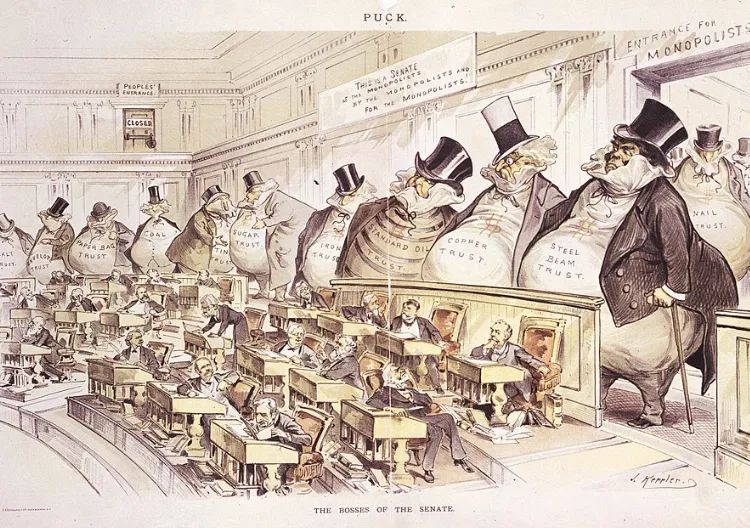
The rise of digital platforms like Amazon has disrupted more than commerce but it has tested the limits of American antitrust law. Antitrust law, also known as competition law, is designed to promote fair and open competition in the marketplace and to regulate anti competitive practices. Over the last four decades, US antitrust enforcement has been guided primarily by the Consumer Welfare Standard (CWS), a framework that evaluates harm based on price increases, reduced output, or diminished quality. As Robert Bork famously asserted, “[t]he only legitimate goal of antitrust is the maximization of consumer welfare” with efficiency treated as the central measure of that welfare. [1]
The recent emergence of digital platforms, however, pose a unique challenge to this paradigm. As online infrastructures that facilitate interactions and transactions between users, these platforms often dominate multiple market layers simultaneously serving as retailer, distributor and data aggregator. They derive power not merely through price manipulation, but through control of logistics (such as Amazon), and visibility (such as Facebook).
In the American legal tradition, antitrust law is not only about economic efficiency, but also about protecting democratic markets from concentrated private power. This argument is at the core of the New Brandeis movement, also called “Columbia School”, which rejects the narrow lens of the CWS in favor of an approach concerned with power and democratic accountability. This movement is led by scholars and political figures such as Barry C. Lynn, Cory Booker and Elisabeth Warren. Among them, Lina Khan, lawyer and long lasting advocate of a revitalization of antitrust enforcement had been appointed head of the Federal Trade Commission. From their perspective, the current framework does little to address how platform monopolies can conduct monopolistic practices without raising consumer prices. Furthermore, in the contest of a racial reckoning, legal practitioners and scholars evaluate the current antitrust framework highlighting the negative consequences of anti-competitive practices in reinforcing already existing racial inequalities.
This paper argues that the FTC’s 2023 complaint against Amazon reveals the structural limitations of the CWS and illustrates a broader doctrinal shift, led by Lina Khan, toward an renewed antitrust framework better suited for digital monopolies. The complaint, though still unresolved, signals an important shift: a growing recognition that price-based metrics alone cannot capture the full scope of modern market harm. Consequently, we must ask: Is the Consumer Welfare Standard still adequate for regulating modern anticompetitive practices, particularly in the context of dominant digital platforms and their disparate impact on racialized communities?
While the CWS has been central to American antitrust law, it revealed itself to be an inadequate legal framework in regulating contemporary attacks against competition (I). Instead, the rise of the New Brandeis movement signals a shift in which the FTC defends (II). However, it appears that this movement overlooks the disproportionate effects of anticompetitive practices on racialized communities (III).
While the CWS was an efficient framework for the last fifty years, it now appears increasingly inadequate, particularly in its failure to address platform dominance, labor harms, and seller-side exclusion. When first introduced, the American antitrust framework had a broader ambition. The Sherman Act of 1890, through its Sections 1 and 2, laid the foundation for U.S. antitrust law. Often referred to as the “Magna Carta of free enterprise” it was intended not only to prohibit monopolies but to target “every” restraint of trade and the processes of “monopolization” itself. [2] This original vision was expansive and attentive to exclusionary conduct that allowed firms to enhance or maintain monopoly power with anticompetitive effects on consumers. Under this broad standard, coordinated agreements between firms could be found illegal based on their impact on competition, not merely on prices.
The 1970s, however, marked a turning point with a rise of figures in the Chicago School of antitrust law, like Robert Bork with his foundational The Antitrust Paradox. These economists reinterpreted the Sherman Act in a more limited lens, arguing that the original and sole purpose of antitrust law was the promotion of “consumer welfare.” They defended the virtue of quantifying this welfare via price, arguing that it was an objective and administrable standard for courts. [3] According to this view, a consumer is harmed only if prices are too high, quality is too low, or variety is insufficient. The broad and value-driven ambitions of the Sherman Act were thus replaced by a narrow economic calculus.
However, the CWS does not account for the multiplicity of harms that arise in contemporary markets. Its definition of “consumer interest” is restricted to price effects and fails to consider how monopolization affects systemic outcomes such as labor precarity, platform gatekeeping, or the suppression of innovation. [4] As Lina Khan explains, this shift in method replaced the foundational concern of whether “power [is] sufficiently distributed to keep markets competitive” with the far narrower question: “did prices rise?”. [5]
The failure of the CWS is also evident when measured by its own standards. While it claims to protect consumer welfare, it can in fact facilitate outcomes where prices rise indirectly due to constrained competition. Amazon, which Khan describes as an “industrial monarch,” exemplifies this contradiction. [6] It subsidizes consumer prices in the short term while building a closed ecosystem that extracts value from sellers and workers, raising overall market prices and reducing competitive choice over time. As Senator George warned during debates on the Sherman Act, the unchecked growth of large-scale industry would “crush out all small men, all small capitalists, all small enterprises.” [7] In effect, it appears that the CWS has enabled the very conditions the Sherman Act sought to avoid.
The digital economy further exposes the doctrinal inadequacies of the CWS. Digital platforms operate in two-sided markets, creating interdependent systems in which users and providers interact through a central intermediary. [8] Apple’s App Store, for example, hosts both developers and users, exerting control over both sides of the exchange. These markets are reinforced by network effects: as economist Steven Salop notes, “more search generates more user data, which can permit more narrowly targeted advertising and better recommendations.” [9] The more users a platform has, the more attractive it becomes to businesses, and vice versa. This circular dominance amplifies inequality and makes entry by smaller firms nearly impossible.
Moreover, the rise of dominant platforms has coincided with deepening social disparities. Steven Salop notes, “these concerns are reinforced by the worsening skew in the distribution of income and wealth.” [10] The CWS, in its current form, is ill-equipped to confront this reality. It treats competition as a technical problem of market efficiency, not a structural question of access, power, or equity.
Given these dynamics, there is a growing call for a new legal framework capable of addressing the challenges of our time. In March 2021, Lina Khan’s appointment to the FTC signals the institutionalization of this shift. [11] Under her leadership, the FTC has begun applying a structuralist vision of antitrust, most notably through its landmark complaint against Amazon, Meta, Nvidia, and others. This moment marks not just an enforcement action, but a fundamental rethinking of what it means for a market to be fair.
Prior to being appointed at the FTC, Lina Khan called on the weaknesses of the narrow lens of the CWS. In her 2017 article, Amazon’s Antitrust Paradox, Khan, at the time, law student at Yale university, warned that dominant platforms could “self-reinforce” their power through data, logistics, and vertical integration. [12] She called for “prophylactic limits” on platform mergers and a return to enforcement grounded in market structure.[13]
In September 2023, the FTC, joined by 17 states, filed a complaint against Amazon in the Western District of Washington under Section 2 of the Sherman Act and Section 5 of the FTC Act. [14] The complaint alleges that Amazon has maintained monopoly power in two markets: online superstores and online marketplace services. The government describes Amazon as “a monopolist that uses a set of interlocking anticompetitive and unfair strategies to illegally maintain its monopoly power,” strategies that “prevent current competitors from growing and new competitors from emerging.” [15] Among these are coordinated exclusionary tactics: punishing sellers who offer lower prices elsewhere by removing Buy Box visibility and burying their listings. Amazon allegedly manipulates platform logistics by requiring sellers to enroll in Fulfillment by Amazon (FBA) in order to access Prime eligibility, in exchange for what the FTC calls a “costly fee.”[16] The complaint also reveals “Project Nessie,” a covert algorithm used to identify where Amazon could raise prices and lead competitors to follow, generating “more than $1 billion in excess profit.” [17]
The complaint signals a marked departure from the traditional CWS. Rather than focusing solely on price increases, the FTC targets structural conduct that forecloses competition. It accuses Amazon of “block[ing] off every major avenue of competition—including price, product selection, quality, and innovation.” [18] The emphasis is not on consumer prices per se but on the manipulation of market access and suppression of rivals’ growth. As the FTC puts it, “Amazon extracts enormous monopoly rents from everyone within its reach.” [19] In this sense, the complaint reflects Lina Khan’s and more broadly New Brandeis Movement core thesis that modern antitrust should prioritize market structure and distributional effects over price metrics. Yet, the FTC still invokes indirect price harms, like sellers raising prices across platforms due to fear of Amazon’s retaliation, perhaps to retain judicial receptivity.
This case tests whether courts will recognize ecosystem-based exclusion as unlawful under antitrust law. If accepted, it could reorient Section 2 doctrine toward structural harm. As the FTC concludes, the goal is to “restore the lost promise of free and fair competition.” [20] But doctrinal risks remain: the complaint blends structuralist logic with price-based language, suggesting a cautious legal strategy designed to push boundaries without alienating precedent-bound courts.
Outside of digital networks, the failure of the CWS to serve as an efficient and equitable framework is also visible in how it overlooks the disparate racial impacts of anticompetitive conduct. In their 2007 article Race-ing Antitrust, Bennet Capers and Gregory Day argue that “antitrust law must disaggregate the term ‘consumer’ to include those who disproportionately suffer from anticompetitive practices via a community welfare standard.” [21] They highlight how antitrust’s narrow focus on prices erases the structural disadvantages faced by marginalized communities.
This concern gained renewed urgency in 2020, as the COVID-19 pandemic exposed the systemic vulnerabilities of Black Americans. FTC Commissioner Rebecca Slaughter responded by advocating for an “antiracist antitrust,” criticizing the “bizarre” ideological posture of the field’s so-called “value-neutrality”. [22] Capers and Day argue that anticompetitive conduct has historically functioned as a tool of racial exclusion, and they identify antitrust as an “ideal regime” to confront systemic inequality, not only by targeting monopolies, but by reshaping who is seen as a harmed consumer.
They note that communities of color face higher switching costs, more limited market access, and are often overlooked or exploited by dominant firms. For example, while high-income patients can access monopolized pharmaceuticals through expensive insurance, people of color are more likely to “suffer deprivations of care” or “self-medicate,” increasing health risks and economic burdens. [23] In sectors such as banking and housing, trade restraints and mergers have contributed to patterns of disinvestment, reduced service quality, and exclusion from financial tools essential to mobility.
Capers and Day’s work suggests that market harm cannot be separated from social inequality. By disaggregating the consumer, antitrust law could evolve beyond the price-focused CWS and respond to broader forms of exclusion. This vision aligns with the structuralist turn initiated by Lina Khan and the FTC, but insists that any truly modern antitrust regime must include equity as a core concern.
[1] Khan, “Amazon’s Antitrust Paradox,” 719.
[2] Capers and Day, “Race-Ing Antitrust,” 538–39.
[3] Khan, “Amazon’s Antitrust Paradox,” 720.
[4] Salop, “Dominant Digital Platforms: Is Antitrust up to the Task?,” 566.
[5] Khan, “Amazon’s Antitrust Paradox,” 744.
[6] Khan, “Amazon’s Antitrust Paradox,” 740.
[7] Stahl and Chasan, “FTC Head Lina Khan Fighting Big Tech, Big Pharma and Big Groceries | 60 Minutes.”
[8] Salop, “Dominant Digital Platforms: Is Antitrust up to the Task?,” 575.
[9] Salop, “Dominant Digital Platforms: Is Antitrust up to the Task?,” 570–71.
[10] Salop, “Dominant Digital Platforms: Is Antitrust up to the Task?,” 563.
[11] Stahl and Chasan, “FTC Head Lina Khan Fighting Big Tech, Big Pharma and Big Groceries | 60 Minutes.”
[12] Khan, “Amazon’s Antitrust Paradox,” 785.
[13] Khan, “Amazon’s Antitrust Paradox,” 793.
[14] “FTC Sues Amazon for Illegally Maintaining Monopoly Power.”
[15] FEDERAL TRADE COMMISSION et al., “COMPLAINT.”
[16] id.
[17] id.
[18] id.
[19] “FTC Sues Amazon for Illegally Maintaining Monopoly Power.”
[20] id.
[21] Capers and Day, “Race-Ing Antitrust.”
[22] “FTC Sues Amazon for Illegally Maintaining Monopoly Power.”
[23] Capers and Day, “Race-Ing Antitrust,” 545.