For international issues such as human rights violations and mass conflict, people look to international institutions such as the United Nations (UN) and the International Criminal Court (ICC) to intervene when states fail to act. Yet, there has been a subtle but growing shift in global sentiment regarding legitimacy and authority in resolving such crises. Increasingly, it is believed that the nation or people subjected to a conflict should be the driving force behind its solution. International actors, such as the UN, are now viewed by many as lacking legitimacy to interfere in state affairs, and when they do, their influence should be limited or dictated by the subject state. This shift in thinking is reflected in the landmark case of Democratic Republic of Congo v. Republic of Rwanda, currently before the African Court on Human and Peoples’ Rights (AfCHPR).
For the past three decades, the Great Lakes region in Africa, including the DRC, Rwanda, Burundi, and Uganda, has faced persistent turmoil, resulting in thousands of deaths and the displacement of millions [1]. At the center of this crisis lies the Democratic Republic of Congo (DRC), a resource-rich nation plagued by political instability rooted in its colonial past.
The colonial histories of both Rwanda and the DRC laid the groundwork for ongoing instability. The DRC was ruled by Belgium from 1879 until 1960, during which time its territorial boundaries were drawn without consideration for ethnic, cultural, or historical divisions [2]. These borders fostered friction and internal conflict. Rwanda, meanwhile, was initially a German territory, but it was then transferred to Belgian rule by the League of Nations (now known as the UN). Under both regimes, colonial authorities solidified ethnic divisions between Hutus and Tutsis, transforming social identities into biologically framed racial categories [3]. This “divide and rule” strategy exacerbated ethnic tensions and led to lasting hostilities[4].
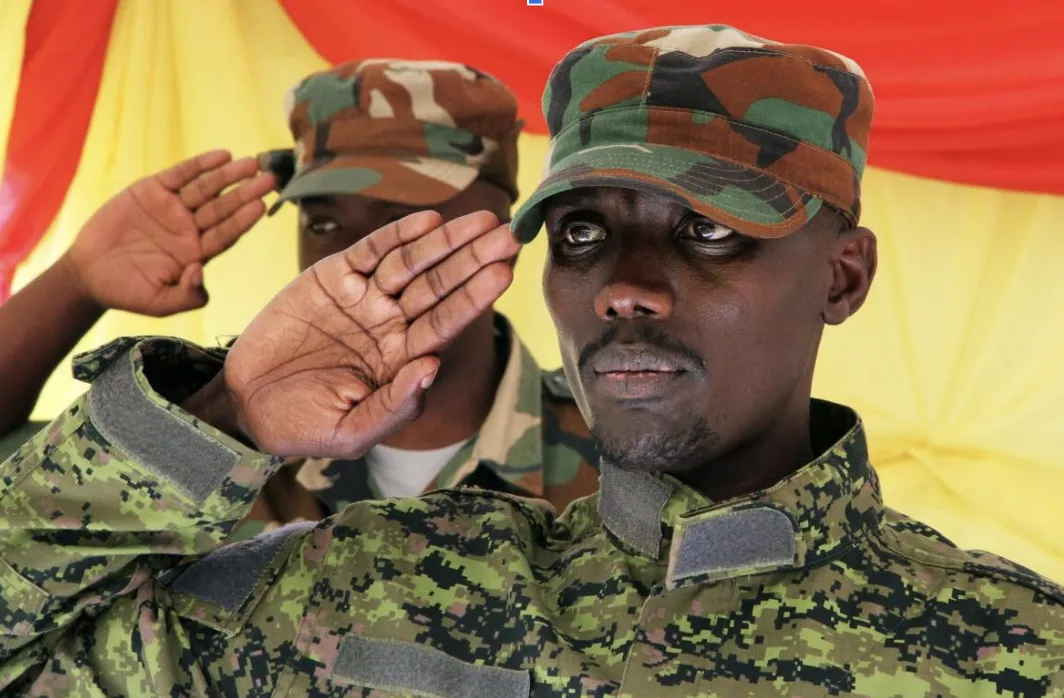
These colonial legacies led to the 1994 Rwandan Genocide, where hundreds of thousands of Tutsis were systematically murdered [5]. In the aftermath, many Tutsi survivors fled to neighboring countries, including the DRC. It is from this context that the M23 rebel group emerged, originally as a Congolese Tutsi paramilitary group seeking to defend Tutsi communities in the DRC. However, over time, M23 has been accused of widespread human rights abuses, including the displacement and killing of civilians [6].
The DRC v. Rwanda case marks a pivotal moment in the regional quest for accountability. Filed on March 7, 2024, the case alleges that Rwanda, by supporting the M23 rebels, has violated multiple provisions of the African Charter on Human and Peoples’ Rights [7]. This includes the rights to life, physical integrity, dignity, and access to education. The DRC’s decision to bring the case before the AfCHPR rather than an international institution like the ICC represents a significant pivot toward African-centered legal accountability.
M23 has periodically resurfaced over the past few decades. It re-emerged in 2012, citing government neglect and discrimination against Congolese Tutsis. A 2013 UN Security Council report (S/2013/433) tied Rwanda to supporting M23 [8]. Though temporarily subdued by a UN “intervention brigade,” M23 regained strength by 2017. By 2022, international actors once again accused Rwanda of backing the group and facilitating war crimes. The situation escalated in early 2025 when M23 launched a major offensive, capturing Goma and Bukavu, displacing civilians, and aggravating the humanitarian crisis [9].
The DRC argues that Rwanda is directly responsible for atrocities committed by M23, invoking both the African Charter and broader international legal principles, including state responsibility for non-state actors and the prohibition of genocide under the UN Genocide Convention [10].
Although Rwanda withdrew its Article 34(6) declaration in 2017, thereby protecting itself from individual and NGO petitions, state-to-state cases remain within the African Court’s jurisdiction. [11] The DRC, as a state party to the AU Protocol, retains standing to litigate before the Court. This jurisdictional strategy reflects the evolving belief that African states can and should adjudicate their own regional conflicts, strengthening both the legitimacy and relevance of continental institutions.
Yet, a significant obstacle lies in the Court’s enforceability. The AfCHPR lacks the authority to impose sanctions or directly enforce its rulings. Historically, fewer than 10% of its decisions have been fully implemented [12]. While the Court can report non-compliance to the African Union (AU), the AU has limited tools at its disposal beyond diplomatic pressure.
Rwanda, in particular, presents a unique challenge to enforcement. In recent years, it has cultivated strong diplomatic and economic ties with Western nations, including partnerships in peacekeeping and development initiatives [13]. This global positioning has allowed Rwanda to shield itself from certain regional pressures and could make AU-driven enforcement efforts more difficult.
Even if the Court rules in favor of the DRC, compelling Rwanda to withdraw its support for M23, halt military activities, or pay reparations remains uncertain. The AU could impose sanctions, but Rwanda’s access to Western economic partners weakens the threat of regional isolation.
Western involvement in the conflict has been mixed. While the United States and the European Union have condemned Rwanda’s alleged support for M23, with the US imposing sanctions and the UK freezing aid, geopolitical considerations often blunt these efforts [14]. Rwanda remains a strategic partner for many Western governments, complicating direct intervention or more punitive actions.
Moreover, the conflict is sustained by economic interests. The DRC’s vast mineral wealth, particularly coltan, cobalt, and gold, which are critical for global tech supply chains, has become a central issue. M23, reportedly profiting around $800,000 in 2025 alone from resource extraction, is believed to funnel these revenues toward sustaining its insurgency [15]. This economic incentive structure must be addressed if lasting peace is to be achieved.
The outcome of DRC v. Rwanda holds the potential to transform the role of African regional courts. A ruling in favor of the DRC would affirm the viability of African-led mechanisms to adjudicate complex human rights violations and interstate disputes. However, such symbolic victories must be accompanied by structural reforms to ensure enforceability. This includes empowering the AfCHPR with stronger institutional tools, increasing compliance incentives, and strengthening AU-led diplomatic coalitions.
Democratic Republic of Congo v. Republic of Rwanda marks a crucial test for African legal institutions. While it signals a growing recognition of regional courts as legitimate arenas for justice, it also exposes enduring challenges, particularly around enforcement and geopolitical friction. The case ultimately underscores the need for an integrated strategy combining legal accountability, diplomatic engagement, and economic reform to secure sustainable peace in the DRC and uphold human rights across the continent.
[1] Viljoen, F. “DRC vs Rwanda at the African Court: why it could be a decisive moment for human rights and justice on the continent.” 2025, February 23.
[2] Amnesty, “Why is the Democratic Republic of Congo wracked by conflict? Amnesty International.” 2024, October 29.
[3] South Africa History Online, “Rwanda.” (n.d.)
[4] Morrock, R. “Heritage of Strife: The Effects of Colonialist "Divide and Rule" Strategy upon the Colonized Peoples.” Vol. 37, No. 2 (Summer, 1973), pp. 129-151
[5] id at 3
[6] id at 1
[7] African Court on Human and Peoples’ Rights. “ Democratic Republic of the Congo V. Republic of Rwanda [Case Summary: Application No. 007/2023].” (n.d.)
[8] United Nations Security Council. “Letter dated 19 July 2013 from the Chair of the Security Council Committee established pursuant to resolution 1533 (2004) concerning the Democratic Republic of the Congo addressed to the President of the Security Council. UN Security Council.” 2013, July 19.
[9] id at 7
[10] id at 7
[11] The African Court on Human and Peoples’ Rights. “Title page.” (n.d.)
[12] Gabay, A. “Indigenous peoples won in court — but in practice, they face a different reality.” 2024, September 20.
[13] Bela, J. “Rwanda, M23 and the conflict in Congo explained | Start Here.” 2025, April 25
[14] Muhumuza, R. “UK suspends some financial aid to Rwanda over violence in eastern Congo as rebels dig in.” 2025, April 25
[15] Kazadi, C. “Kinshasa and Kigali face off in African courts.” 2025, March 17