The Mining Crisis in Congo: From Fines to Prison, From Law to Symbolism
Written by: Bless Adedeji
Edited by: Brett Fisher
Abstract:
As global demand for cobalt intensifies, the Democratic Republic of Congo (DRC) faces a critical mining crisis characterized by legal instability and systemic human rights abuses. This essay examines the DRC's recent shift from administrative penalties to criminal sanctions for illegal mining, analyzing the 2018 Mining Code and subsequent judicial actions. Through a comparative analysis of the 2025 Bukavu sentencing of Chinese nationals and the contradictory release of detainees in Walungu, the study explores how the reliance on military jurisdiction and the influence of political pressure undermine the legal authority of potentially influential precedent. While the move toward imprisonment reflects a stricter stance on mining exploitation, the political influences on the legality of the shift risk framing these legal reforms as symbolic rather than systemic. Ultimately, the essay argues that without uniform legal reform and enforcement, the DRC’s efforts to strengthen its mining sector’s legal framework will fail to provide a sustainable deterrent to the illegal extractions fueling conflict.
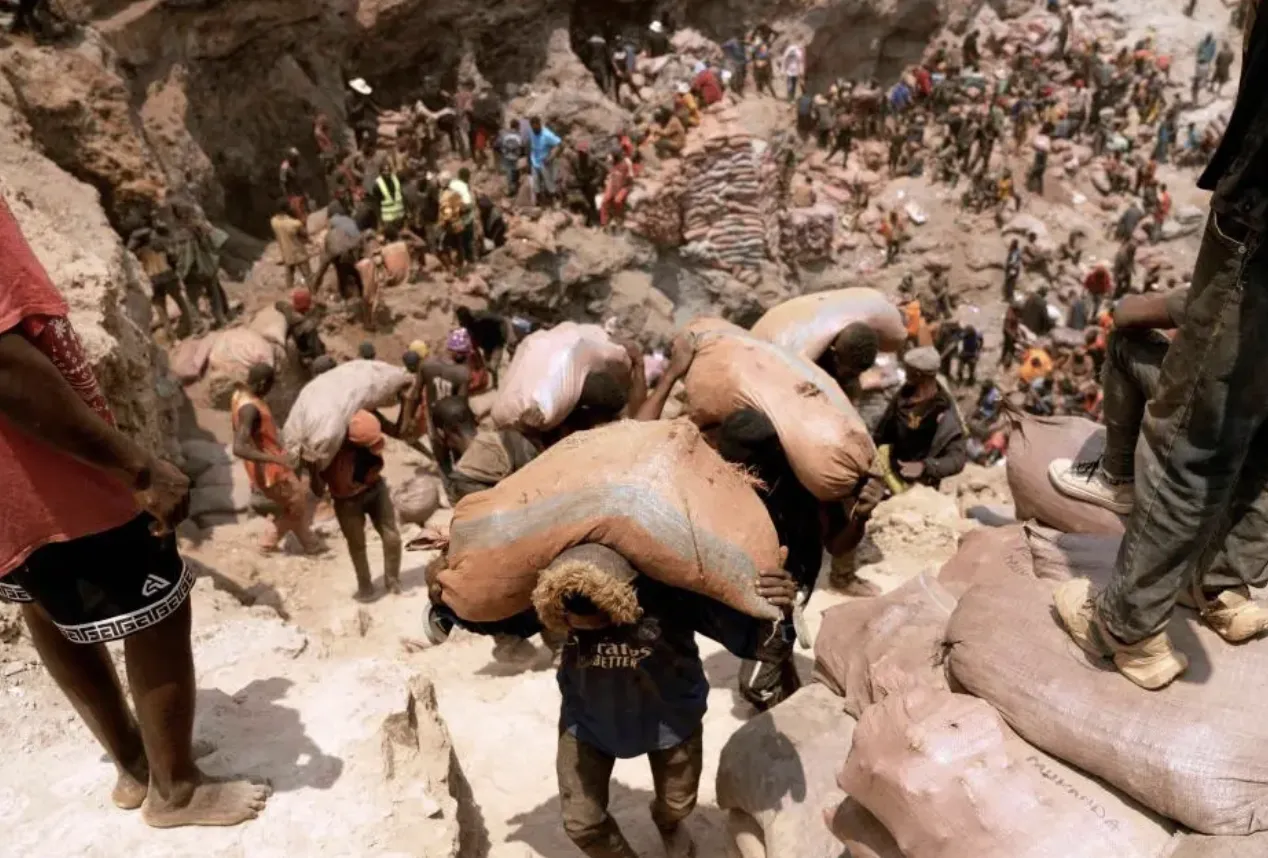
The demand for cobalt is rising worldwide, raising concerns about the legality and ethics of its extraction. The Democratic Republic of Congo (DRC) produces the majority of the world’s cobalt supply. As a country with vast natural resources, the DRC’s mineral wealth is currently subject to external and internal exploitation, exacerbated by legal instability. The rise of cell phones in the 1990s led to the seizure of mines by militant groups intent on funding illegal extraction operations [1]. Recovering from an increase of Rwandan refugees and dealing with the beginnings of their first civil war, the DRC was unable to create a comprehensive, effective legal response to this abuse. The result of this mixture of militant groups in mining as well as in the government is systemic and continuous genocidal violence, rapes, and displacement, with over 6 million deaths [2]. The expansion of mobile technology in the 2000s further exacerbated and expanded conflict over control of the mines, contributing to already murky relations between militant groups and the law [3]. With this legal instability, measures to provide social and economic aid to Congolese people will continue to fall short, as they focus on the symptoms of the mining crisis rather than on legally sound solutions that can be implemented holistically. The issue of legal instability related to the mining crisis is particularly pressing as human rights reports from 2024 note that the expansion of mining operations led to mass forced evictions and the denial of essential rights, including access to housing, healthcare, water, and other basic services [4].
Furthermore, the recent transfer of jurisdiction from civil to military authority has resulted in restrictions on civil liberties [5]. This transfer has intensified the period of legal transition – of decisions, revisions, and enforcement of laws – currently shaping the governance of mining enforcement in the DRC. Specifically, this overlap between armed actors and extraction networks weakens the state’s capacity to enforce mining law and contributes to the legal instability that continues to shape enforcement today.
The involvement of foreign actors, mainly Chinese state-owned enterprises (SOEs) and state-backed mining firms, in the Congolese mining sector has been met with global silence as they exploit the internal armed conflict to engage in illegal labor practices and evade regulatory enforcement [6]. While the Congolese government has begun to respond to these foreign actors with more punitive legal measures, the effectiveness of these legal reforms remains uncertain. Although the DRC’s transition from administrative fees to criminal penalties for unauthorized mining illustrates a stricter legal response to labor exploitation, the legal ambiguity of trying mineral brokers in military courts risks framing the transition as a political performance, limiting its legal effectiveness.
The 2018 Mining Code is the legal foundation of Congo’s current mining regulation. It aimed to formalize and protect the domestic mining sector. Articles 299 and 311 are particularly important as they criminalize unauthorized exploitation of mineral resources and penalize the illicit purchase or possession of minerals, respectively [7]. These provisions appear to establish a clear legal prohibition against illegal mining, but, in practice, their enforcement relied on financial penalties. Specifically, the code allows penalties to be either a fine or imprisonment [8]. Thus, instead of functioning as criminal sanctions, articles 299 and 311 operated as a predictable cost of doing business. Individuals and corporations engaged in unauthorized mining could continue their exploitation with the expectation that violations would result in only manageable financial consequences, thereby indirectly normalizing illegal mining and undermining the 2018 Code.
The January 2025 sentencing of three Chinese nationals to 7 years in prison for illegal gold mining and money laundering in a Bukavu court demonstrates an explicit shift away from administrative fees towards legal criminalization of illegal mining [9][10]. By imposing significant prison terms, the court reinforces the severity of the mining exploitation and acknowledges the humanitarian harms of illicit mining practices. The legal significance of the Bukavu case is complicated by its procedural context. The defendants were tried in a military court, raising important constitutional questions. Article 155 of the 2006 Constitution of the DRC generally limits the jurisdiction of military courts to members of the armed forces and offenses related to national security [11]. The decision to prosecute civilian foreign nationals in the military court indicates that the DRC is legally framing illegal mining as a threat to national stability.
However, the Bukavu case also raises concerns about due process and the scope of military jurisdiction, undermining the legal foundation for the case’s precedential ruling. Civilian defendants may be deprived of procedural protections typically afforded in civilian courts, including guarantees of judicial independence and fair trial rights [12][13]. In regions affected by armed conflict, revenues from illegal mining are often linked to militia activity, including groups operating in eastern Congo, a pattern regional studies observe as resource-backed armed conflict [14]. This connection provides a rationale for treating mining-related offenses as matters of national security, thereby justifying the involvement of military courts under the state of siege. However, this approach conflates economic regulation with security policy, further blurring the boundaries of legal authority and weakening civilian judicial institutions. Hence, instead of establishing a consistent and replicable legal framework for prosecuting illegal mining, the ruling risks being viewed as a merely legitimate legal exception.
The 2024 release of 14 Chinese nationals in Walungu on charges related to illegal mining further underscores the legal vulnerability of the Bukavu case. In this case, 14 out of 17 Chinese nationals were released despite being suspected of running an illegal gold mine and owing the government ten million in taxes and fines [15]. The differences in outcomes between the Walungu and Bukavu cases demonstrate a lack of legal uniformity in the DRC's response to illegal mining. Furthermore, the characterization of the Bukavu proceedings as an educational trial by lawyers and legal professionals reinforces the perception that the case served a symbolic function primarily [16]. By framing the trial in this manner, prosecutors suggested that its purpose was to send a domestic and international message about the government’s commitment to addressing illegal mining rather than to set a legal precedent [17] [18]. When legal actions are explicitly positioned as demonstrative or political, they compromise their legal legitimacy.
Furthermore, the differences between the Bukavu and Walungu cases can be partially explained by differing political pressures surrounding the individual cases. In South Kivu, public protests and local demands for accountability potentially contributed to the severity of the Bukavu sentencing [19][20]. In contrast, the release of detainees in Walungu could have been influenced by diplomatic considerations and pressure from authorities in Kinshasa [21]. These contrasting political atmospheres illustrate how enforcement decisions may be shaped by external factors rather than by a regular or intentionally precedential application of the law.
Although the shift from administrative fines to criminal penalties represents an important acknowledgment of the exploitation of resources, the reliance on military courts and the politically motivated inconsistencies demonstrated in cases like Bukavu and Walungu undermine the credibility and sustainability of this legal approach. Ultimately, the DRC’s shift toward criminalizing illegal mining reflects the country’s strengthening of mining law, but inconsistent enforcement, reliance on military courts, and political interference transform these reforms from implementable, long-lasting legal consequences to symbolic acts. As the world becomes increasingly technologically advanced, it is crucial that the legal response to the exploitation that supports these technological advancements also grows. Without consistent jurisdiction and credible enforcement, these reforms risk creating a legal system where illegal mining is selectively punished rather than systematically deterred, undermining the sustainability and legitimacy behind the legality of DRC’s response to its mining crisis.
References:
[1] Panzi. “War in Congo.” Panzi Foundation, 2024.
[2] Ibid.
[3] Ibid.
[4] Amnesty International. “Democratic Republic of the Congo.” Democratic Republic Of The Congo 2025, 2025
[5] Bureau of Democracy, Human Rights, and Labor. “2021 Country Reports on Human Rights Practices: Democratic Republic of the Congo.” 2025.
[6] Tom, Amani Matabaro. “China's Illegal Mining Operations in the Democratic Republic of Congo.” 2025
[7] Democratic Republic of the Congo. Law No. 18/001 of March 9, 2018, Amending and Supplementing Law No. 007/2002 of July 11, 2002 on the Mining Code. Published in the Official Gazette, 2018.
[8] Ibid.
[9] Tom, Amani Matabaro. “China's Illegal Mining Operations in the Democratic Republic of Congo.” 2025.
[10] Kambuma, Justin. “3 Chinese citizens sentenced to 7 years in prison for illegal mining in Congo.” The Associated Press, 2025.
[11] Democratic Republic of the Congo. Constitution. 2005 (rev. 2011). Constitute Project,
[12] Amnesty International. “Democratic Republic of the Congo.” Democratic Republic Of The Congo 2025, 2025.
[13] Democratic Republic of the Congo. Constitution. 2005 (rev. 2011). Constitute Project,
[14] Huggins, Chris. “Securitization of the mining sector? The role of the armed forces in state interventions in Tanzania.” 2024
[15] Reuters. “Congo frees most of Chinese men held for illegal mining.” 2024
[16] Ibid.
[17] Tom, Amani Matabaro. “China's Illegal Mining Operations in the Democratic Republic of Congo.” 2025
[18] Africa Defense Forum. “DRC Takes Action Against Illegal Chinese Mining.” Africa Defense Forum, 2025
[19] Bureau of Democracy, Human Rights, and Labor. “2021 Country Reports on Human Rights Practices: Democratic Republic of the Congo.” 2025
[20] Tom, Amani Matabaro. “China's Illegal Mining Operations in the Democratic Republic of Congo.” 2025
[21] Reuters. “Congo frees most of Chinese men held for illegal mining.” 2024
Works Cited:
Africa Defense Forum. “DRC Takes Action Against Illegal Chinese Mining.” Africa Defense Forum, 2025, https://adf-magazine.com/2025/01/drc-takes-action-against-illegal-chinese-mining/.
Amnesty International. “Democratic Republic of the Congo.” Democratic Republic Of The Congo 2025, 2025, https://www.amnesty.org/en/location/africa/east-africa-the-horn-and-great-lakes/democratic-republic-of-the-congo/report-democratic-republic-of-the-congo/#:~:text=Democratic%20Republic%20Of%20The%20Congo%202024,raped%20during%20his%20arbitrary%20detention.
Bureau of Democracy, Human Rights, and Labor. “2021 Country Reports on Human Rights Practices: Democratic Republic of the Congo.” 2025, https://www.state.gov/reports/2021-country-reports-on-human-rights-practices/democratic-republic-of-the-congo/.
Democratic Republic of the Congo. Constitution. 2005 (rev. 2011). Constitute Project, constituteproject.org/constitution/Democratic_Republic_of_the_Congo_2011.
Democratic Republic of the Congo. Law No. 18/001 of March 9, 2018, Amending and Supplementing Law No. 007/2002 of July 11, 2002 on the Mining Code. Published in the Official Gazette, 2018.
Huggins, Chris. “Securitization of the mining sector? The role of the armed forces in state interventions in Tanzania.” 2024, https://www.sciencedirect.com/science/article/abs/pii/S2214790X2400039X.
KABUMBA, JUSTIN. “3 Chinese citizens sentenced to 7 years in prison for illegal mining in Congo.” The Associated Press, 2025, https://apnews.com/article/congo-chinese-citizens-sentenced-illegal-mining-665da382520d31cfe394b723c308b5c5.
Panzi. “War in Congo.” Panzi Foundation, 2024, https://panzifoundation.org/war-in-congo/.
Reuters. “Congo frees most of Chinese men held for illegal mining.” 2024, https://www.reuters.com/world/africa/congo-frees-most-chinese-men-held-illegal-mining-2024-12-25/.
Tom, Amani Matabaro. “China's Illegal Mining Operations in the Democratic Republic of Congo.” 2025, https://www.hks.harvard.edu/centers/carr-ryan/our-work/carr-ryan-commentary/chinas-illegal-mining-operations-democratic.