Mobilizing Black Voters: From Historical Struggle to Contemporary Challenges
Written by: Teniola Adedire
Edited by: Solomon Akaeze
Abstract:
This article examines the persistent turnout gap between Black voters and other racial groups in the United States, focusing on the voter suppression tactics that have long impeded Black political participation. Rather than emphasizing socioeconomic factors that may impact voting behavior, this analysis will trace the historical evolution of voter suppression from the post-Reconstruction era to the present day and cite its impact. This paper also seeks to uncover why the 2008 election of Barack Obama and the "Obama effect" have not sustained increased Black voter participation in subsequent elections. Lastly, this article will discuss the effectiveness and limitations of grassroots mobilization efforts in counteracting Black voter suppression. By examining these factors, this paper aims to provide a comprehensive understanding of the complex interplay between historical disenfranchisement, contemporary suppression tactics, and mobilization efforts in shaping Black voter turnout.
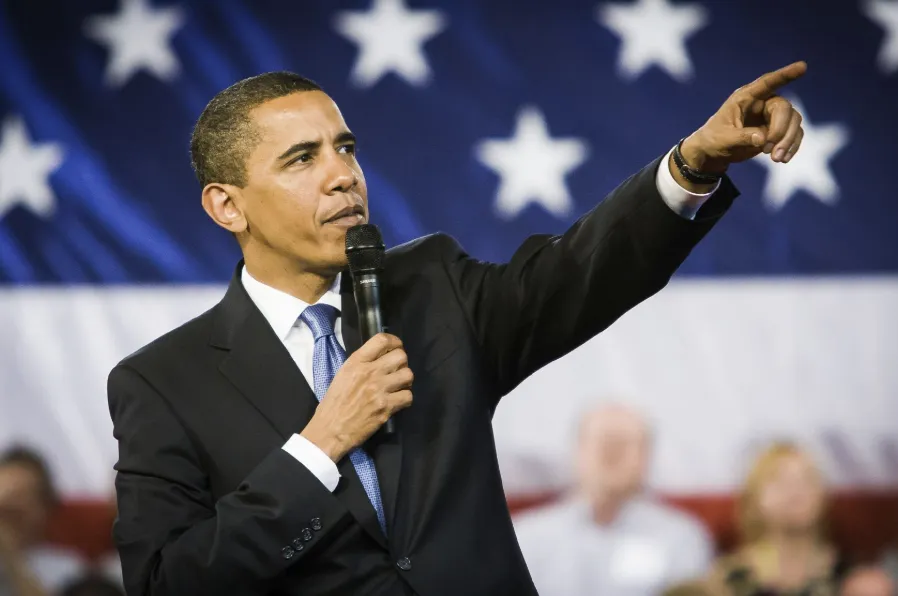
When Barack Obama took the stage to give his victory speech on election night in 2008, it was a seismic moment in American political history. For the first time, an African American would become president of the United States, seemingly shattering long-standing barriers to racial representation. Black voter turnout surged to unprecedented levels, with 64.4% of eligible African American voters casting ballots, a historic high that sparked the potential for a new era of political engagement [1].
Yet, in the years that followed, this moment of optimism began to fade. The election of the first Black president, rather than ushering in a sustained period of increased Black voter participation, instead triggered a political backlash. Voter suppression tactics intensified, with right-wing state legislatures abusing their right to govern the election process and thereby implementing increasingly restrictive voting laws that disproportionately impacted African American communities [2]. Despite the significant progress in voter participation achieved during the Civil Rights Era—and in races in which a Black candidate is on the ballot—contemporary voter suppression tactics and systemic barriers steadily undermine African American electoral engagement, thus reversing the hard-won gains of suffrage activists during the 1960s.
In the post-Civil War era, there were many uneducated African Americans—most of whom resided in the South—who had just come out of slavery and thus had little to no education, and thereby did not know how to read. Challenging that reality, southern legislators began to mandate literacy tests as a prerequisite for voting eligibility. These tests were typically administered by White clerks who had the authority to pass or fail a Black American, not based on any guidelines, but just their prejudice. Though there was a significant number of uneducated White people as there were Black, the southern legislatures crafted a loophole to avoid marginalizing illiterate poor white people. The so-called “Grandfather Clause” was enacted by seven southern states between 1895 and 1910. This legislation provided that individuals who had “enjoyed the right to vote” before the Civil War and “their lineal descendants would be exempt from educational, property, or tax requirements for voting”[3]. This practice served as the main system for assuring “distrustful poor whites that their rights would not be affected by the program of black disfranchisement” of the South [4]. Since former slaves had not been granted the right to vote until the Fifteenth Amendment was ratified in 1870, this clause effectively excluded Black people from voting [5].
In addition to this clause, the Democratic Party, which was the dominant party in the South during this time, instituted “White Primaries” in which they declared that their party was a private organization that could exclude whomever (meaning Black citizens) they chose. Since winning the Democratic primary in the South at the time almost always meant winning the general election, barring black and other minority voters meant they were, in essence, disenfranchised [6].
Beyond the educational barriers imposed on Black voters, White southern legislators imposed financial burdens on those seeking to vote through poll taxes. Given their newly found state of freedom and often lack of economic security, many African Americans “who could not afford to pay the poll tax were disfranchised and deprived of their rights” [7]. Not to mention these mandates not only extended to voting, but black citizens who did not meet the requirements to cast a ballot were also shut out of running for local offices, serving on juries, or being a representative in any capacity – forcing them into a second-class status. Though eventually, through litigation work by Republicans and abolitionists, practices such as “White Primaries” and the “Grandfather clause” were struck down by the Supreme Court, through Smith v. Allwright (1944) & Guinn v. United States (1915), the South’s discrimination persisted. They retained other disenfranchisement techniques, particularly regarding barriers to voter registration, such as poll taxes and literacy tests. These generally survived legal challenges as they applied to all potential voters, but in practice, they were administered in a discriminatory manner by white officials.
In 1964, in response to the institutional obstacles that Black voters continued to face, coupled with the intimidation and physical violence felt when they tried to register to vote, numerous protests were organized by civil rights leaders. The demonstrations in Mississippi and Alabama garnered national attention after white state troopers were pictured attacking peaceful protesters. The combination of public backlash to the violence and then President Johnson’s political skills urged Congress to pass the Voting Rights Act in 1965 [8]. This legislation outlawed literacy tests and implemented federal examiners to aid qualified citizens in registering to vote in "covered” areas. Section 2 of the act—mirrored after the 15th Amendment—applied a national ban on denying a citizen the right to vote on account of the color of their skin. The use of poll taxes in state and local elections was also outlawed, drawing support from the 24th amendment in 1964 which barred the use of poll taxes in national elections One of the most notable parts of the act lay in section 5 which “ required covered jurisdictions to obtain "pre-clearance" from either the District Court for the District of Columbia or the U.S. Attorney General for any new voting practices and procedures” [9].
The remarkable surge in Black voter registration immediately following the Voting Rights Act demonstrated the legislation's power to dismantle institutional barriers. By the end of 1965, a quarter of a million new Black voters had been registered, one-third by federal examiners. By the end of 1966, just a single year after the legislation was passed, the percentage of Black voters who were registered had exponentially increased. According to a data chart depicting Black voter registration before the Voting Rights Act of 1965 (1944-1965) and one year after (1966), the rate went from 11% to 51% in Alabama, from 27% to nearly 72% in Tennessee, and in addition to that, the number of Black elected officials more than doubled in southern states, rising from 72 to 159 [10]. Furthermore, by the end of 1966, only four out of 13 southern states had fewer than 50 percent of African Americans registered to vote [11].
Looking forward to the 21st century, we see, in 2008, the Black voter turnout exceeded 60%, the highest rate seen since the implementation of the Voting Rights Act of 1965 [12]. This record percentage prompts whether the 2008 United States presidential election and Obama’s influence produced strong future mobilization for African Americans. It is known that first-time voting influences the likelihood of long-term political behavior, but do Black voters tend to continue this pattern? Understanding why the “Obama effect” failed to produce lasting mobilization requires examining how the legal framework protecting Black voters was systematically dismantled in the years following 2008.
According to Jacob Brown’s research in his article “The Obama Effect? Race, First-time Voting, and Future Participation on Mobilization”, voting in 2008 produced positive effects on voting in the 2010, 2012, 2014, and 2016 elections for all racial groups. However, it was Black voters who voted in 2008 that initially received the largest boost in their likelihood of voting in the next general election, but this advantage faded in subsequent election years. A graph in Brown’s paper presents the distributions of the state-level complier average causal effect (CACEs) of 2008 voting on future voting, weighted by the inverse of the estimates’ variances [13]. The distributions illustrate the shift from a Black mobilizing advantage in 2010 to the effects for Blacks lagging behind those for Whites and especially those for Hispanics in ensuing elections.
By 2012, while Black voters still maintained a higher voting persistence than White voters, Hispanic voters demonstrated the strongest effect. Brown notes that these effects were generally more pronounced than those observed in 2010, possibly due to the nature of presidential elections versus midterms. The 2014 midterm election saw a significant decrease in voting persistence across all racial groups, with little differentiation between them. Brown suggests this could be attributed to the typically lower turnout in midterm elections. In the 2016 presidential election, the effects rebounded to levels closer to those seen in 2010 and 2012. Interestingly, Hispanic voters showed the strongest voting persistence in a majority of states studied, followed by White voters, and then Black voters (Brown, 2023). Thus, the evidence shows that 2008 is not statistically distinguishable from other presidential elections in its mobilizing effects on African American voters. Why is that?
The answer lies not in a lack of enthusiasm among Black voters, but in the systematic dismantling of the very protections that had made their electoral participation possible. While Obama's election energized Black communities, legal challenges were simultaneously undermining the foundation of voting rights that the Civil Rights Movement had secured. Since its enactment in 1965, the Voting Rights Act has undergone five reauthorizations, amendments, and expansions, occurring in 1970, 1975, 1982, 1992, and 2006 [14]. The most recent reauthorization in 2006, known as the Fannie Lou Hamer, Rosa Parks, and Coretta Scott King Voting Rights Act Reauthorization and Amendments Act, extended the Act unanimously for 25 years, preventing its expiration in 2007 [15]. However, recent Supreme Court decisions have significantly weakened the Act's effectiveness. In 2010, Shelby County, Alabama, initiated a legal challenge against two sections of the Voting Rights Act. The first is Section Five of the act, which mandates that eligible jurisdictions with a history of discriminatory practices submit proposed voting changes to the Department of Justice for review and authorization. The second section, Section Four, defines the formula used to determine which jurisdictions are deemed “eligible” for oversight [16]. Shelby County officials argued that these provisions were unconstitutional as they violated the Tenth Amendment and Article Four of the Constitution. The district court upheld the constitutionality of the Sections and granted summary judgment to the Attorney General. The U.S. Court of Appeals for the District of Columbia Circuit also held that Congress did not exceed its powers by reauthorizing Section Four, thus leading the case to reach the Supreme Court.
In 2013, in a 5-4 decision, the Supreme Court ruled that Section Four of the Voting Rights Act is unconstitutional. The court held that only “Section Four of the Voting Rights Act imposes current burdens that are no longer responsive to the current conditions in the voting districts in question” [17]. The conservative-leaning Justices argued that although the constraints this section places on specific states made sense in the 1960s and 1970s, they do not any longer and have evolved to become an unconstitutional violation of the power to regulate elections that the Constitution reserves for the states. They cited the narrowing racial voter turnout gap as evidence that the federal review of states' voting practices is now outdated. Notably, the Court did not rule that the pre-clearance practice itself outlined in Section Five was unconstitutional, but rather that the current formula being used to establish eligible districts for pre-clearance was unconstitutional. Following the decision, the burden was on Congress to pass a new coverage formula, but since 2013, it has failed to do so, and as a result, Section Five is ineffective as voting changes have been made completely unchecked in previously covered jurisdictions.
The decision in Shelby County v. Holder has systematically harmed the mobilization of Black voters and the racial turnout gap. Immediately after the court’s decision in 2013, states previously under preclearance became emboldened to pass restrictions on voting that they would have never even submitted for review when Section Four was still in place. Less than 24 hours after the court’s ruling, then-Texas Attorney General Greg Abbott issued a statement saying that the state’s voter identification law, which had been suspended under federal review, would take effect immediately. Following suit, North Carolina passed a bill in their state legislature that imposed a sweeping set of restrictions on voters, including a photo ID requirement, restrictions on when voters could cast provisional ballots, the elimination of same-day registration, as well as elimination of pre-registration for young voters.
Though the legislation (officially known as H.B. 589) was struck down by the U.S. Court of Appeals – citing that the bill acutely targeted Black voters – the legislation's existence itself is telling. The law’s broad reach, on the first go around at new legislation, signaled that state legislatures are more than willing to go the distance to push for these new restrictions. This was proven right eventually when North Carolina’s Supreme Court overturned Holmes v Moore (2023). This case was a state court challenge to legislation implementing North Carolina’s voter ID constitutional amendment, SB 824. The court’s initial decision held that North Carolina's voter ID restriction in SB 824 was enacted with discriminatory intent and had a discriminatory impact on Black voters[18]. However, once the court’s ideological composition changed after the 2022 election, the court reheard and reversed its earlier decision in 2023 in an unprecedented case. The Brennan Center found in using county-level data from around the country, that the racial turnout gap grew once states like North Carolina enacted these stricter voter ID laws. This is corroborated by the fact that “Black people [are] statistically less likely to possess an ID than White people” [19].
In the years following the repeal of section 4, over 1700 polling sites across 13 states have been closed, many of which were in locations with histories of voter suppression tied to racism and formerly fell under the federal preclearance guidelines [20]. In Georgia, there have been up to 180 net closures since the Shelby ruling; in Warren County, whose population is 61% African American, there has been an 83% decrease in polling locations [21]. In Texas, there have been 706 net closures since Shelby, an 11.2% decrease from 6314 to 5608 polling sites. Since Shelby, 52 of Texas’s polling location closures were in Harris County, whose population is 42% Latino and 19% African American. Though most of the polling locations in these three states remained open after Shelby, many of these closures were in minority-majority areas, limiting the Black electorate.
In addition to polling place closures, post-Shelby, many states that were formally covered by preclearance requirements began to participate in purging voter rolls. The influx in this practice can be attributed to the case Husted v. A. Philip Randolph Institute (2018), which reached the Supreme Court to address a matter regarding voter registration lists and their maintenance. The debate started in Ohio, a state that regularly maintains a process that clears its state’s voter rolls of people who are now deceased or have since moved out of state. However, that is not the point of concern; what sparked debate is the fact that under this process, voters who have not voted for two years are sent notices to confirm their registration. Then, if the state receives no response and these individuals do not vote over the next four years, they are ultimately removed from the registration lists [22].
Ohio’s process was challenged by various civil rights groups who claimed that removing people from voter registration rolls as a consequence of not voting is inappropriate, as well as a violation of the National Voter Registration Act (NVRA) of 1993. Seeing as the NVRA prohibits any program for voter-list maintenance for federal elections that involves “the removal of the name of any person from the official list of voters . . . by reason of the person’s failure to vote” [23]. The plaintiffs held that because the action of not voting “triggers” the state to send notice to the voter threatening to take them off the registration roll, it deems the practice a violation of federal law.
In 2018, the case reached the Supreme Court, and in a 5-4 decision, the court ruled that Ohio’s process for voter registration list maintenance does not violate the NVRA of 1993. The majority reasoned that by the plain language of the statute, the NVRS does not allow the removal of a voter who has abstained from voting as the sole reason for removal. So, while Ohio does cite “not voting” as a trigger for removal, it is not the only reason for the said removal and thus does not violate the act.
This ruling consequently had poor effects on ongoing efforts to mobilize Black voters. A Reuters study in 2016 found that this practice of voter roll purging hits African American and low-income voters the hardest, resulting in tens of thousands of cancellations. In Ohio specifically, in African-American concentrated neighborhoods near downtown, “more than 10 percent of registered voters have been removed due to inactivity since 2012” [24]. In total, 30,000 voters were removed from rolls because of inactivity since 2012; this is a larger figure than Obama's margin of victory that election year, and that amount has only increased. In 2018, the Brennan Center issued a report that highlighted this phenomenon and found that the formerly preclearance status states seemed to be purging their voter rolls more aggressively than states that weren’t in the past.
While legal challenges and restrictive legislation created structural obstacles to Black voting, community organizations worked simultaneously to counteract these effects through grassroots mobilization efforts rooted in longstanding institutions. The Black church— Christian denominations that are administratively run by Black people— has consistently been a political and social power base within the Black community. Due to its longstanding historical relationship with the development of not only the Black community but also the progress of African Americans in society in general. It has served not only as a hub for religious practice but has also increased educational, economic, and social opportunities for African Americans. Hanes Walton, in his book Invisible Politics (1985), found that African Americans identify the church, family, and school as having the most significant influence on their political leaning [25]. Under slogans like “Souls to the polls”, Black denominations and national bodies like the Conference of National Black Churches have partnered with civil rights organizations to increase voter participation amongst African Americans.
During the Civil Rights Era, Black Church-based voter registration efforts took place under the Voter Education Project, which was funded by organizations such as the NAACP and the Southern Christian Leadership Conference (SNCC). The project emphasized “voter education, registration, and electoral representation of blacks and minorities in the South” [26]. Beyond their efforts to report on race and voting, they “awarded grants to nonpartisan agencies or groups to register disfranchised citizens, $900,000 by the end of 1964 alone” [27]. Simultaneously, grantees (typically civil rights activists and public figures) helped to register more than 688,000 African American voters in the upper south, with an additional 1,496,200 Black voters added in Deep South states by 1969 [28]. The Voting Rights Act helped promote the workings of the Voter Education Project, which used civics in schools and communities to promote Black voter mobilization.
In recent years, Black voter mobilization has undergone a significant transformation, adapting to the digital age while maintaining traditional community-based approaches. Churches continue to play a crucial role in political engagement, but contemporary strategies have increasingly shifted towards social media and targeted outreach in battleground states. Organizations have leveraged digital technologies to expand their reach, using common apps like Facebook, Instagram, and, more recently, TikTok.Social media and data-driven targeting have become fundamental to modern mobilization efforts. The NAACP, for example, has developed sophisticated approaches that combine digital advertising, virtual phone banks, and strategic media placement. Their campaign included a seven-figure radio and digital advertising initiative targeting 29 markets across 10 states, with a significant investment in 17 Black-owned radio stations [29]. By strategically placing ads during popular Black-focused media events like the premiere of "Black-ish" and BET's HBCU virtual homecoming, they generated over 18 million digital impressions, demonstrating the power of culturally relevant and precisely targeted communication [30]. Moreover, peer-to-peer communication strategies have also emerged as a critical component of voter mobilization (Brown et al., 2022). The organization recruited over 100,000 volunteers in battleground states, creating a network of engaged community members who could personally connect with potential voters. Virtual and hybrid organizing models have also further expanded the reach of these efforts, allowing for more participation.
Measuring the impact of Black voter mobilization efforts reveals a complex landscape of both achievements and persistent challenges. While recent initiatives have demonstrated some success in improving voter turnout metrics, particularly in battleground states, researchers argue that these gains have not translated into sustainable long-term political empowerment. Voter participation studies show incremental increases in Black voter registration and turnout, with some states experiencing up to a 5.3% rise in Black voter engagement during recent election cycles [31]. However, these improvements are often temporary and fail to address deeper systemic barriers to political representation.
The limitations of current mobilization strategies become particularly evident when examining long-term community political empowerment and policy influence. Despite significant investments in grassroots organizing and digital outreach, Black communities continue to face substantial representational challenges. Research indicates that while voter mobilization efforts generate short-term political excitement, they have not fundamentally altered the structural inequities that limit Black political power. Critical analyses suggest that these mobilization attempts often create an illusion of progress without delivering meaningful policy changes or substantive representation in legislative bodies. The gap between increased voter participation and tangible political outcomes remains a significant concern, highlighting the need for more comprehensive approaches to community empowerment and political engagement. As the United States continues to deal with its complicated racial political landscape, the future of Black voter mobilization depends on developing nuanced strategies that not only increase turnout but also fundamentally change and progress the systems that have historically marginalized African American political participation.
[1] Lopez, M. H., “Dissecting the 2008 Electorate: Most Diverse in U.S. History,” April 30, 2009
[2] Morris, K., & Grange, C., “Growing Racial Disparities in Voter Turnout, 2008–2022,” March 2, 2024
[3] Schmidt, B. C., “Principle and Prejudice: The Supreme Court and Race in the Progressive Era. Part 3: Black Disfranchisement from the KKK to the Grandfather Clause”, Jun., 1982
[4] Schmidt, B. C., “Principle and Prejudice: The Supreme Court and Race in the Progressive Era. Part 3: Black Disfranchisement from the KKK to the Grandfather Clause”, Jun., 1982
[5] “Grandfather Clauses, Literacy Tests, and the White Primary – Civil Rights”. (n.d.)
[6] Walton, Hanes, Sherman C. Puckett, and Donald R. Deskins, eds. “The African American Electorate: A Statistical History”, 2012
[7] Tarter, Brent. “Poll Tax”, 2020
[8] National Archives, “15th Amendment to the U.S. Constitution: Voting Rights”,1870
[9] National Archives, “15th Amendment to the U.S. Constitution: Voting Rights”,1870
[10] Hanes, Walton Jr., “Black Politics: A Theoretical and Structural Analysis”, 1972
[11] Hanes, Walton Jr., “Black Politics: A Theoretical and Structural Analysis”, 1972
[12] Morris K. & Grange C., “Growing Racial Disparities in Voter Turnout, 2008–2022”, March 2, 2024
[13] Brown, Jacob R. “The Obama Effect? Race, First-Time Voting, and Future Participation.” 12, no. 2 (2024)
[14] U.S. Commission on Civil Rights, “Reauthorization of the Temporary Provisions of The Voting Rights Act”, April 2006
[15] Bush, G. W., “Fact Sheet: Voting Rights Act Reauthorization and Amendments Act of 2006,” 2006.
[16] Shelby County v. Holder, 570 U.S. 529 (2013)
[17] Shelby County v. Holder, 570 U.S. 529 (2013)
[18] “Holmes v. Moore”, Justia Law, 2023
[19] Barreto, M. A., Nuño, S., Sanchez, G. R., & Walker, H. L., “The Racial Implications of Voter Identification Laws in America”, 2019
[20] De Rienzo, S. M., “Shelby County v. Holder and Changes in Voting Behavior”, 2022
[21] De Rienzo, S. M., “Shelby County v. Holder and Changes in Voting Behavior”, 2022
[22] Husted v. A. Philip Randolph Institute, 584 U.S. (2018)
[23] Husted v. A. Philip Randolph Institute, 584 U.S. (2018)
[24] Sullivan, A., & Smith, G., “Use it or lose it: Occasional Ohio voters may be shut out in November”, June 2, 2016
[25] Walton, Hanes, “Invisible Politics”, 1985
[26] Gavins, R., “Voter Education Project (VEP). In The Cambridge Guide to African American History”, 2016
[27] Gavins, R., “Voter Education Project (VEP). In The Cambridge Guide to African American History”, 2016
[28] NAACP, “Reauthorization of Expiring Portions of the Voting Rights Act of 1965”, 2020
[29] NAACP, “Voter Engagement Report: Advancing Political Participation through Targeted Outreach”, 2023
[30] Williams, M., & Lee, R., “Media Strategy in Voter Engagement”. 2023
[31] Harris, J., Williams, D., & Lee, S., “Social Media and Political Mobilization”. 2023
Works Cited:
Barreto, M. A., Nuño, S., Sánchez, G. R., & Walker, H. L., 2019. “The Racial Implications of Voter Identification Laws in America”, American Politics Research, 2019 https://doi.org/10.1177/1532673X18810012
Brown, Jacob R. 2024. “The Obama Effect? Race, First-Time Voting, and Future Participation.” Political Science Research and Methods 12, no. 2 (2024): 249–66. https://doi.org/10.1017/psrm.2023.9.
Bush, G. W., 2006. “Fact Sheet: Voting Rights Act Reauthorization and Amendments Act of 2006” The White House Archives, 2006, https://georgewbush-whitehouse.archives.gov/news/releases/2006/07/20060727.html
De Rienzo, S. M., 2022. “Shelby County v. Holder and Changes in Voting Behavior”, The American Economist, 2022 https://doi.org/10.1177/05694345221101133
Gavins, R., 2016, “Voter Education Project (VEP). In The Cambridge Guide to African American History”, Cambridge University Press, 2016 https://www.cambridge.org/core/books/cambridge-guide-to-african-american-history/voter-education-project-vep/B59B822B80A05ADFE4F89EC067FC1A52
Hanes, Walton Jr. 1972. “Black Politics: A Theoretical and Structural Analysis”, Philadelphia, Lippincott, 1972, https://archive.org/details/blackpolitics0000unse/page/n271/mode/2up
Harris, J., Williams, D., & Lee, S., 2023. “Social Media and Political Mobilization”. Digital Politics Journal, 2023
“Holmes v. Moore.” 2023b. Justia Law. 2023. https://law.justia.com/cases/north-carolina/supreme-court/2023/342pa19-3.html.
“Husted v. A. Philip Randolph Institute, 584 U.S. ___ (2018).” 2018. Justia Law. 2018. https://supreme.justia.com/cases/federal/us/584/16-980/#tab-opinion-3913485.
Legal, US. 2019. “Grandfather Clauses, Literacy Tests, and the White Primary – Civil Rights.” Uslegal.com. 2019. https://civilrights.uslegal.com/voting-rights/grandfather-clauses-literacy-tests-and-the-white-primary/.
Lopez, Mark Hugo. 2009. “Dissecting the 2008 Electorate: Most Diverse in U.S. History.” Pew Research Center. April 30, 2009. https://www.pewresearch.org/race-and-ethnicity/2009/04/30/dissecting-the-2008-electorate-most-diverse-in-us-history/.
Morris, Kevin, and Coryn Grange. 2024. “Growing Racial Disparities in Voter Turnout, 2008–2022 | Brennan Center for Justice.” Www.brennancenter.org. January 18, 2024. https://www.brennancenter.org/our-work/research-reports/growing-racial-disparities-voter-turnout-2008-2022.
NAACP, 2020. “Reauthorization of Expiring Portions of the Voting Rights Act of 1965”, naacp.org, 2020 https://naacp.org/resources/reauthorization-expiring-portions-voting-rights-act-1965
NAACP, 2023, “Voter Engagement Report: Advancing Political Participation through Targeted Outreach”, naacp.org, 2023 https://naacp.org/resources/voting-rights-issue-brief
National Archives. 2021. “15th Amendment to the U.S. Constitution: Voting Rights (1870).” National Archives. September 7, 2021. https://www.archives.gov/milestone-documents/15th-amendment.