Moody v. NetChoice & NetChoice v. Paxton: The First Amendment and Protection Against Misinformation on Social Media
Written by: Armando Javier Gimenez
Edited by: Sophia Bediako, Daniela Mays-Sanchez
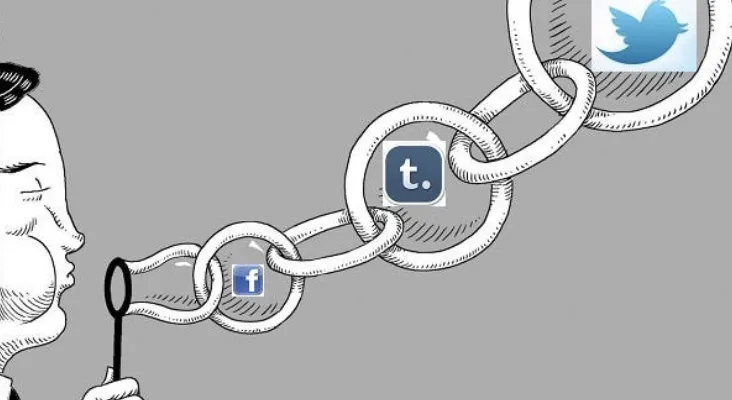
On September 23, 2023 NetChoice, LLC, representing social media companies–– including Facebook, X (formerly known as Twitter), and Google––filed suit against Florida and Texas attorneys general, Ashley Moody and Ken Paxton respectively, in response to recent bills passed by Florida and Texas’ state legislatures, Florida’s Senate Bill (SB) 7072 and Texas’ House Bill (HB) 20. Both of these laws aim to moderate social media platforms and their ability to restrict their users, particularly with respect to “political candidates or journalistic enterprises” [1]. These lawsuits and the laws that propel them will define individuals’ ability to exercise their speech freedoms on social media platforms, and the extent of constitutional protections of these platforms and their policies. This article will explore how speech is restricted and protected on social media platforms, primarily focusing on the protection of social media platforms under Section 230 of the Communications Act, and examines the thin line between civil liberties and protections amidst the emerging digital landscape of modern social discourse and debate.
Before discussing NetChoice’s challenges against state legislation in their respective lawsuits, it is essential to understand Florida’s SB 7072 and Texas’ HB 20, what they specifically prohibit, and what prompted the introduction of these bills. Florida’s SB 7072––introduced by the State of Florida’s Governmental Oversight and Accountability Committee––places restrictions and requirements on social media platforms and their power to deplatform [2]. Deplatforming is a phenomenon in which a social media platform removes and bans a user from their platform, refusing them access to their platform through their banned profile or to post on it as a platform sees fit as per their policy or terms of service. SB 7072 protects political candidates and “journalistic enterprises” from being deplatformed, and requires specific conditions to be met by these two groups in order to take this course of action. SB 7072 offers no clear requirements for social media platforms to distinguish between “willful” deplatforming and excused deplatforming, solely stating in Section 4.3c, that in its justification for their decision to deplatform a user, a platform must “include a thorough rationale explaining the reason that [it] censored the user” [3]. Furthermore, those excused from deplatforming pursuant to the terms of the law can still be investigated “by [the department’s] inquiry or as a result of a complaint” [4]. The restrictions set in place by SB 7072, enable social media platforms to become eligible to administrative/moderative interference from local governments. These regulations are defended in Section 1 of the law, which claims that “social media platforms have become as important for conveying public opinion as public utilities are for supporting modern society. Social media platforms hold a unique place in preserving first amendment protections for all Floridians and should be treated similarly to common carriers” [5]. This growing sentiment around social media and its place within a digitally-reliant society is further expanded in Texas’ HB 20.
Texas HB 20 of legislative session 87(2) lays a similar foundation for social media platforms and their social responsibility as Florida’s SB 7072, identifying social media platforms as “common carriers” that are central to public debate [6]. HB 20 further dives into this claim by not solely placing restrictions on the moderation of politicians and journalists, but rather for all of a platform's users. Sec. 143A.002. of HB 20 prohibits censorship against a user for any of the following reasons: “the viewpoint of the user or another person; the viewpoint represented in the user's expression or another person's expression; or a user's geographic location in this state or any part of this state” [7]. These restrictions aiming to moderate all users bind social media companies and their policies to a high standard. With regard to the bill's address of policies, the law introduces a standardized form of moderation that all social media platforms must adhere to, including acceptable application of policy, policy transparency and complaints against policy. Within the bill, application of policy includes a list of all forms of acceptable moderation of content, as well as “publicly disclos[ing] accurate information regarding its content management, data management, and business practices” [8]. A huge demand within these requirements comes down to loose defenses against policy complaints alongside the large demand of making company data available to the public. These propositions for social media managements heavily restrict a platform's ability to maintain their own policies effectively, stripping a platform of their freedom to manage content and users as they best see fit. Restrictions such as these will place a strain on platforms’ moderation capacity and freedom. Moderation plays a key role in social media platforms and their management, so what particularly spurred this move to limit moderation?
One of NetChoice’s greatest protections against these bills is 47 U.S.C. § 230 (Section 230). Section 230, enacted as part of the Communications Decency Act of 1996, grants internet service providers significant immunity, as they are not treated as the publisher or speaker of content placed on the platform and cannot be held liable for any restrictions and moderations of content per fair and good judgment [9]. NetChoice introduces Section 230 as the Texas and Florida bills attempt to hold the platforms fiscally liable for restrictions, alongside taking away their ability to judge and moderate content as platforms see fit. Although Section 230 provides a substantial defense, its implications set a dangerous precedent for future legal disputes with online platforms. If NetChoice should succeed in its defense, Section 230 would be further cemented as a means for platforms to avoid liability for excessive restrictions and suppression of content, while defining best and fair judgment within the parameters of the platform. This would achieve a similar effect as the Good Samaritan Act, by excusing any misuse of moderation and restriction as long as they align with “good intentions'' [10]. Although these companies and platforms have a right to their fair judgment, do such loose parameters and definitions for ‘good intentions’ allow for fair moderation? If a moderator's judgment or beliefs do not align with a user’s statement, will the veil of “Good Samaritan” always protect the platform even at the expense of the user's speech? Following is an examination of recent moderations and heavy restrictions, how they developed, and to what extent due they protect or confine.
During the Covid-19 pandemic, social media companies took a larger stance against misinformation, particularly in the advent of the attack on Capitol Hill on January 6th, 2021. In response to the mass spread of polarizing information, be it factual or not, social media platforms took measures to control and clarify what was being posted. For example, then Twitter (now called X) CEO Jack Dorsey added a feature called “Community Notes'' as a means to contextualize and moderate misleading Tweets and information. Formerly called “Birdwatch,” Community Notes includes a note which aims to contextualize photos, videos, or text posted to verify whether a Tweet was misleading or potentially dangerous. This management of possibly dangerous content had a significant effect on politicians, as several predominantly Republican politicians had their accounts suspended. As of March of 2023, 38% of the instances in which politicians were suspended or banned from social media platforms were due to violations of the platform's COVID-19 misinformation policy [11]. The issued suspensions and bans had only been applied to Tweets or other online content after the installment of moderation policies, the majority of which had expanded and harshened their guidelines following the insurrection in January 2021. Issued violations present a clearer image of the spread of misinformation––including information regarding COVID-19––during and after the onslaught of pandemic, as these violations by politicians do not even account for content posted during the height of the pandemic.
The precedent established in Prager University vs Google LLC provides a basis to support NetChoice. Prager University (PragerU), a non-profit media organization that promotes conservative political and social ideologies, has had a long history with YouTube and their moderation policies. In 2018, PragerU claimed that Google violated its First Amendment rights, and was dismissed [12]. PragerU claimed that by placing restrictions, specifically limiting their video’s availability, YouTube was actively censoring and suppressing PragerU’s rights to free expression in a “public forum” [13]. Judge Koh's dismissal of the lawsuit rejected the claim that a private entity becomes a state actor, as “[YouTube] does not own all the property and control all aspects and municipal functions of an entire town… [YouTube] merely regulates content that is uploaded on a video-sharing website that they created as part of a private enterprise [14]. YouTube, a private enterprise, cannot be considered a public forum in necessary compliance with the Constitution, as YouTube does not own property or faculties in which individuals rely on. With this dismissal, social media companies should be able to moderate their platforms as they see fit, including judgment of misinformation, which can be misleading and harmful to individuals.
Brock v. Zuckerberg establishes a similar precedent. Plaintiff Mandela Brock, sued Facebook, alleging that on various occasions between March and September of 2020, theplatform violated his First Amendment rights by flagging and deleting a number of his posts on both his personal Facebook account (under the alias “Mandela El’Shabazz”) and a group that he had formed and administered called “Governmental Reformation NOW!!”. Facebook claimed that Brock’s content was removed due to violations of the platform’s policy regarding spam and hate speech. Brock acted pro se, and claimed that this removal of his content was a violation of his First Amendment right, as he felt that Facebook silenced him on what he claimed to be a public form. Brock argued that Facebook is a state actor given its purpose as an online messaging platform, not unlike the U.S. Postal Service, and that given its status as a publicly held company, Facebook is in essence the equivalent to a public forum. The case was litigated up to the Second Circuit, where the Court ultimately dismissed all of Brock’s arguments and ruled in favor of Zuckerberg.
Despite the establishment of precedents rejecting the notion that social media platforms are public forums as traditionally outlined in the First Amendment––and crucially, as state actors––there seems to be a shift in perspective amongst prominent judicial figures, which positions social media as a vital entity in the lives of Americans, essential to the distribution of news and information to American masses. Supreme Court Justice Clarence Thomas commented, “legislatures might ... be able to treat digital platforms like places of public accommodation” [19]. With social media and online providers playing such a pivotal role, Supreme Court Justice Clarence Thomas is arguing that the majority of information and communication occurring within digital platforms should not be left to the discretion and judgment of private corporations. With the instance of Mandela Brock, it is becoming ever-present that these corporations are not limiting their suppression of particular voices to just political figures, but rather individuals. With America’s history of suppression of marginalized groups, such as Black activists, the question still remains of how applicable traditional notions of freedom are in the digital space. Moody v. NetChoice and NetChoice v. Paxton can play an essential role in which social media platforms interact with First Amendment Rights.
The private enterprises behind social media platforms must maintain their respective rights to govern and moderate their company as they see fit, but with their rise in social relevance and necessity, the protection of the individual's freedom of speech comes into question. As more Americans use social media platforms to access vital information and engage in public discourse, we must question whether it is within the best interest of private corporations to uphold equal and fair discussion amongst its users. Given how social media platforms wield a significant amount of power over public discourse and the exchange of information, should frameworks that limit free speech and expression be permitted in the digital space? This becomes apparent in the state legislation at the center of Moody v. NetChoice and NetChoice v. Paxton, as Texas and Florida legislators find social media platformings socially relevant, to the extent of which journalistic and political figures should never be banned. Even in the advent of misinformation and potential risks imposed upon users by politicians, many state legislators feel that political leaders use and access social media platforms as vital sources of information and public discourse. Although social media platforms have their right to moderate and restrict content as they please, either under the guise of combating misinformation or suppression of ‘radical’ content, these platforms are transforming into public forums both within society and the judicial branch. With this growing definition of social media platforms in legislation, it is essential to question whether one’s freedom of speech can truly be governed by a private enterprise. There should be hesitancy in both granting moderative abilities to these corporations and the government. Nonetheless, with the potential damage posed by misinformation and the powers of freedom of speech on the internet, social media platforms wield a power that must be reevaluated in the interest of the public, whether it be social or legal. With this insight into the ramifications and development around Moody v. NetChoice and NetChoice v. Paxton, these two cases have the potential to serve as the new precedents for social media as a public forum, or further reinforce the status of social media platforms as strictly private enterprises.
Bibliography
[1] “Florida Senate Bill 7072 — Social Media Platforms.”
[2] id at 1
[3] id at 1
[4] “Section 4.5 Florida Senate Bill 7072 — Social Media Platforms.”
[5] “ Section 1.5-6 Florida Senate Bill 7072 — Social Media Platforms.”
[6] “Section 1.3 Texas House Bill 20, Session 87(2), — An Act Relating to censorship of or certain other interference with digital expression.”
[7] “Sec. 143A.002. Texas House Bill 20, Session 87(2), — An Act Relating to censorship of or certain other interference with digital expression.”
[8] “Sec. 120.051. Texas House Bill 20, Session 87(2), — An Act Relating to censorship of or certain other interference with digital expression.”
[9] “Section 230 of the Communications Act of 1934.”
[10] id at 9
[11] Pallay , Geoff. “Elected Officials Suspended or Banned from Social Media Platforms.”
[12] “Prager Univ. v. Google LLC, Case No. 17-CV-06064-LHK (N.D. Cal. Mar. 26, 2018).”
[13] id at 12
[14] id at 12
[15] “Leo & Layla's History Adventures with Frederick Douglass | Kids Shows.”
[16] Hill, Latoya. Artiga, Samantha. “Covid-19 Cases and Deaths by Race/Ethnicity: Current Data and Changes over Time.”
[17] Yang, Angela. “Activist Shaun King Says Meta Banned Him from Instagram Because of His Pro-Palestinian Stance.”
[18] “Dangerous Organizations and Individuals.” Meta.
[19] Brandom, Russell. “Clarence Thomas Really Wants Congress to Regulate Twitter Moderation.”