Narrative of the Life of Frederick Douglass: A Legal & Ethical Perspective
Written by: Marco Buglione | Fordham University
Edited by: DeVon Thompson
Abstract:
Frederick Douglass, a former enslaved person and influential leader in the 19th-century Civil Rights Movement, used his self-taught literacy to challenge and ultimately help dismantle slavery in the United States. His autobiography, “Narrative of the Life of Frederick Douglass, an American Slave,” detailed his harrowing experiences and played a pivotal role in the fight for abolition, culminating in the ratification of the 13th Amendment. Douglass's enduring legacy is a testament to the power of education and resilience in the face of injustice.
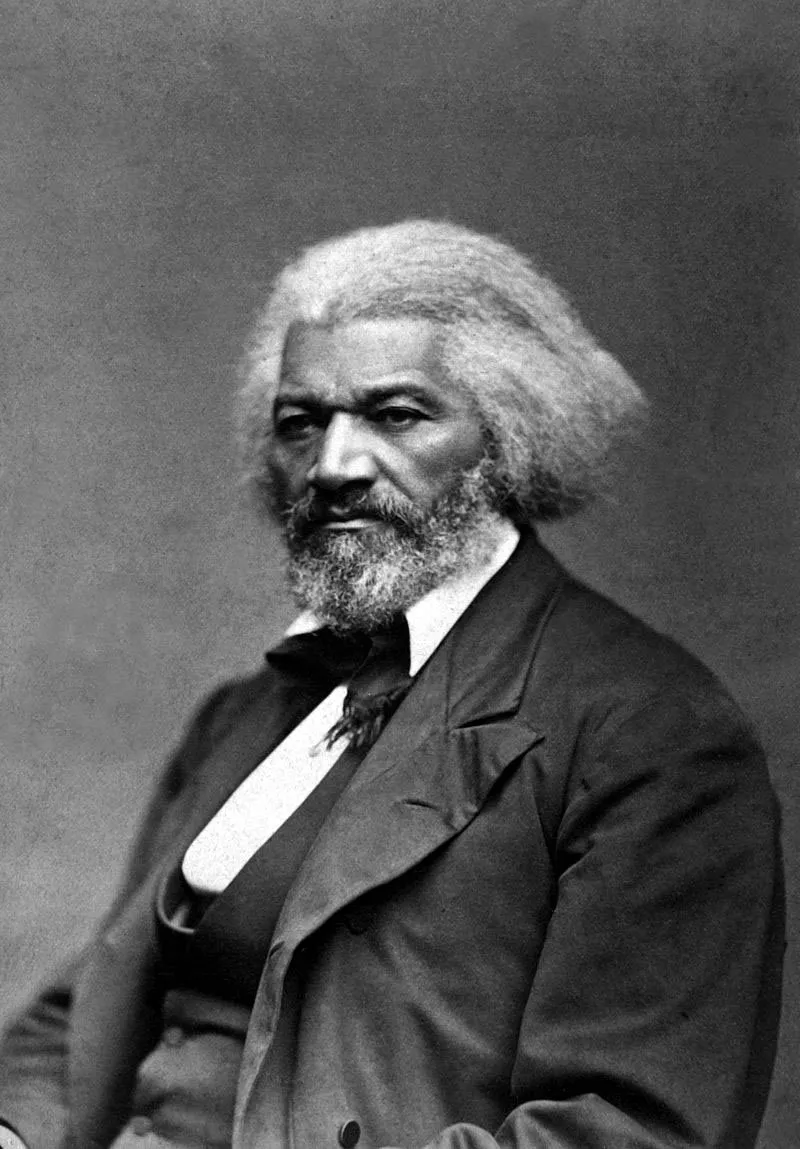
Frederick Douglass was a runaway enslaved person who emerged as the most important leader of the Civil Rights Movement in the 19th century. He was among the first fugitive enslaved people to call for an end to slavery. Today, he is most famously remembered for his autobiography, despite having no formal education and teaching himself to read and write. He condemned slavery as an affront to natural law and American republicanism.
In the autobiography by Frederick Douglass, “Narrative of the Life of Frederick Douglass, an American Slave,” Douglass described the horrors he experienced as a formerly enslaved person who escaped to freedom. When abolitionists offered to purchase his freedom, Douglass accepted and returned home to the United States legally free. Douglass’ journey and rise to fame as an abolitionist and author garnered him considerable support as he drove to abolish slavery. Ultimately, he was instrumental in terminating slave practices in the US in 1865 with the ratification of the 13th Amendment. The Amendment rendered slavery unlawful unless it resulted from punishment for criminal action. Notably, Douglass endured physical and mental agony, starvation, whipping, and other forms of abuse, and the loss of his ten-year-old youngest daughter, Annie, and his mother. Despite his grief and anguish, Douglass persistently fought to establish basic human (Constitutional) rights for African Americans, specifically the 15th Amendment - outlawing voter discrimination on account of race, religion, etc. His focused perseverance allowed him to maintain self-dignity despite the trauma he had undergone and “amend” the Constitution into what it is today.
Through education, Douglass preserved his sanity and well-being; as he enhanced his intellect, he maintained control of his situation. Whereas other enslaved people, whose education was restricted, were incapable of independence. Frederick Douglass was fortunate enough to be taught the alphabet at 12 by the wife of Baltimore slaveholder Hugh Auld, Sophia. When Auld prohibited his wife from teaching him, Douglass continued learning from white children in his neighborhood with whom he established a relationship. Douglass was not treated as property during this period -- but as a human. “People” in America were then (and currently are) required by law to attend school until a specific age. Thus, despite being an enslaved person and non-citizen, Douglass was able to glean glimpses of human freedom, becoming a legal scholar of the Civil Rights Movement. This education helped him interpret legal, political, and oratory documents that transformed the perspective of everyday Americans. One example was his resounding condemnation of the infamous Dred Scott v. Sanford case in 1883. Dred Scott, like Douglass, was an enslaved person who sued for freedom in a St. Louis Circuit. Scott claimed he was “free” due to St. Louis’ status as a slave-prohibited territory. The Supreme Court struck down the argument, ruling that enslaved people were not citizens of the United States and, thus, could not participate in the legal process. At a Civil Rights meeting at Lincoln Hall in Washington, DC, Douglass spoke, “O for a Supreme Court of the United States which shall be as true to the claims of humanity as the Supreme Court formerly was to the demands of slavery! When that day comes, as come it will, a Civil Rights Bill will not be declared unconstitutional and void, in utter and flagrant disregard of the objects and intentions of the National legislature by which it was enacted and of the rights secured by the Constitution.” For Douglass, the Dred Scott Decision, handed down by slave-holding justices, exposed the hypocrisy of the legal system.
Knowledge is power; thus, Frederick Douglass’s literary proficiency allowed him to write a book that would influence the formation of the Constitution. In addition, his education led to him meeting then President of the US, Abraham Lincoln, the land's highest office, in 1863, where Douglass later served as a consultant to Lincoln. In this role, Douglass convinced Lincoln to allow enslaved people to serve in the Union’s military forces and make abolition a priority of the Civil War. Reading changed his life, “The more I read, the more I was led to abhor and detest my enslavers” (42). One collection, The Columbian Orator by Caleb Bingham, includes speeches from Washington, Lincoln, and Jefferson. The Enlightenment Principles of faith and equality pushed by these presidents defined his views on freedom and human rights. His intelligence and passion for his cause were unmatched, even influencing the mind of the US President. Many free Americans, even today, did not experience this level of societal influence over others in a lifetime. Nevertheless, his literacy enabled him to interpret these readings that would change the scope of the Civil Rights Movement.
In summary, Frederick Douglass made the best of his difficult life by pursuing his beliefs amid the challenges he combatted as an enslaved person. By knowing his rights, he protested for the liberation of enslaved African Americans and worked towards an egalitarian society for all Americans. His impact on American society in both the legal and social sense has driven our perceptions of slavery and other forms of discrimination through the present day. Thus, he not only discovered his humanity, but he ensured others like him could hope for the possibility of a better life. It was written in our nation's founding document that in the US, “all men are created equal, endowed by their Creator with certain unalienable rights.” And the African American was and is most certainly a man in the eyes of the law. We can largely attribute the tremendous strides toward freedom to the tireless and passionate perseverance of men like Frederick Douglass.
Works Cited
Kruman, Marc W. "The Second American." JSTOR. Accessed December 10, 2022.
Wood, Gordon. "Empire of Liberty: A History of the Early Republic, 1789-1815." Google Books. Google. Accessed December 10, 2022.
Gibson, Alan. "Ancients, Moderns, and Americans: The Republicanism–Liberalism Debate Revisited." History of Political Thought 21, no. 2 (2000): 261–307.
Carey, Sammy. "The Tripartite American Judiciary: The Influence of the Mixed Constitution upon the Founding Fathers." eScholarship, University of California, August 8, 2018.
Baughman, Karl. "Parallel Lives: African Americans and the American Founders." Parallel Lives.