The New Landscape of NIL
Written by: Brianna Wilson
Edited by: Sophia Blucker
Abstract
The new legal landscape of collegiate athletics transformed the estranged relationship between athletes, university athletic staffing, and governing institutions such as the National Collegiate Athletic Association (NCAA). The NCAA’s constitution championed amateurism regulations, forbidding payment to athletes for any means beyond education purposes, with the underlying message of collegiate athletics remaining purely recreational and distinct from professional athletics. Amateurism rules made athletes “cash cows”, allowing universities to use an athletes name, image and likeness (NIL), to increase funding and recognition for their university's sports programs. Seen mainly in the revenue-sports football and basketball, the prior lack of NIL payment exploited Black athletes, who make up the minority in the NCAA but top the charts in popularity. The landmark case of House V. NCAA dismantled the restrictive trade and antitrust policies of the NCAA, holding the institution accountable for withholding athlete earnings, and enforcing new revenue models that compensate athletes in proportion to their universities’ usage of their popularity and name.
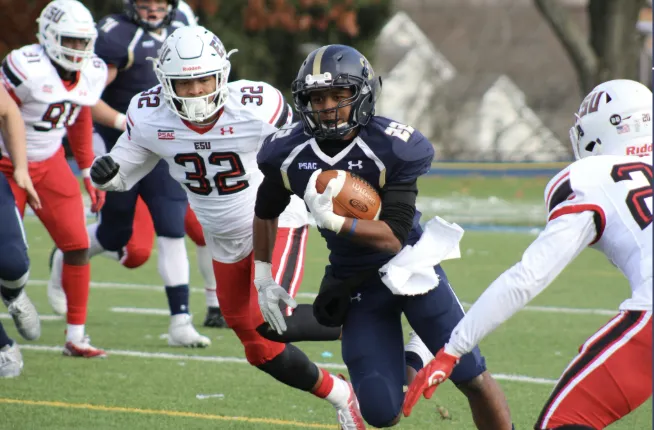
The National Collegiate Athletic Association (“NCAA”) and universities have long portrayed themselves as bastions of amateur athletics, even while evolving into a multi-billion-dollar industry in which the only participants generating but arguably not sharing in the wealth are the predominantly athletes of color playing on the football and basketball teams – the “revenue sports.” To justify the lack of proper compensation, the NCAA established amateurism rules, which mandate that athletes should play not for monetary gain, but instead for the love of the sport. Recent Supreme Court decisions, such as House V. NCAA, signal that many of the association’s restrictions that preserve amateur status likely violate antitrust law as well as state legislation that precludes college and university sport administration’s interference with athletes’ ability to profit from their Name, Image, Likeness (NIL).
NIL refers to a student-athlete’s ability to monetarily benefit from their name, image, and likeness. Lebron James Jr. (Bronny) estimated an NIL valuation of about $6.1 million during his short one-year career at the University of Southern California [1]. Rooted in the “right of publicity,” NIL gives individuals control over how their identity is used for commercial purposes. The right of publicity isn’t recognized in federal law or legislative statutes, but protected under Restatement of the Law, Second, Torts, § 652, which restates the general principles for American common law in the area of civil and personal injury disputes. The restatement protects the interest of the individual in the exclusive use of his own identity when others advertise the defendant's business or product, for commercial purposes [2]. One's image and name in college sports fall under “business or product”, as it is the student-athlete's personal brand. The NCAA uses a player's likeness for game advertisements, jersey sales, and even game avatars if the athlete plays a revenue sport - sports that earn a university a majority of their athletic profit. Although no reliable numerical data is available, NIL Store, responsible for the sale of athlete-specific merchandise, reported the top-selling athletes of October 2025 to be Azzi Fudd (University of Connecticut Women’s Basketball) and Luke Altmyer (University of Illinois Urbana-Champaign Football) [3]. Fudd’s NIL valuation sits between $750,000 and $1 million[4], and Altmyer’s is undetermined, but he has appeared in promotions for big companies such as Cheez-its [5]. NIL restrictions essentially rob the athletes of money and practically take money from them all by using their likenesses. The infringements overwhelmingly harm revenue sports, with most first-generation college students playing either basketball or football and using their scholarship awards to support their families. Socio-demographic and NCAA knowledge suggest that the Black athletes in the NCAA are the minority, with 12,918 Black basketball players reported playing for the NCAA, comparable to the 15,369 White basketball players; the football demographic lists 33,523 Black male NCAA football players and 34,628 white male players. Overall, in 2025, the NCAA reported 89,090 Black athletes and 337,836 White athletes [6]. Despite white athletes outnumbering Black athletes in the NCAA, black athletes continue to top the charts in popularity and performance statistics. According to ESPN, the top 3 collegiate football players ahead of the 2025 season included Caleb Downs (3rd), Anthony Hill Jr. (2nd), and Jeremiah Smith (1st), all of whom are African American NCAA athletes [7]. Smith broke the Big Ten Freshman receiving yards record in 2024-the same year he won the national championship, while Downs and Hill had a combined total of 140 tackles in the 2024 season. In basketball, BYU freshman and African American phenom AJ Dybansta earned the title of “most anticipated collegiate debut”. Dybansta is currently the most popular basketball player in the nation, and now tops the NIL valuation chart with a value of $4.4 million [8]. The need for proper recognition and compensation remains salient, and the matter’s urgency increases when African American athletes enter the conversation. The travel and adaptation to various cultural and athletic environments, all while putting on an elite display of athletic prowess and elevating their programs, deserve praise. They routinely assume the role as the face of championship teams, garner media attention, and enhance the marketability of collegiate sports. As the minority population, it's imperative that African American collegiate athletes receive equal access to financial opportunities and institutional support as they continue to grow the sports industry.
Further, the world of sports across all genders has garnered immense attention from 2022-2025, due to the emergence of formidable athletes and breakout African American stars such as Jeremiah Smith, Flaujae Johnson, AJ Dybansta, and Angel Reese. However, the revenue earned by sports has remained high over this time, yet the payout to athletes remains consistently low. Division 1 and its subdivisions, Football Bowl Subdivision (FBS) and Football Championship Subdivision(FCS), reported spending just over 18.8 billion on athletics in 2019. Approximately $3.6 billion was spent on financial aid for student-athletes, and approximately $3.7 billion covered coaches’ compensation [9]. FBS and FCS are the two highest levels of NCAA Division I college football. FBS and FCS differ in the NCAA’s level of financial commitment, the championship format, and the number of scholarships. The FBS has more resources and therefore can grant more scholarships, alongside a postseason bowl system, while the FCS has a playoff tournament. The number of coaches is disproportionate to the number of athletes, making the small pay difference concerning.
Due to the improper payment of African American athletes and athletes in general, Shawne Alston, a former Black running back for West Virginia University, filed a lawsuit against the NCAA in 2014, before coming to the Supreme Court in 2021[10]. Alston and his legal team cited the Sherman Antitrust Act as the item of violation. The Sherman Antitrust Act authorized the federal government to institute proceedings against trusts to dissolve them. Any combination "in the form of trust or otherwise that was in restraint of trade or commerce among the several states, or with foreign nations" is declared illegal [11]. The court unanimously found the NCAA’s compensation rules violated the Sherman Act, deeming the pay restraints against athletes interstate and foreign commerce, and therefore illegal. Supreme Court Justice Kavanaugh wrote his concurring opinion, blasting the NCAA for its suppression of pay for student athletes, which disproportionately affects African American athletes [12]. As a result of NCAA v. Alston, athletes were awarded room, board, books, and other educational benefits (a tutor), all capped at $6,000, alongside improved medical benefits and a student assistance fund for athletes expressing financial need [13]. Alston’s case unprecedentedly lifted the limits on education-related compensation/in-kind benefits for student athletes and further attenuated the NCAA’s control over student-athlete compensation. Alston re-established the delicate relationship between universities or colleges and student-athletes from a business transactional perspective. It revealed the evolving landscape of college athletics in terms of fair compensation and treatment. Alston called out the NCAA, which relies heavily on amateurism to exploit student-athlete labor for free or for a lower price, as they would be considered ‘non-employees” [14]. The fight for adequate treatment for athletes didn’t stop here.
In June of 2020, after numerous complaints of fame and recognition not matching pay, the fight for NIL compensation made its way to the courtroom. Athletes Grant House and Sedona Prince led a class action antitrust lawsuit-a case where one person files on behalf of a large group suing a company or organization- seeking reparations for damages inflicted upon them by the NCAA. House began as a collegiate swimmer at Arizona State University (ASU), and Prince signed her NCAA basketball contract 2 years later in 2019 at the University of Oregon. Since the start of her collegiate career, Prince has amassed over 2.4 million followers on TikTok. House, although with a less active social media presence -only 4,000 TikTok followers- his swim times put ASU’s swim program on the map. The influence accumulated by both parties placed a spotlight which aided in ticket sales and widespread media attention that bolstered each university's reputation. However, House and Prince’s reach didn’t equate to respect and pay from their schools' new surplus of funds fostered by their likeness.
House earned certification as a class action lawsuit in 2023, and an initial settlement was reached in 2024, but now three other lawsuits have been brought against the NCAA.
On June 6th 2025, House and Prince engaged in a 2.78 billion dollar settlement with the NCAA. The NCAA now allows college athletes to be compensated adequately for use of their name, image, and likeness in a billion-dollar industry, dismantling the cycle of exploitation between staff and players. The “House Settlement” demanded a payout of $2.78 billion over 10 years, and an annual $280 million payment to athletes who train and compete tirelessly in their sport and the media[15]. Finally, many Black and low-income athletes stand to earn the true value of their hard work. NIL Deals entice players to continue their athletic careers longer while committing to pursuing a degree. Without NIL scholarships, players faced a crossroads: leave college to make money or stay and college and remain undercompensated and overworked. Between academics, practice, and traveling for games, there’s no time for players to work traditional jobs in order to pay for necessities. Some athletes resorted to lucrative measures to receive pay, ultimately resulting in punishment by the NCAA. For example, former NFL running back Reggie Bush accepted monetary gifts during his collegiate career at USC from 2003 to 2005. Bush violated NCAA rules on amateurism, receiving compensation beyond necessary expenses and monetary imbursement for media coverage based on athletic talent and ability [16]. One can argue that Bush’s benefits were justified, including living arrangements near USC, a notoriously costly area. His punishments included the stripping of his Heisman Trophy, one of the greatest accolades a football athlete can earn [17]. Now, with NIL, athletes are deferring from the draft and professional sports to freely and legally take advantage of the money and opportunities that would cease to exist had the athlete turned professional. This is best seen through Caitlin Clark and Azzi Fudd completing all 4 years of college at Iowa State and the University of Connecticut, respectively-obtaining their bachelor’s before declaring for the draft.
Overall, the House settlement attempts to prevent future exploitation of the athletes in a growing industry. It is important to start tackling such issues at the collegiate level to prevent the professional league from following the same notion. For instance, the WNBA stands in conflict with some of its top-tier athletes. The publicity from the House lawsuit inspired WNBA athletes to take a stand of their own, advocating for respect and proper pay as the league expands. Athletes, such as Naphesa Collier, an avid critic of the WNBA’s low salaries, continue to protest against the WNBA for its low salaries despite the recent boom in ticket and jersey sales, sporting “Pay Us What You Owe Us” shirts at the 2025 WNBA All-Star Game- the most highly anticipated All-Star games in WNBA history [18]. Ending the imbalance in the “pro-amateur” realm is the lowest step on the ladder to the peak goal of equitable payment in the professional companies. The dispute between the NCAA and its athletes allows readers to consider other entertainment sectors, such as acting, where children or female actors aren’t paid proper wages.
[1] “Bronny James, Fresh off Committing to USC, Is Most Marketable Young Athlete”
[2] The American Law Institute.”Restatement of the Law, Second, Torts, § 652
[3] “October Nil Store Rankings: UConn Dominates as Basketball Returns.”
[4] “Azzi Fudd Net Worth: How Much Does She Earn from Her Nil Deals and Endorsements?”
[5] “Cheez-It Signs Nils with Cheez-It Citrus Bowl Players.”
[6] “NCAA Demographics Database.”
[7] “Ranking the Top 100 College Football Players Ahead of the 2025 Season.”
[8] Hauser, Jeff. “BYU’s AJ Dybantsa Tops Nil Valuation List
[9] 15-Year Trends in Division I Athletics Finances
[10] 20-512 National Collegiate Athletic Assn. v. Alston
[11] “Sherman Anti-Trust Act (1890).”
[12] Jr., Harry Lyles.“National College Players Association Files Civil Rights Complaint
[13] Dodd, Dennis, et al. “Black College Athletes Allege in Filed Complaint NCAA Is Violating Civil Rights”
[14] “Scotus Analysis: NCAA V. Alston: Emory University School of Law: Atlanta, GA.”
[15] id at 10.
[16] “NCAA Amateurism Rules Explained.”
[17] Jeyarajah, Shehan, et al. “How Did Reggie Bush Lose His Heisman Trophy?
[18] Andrews, Kendra, et al. “‘United’ WNBA All-Stars Wear ‘Pay Us What You Owe Us’ Shirts.”
Works Cited
15-Year Trends in Division I Athletics Finances, ncaaorg.s3.amazonaws.com/research/Finances/2023RES_DI-RevExpReport_FINAL.pdf.
20-512 National Collegiate Athletic Assn. v. Alston (06/21/ ...,www.supremecourt.gov/opinions/20pdf/20-512_gfbh.pdf. Accessed 17 Oct. 2025. Boozang, Kathleen M. Marquette Sports Law Review Marquette Sports Law Review Volume 35-NIL Necessitates Shared Medical Decision Making for College Athletes , 2024, scholarship.law.marquette.edu/cgi/viewcontent.cgi?article=1912&context=sportslaw.
Andrews, Kendra, et al. “‘United’ WNBA All-Stars Wear ‘Pay Us What You Owe Us’ Shirts.” ESPN, ESPN Internet Ventures, www.espn.com/wnba/story/_/id/45778770/wnba-all-stars-wear-pay-us-owe-us-warmup-shirts. Accessed 21 Nov. 2025.
“Bronny James, Fresh off Committing to USC, Is Most Marketable Young Athlete” FOX Sports, FOX Sports, 10 May 2023, www.foxsports.com/stories/college-basketball/bronny-james-fresh-off-committing-to-usc-is-most-marketable-young-athlete-in-sports.
Dodd, Dennis, et al. “Black College Athletes Allege in Filed Complaint NCAA Is Violating Civil
Rights by Capping Compensation.” CBS Sports, www.cbssports.com/college-football/news/black-college-athletes-allege-in-filed-complaint-ncaa-is-violating-civil-rights-by-capping-compensation/#:~:text=Approximately%2056%25%20are%20white.,advocacy%20group%20based%20in%20California. Accessed 17 Oct. 2025.
Hauser, Jeff. “BYU’s AJ Dybantsa Tops Nil Valuation List, Hitting Another Career Milestone.”
Sporting News, 14 Nov. 2025, www.sportingnews.com/us/ncaa-basketball/news/byus-aj-dybantsa-tops-nil-valuatin-list-hitting-another-career-milestone/244a9cd7214cb0f5672fdc2c.
Jeyarajah, Shehan, et al. “How Did Reggie Bush Lose His Heisman Trophy? Answering Key Questions with Ex-USC Star Back among Award Winners.” CBS Sports, www.cbssports.com/college-football/news/how-did-reggie-bush-lose-his-heisman-trophy-answering-key-questions-with-ex-usc-star-back-among-award-winners/. Accessed 21 Nov. 2025.
Jr., Harry Lyles. “National College Players Association Files Civil Rights Complaint with U.S.
Department of Education Against Division I Schools.” ESPN, ESPN Internet Ventures, www.espn.com/college-sports/story/_/id/33571345/national-college-players-association-files-civil-rights-complaint-us-department-education-vs-div-1-schools#. Accessed 17 Oct. 2025.
“NCAA Amateurism Rules Explained.” NCSA College Recruiting, 13 Feb. 2025, www.ncsasports.org/ncaa-eligibility-center/amateurism-rules.
“NCAA Demographics Database.” NCAA.Org, www.ncaa.org/sports/2018/12/13/ncaa-demographics-database.aspx. Accessed 17 Oct. 2025.
“October Nil Store Rankings: UConn Dominates as Basketball Returns.” NIL Store | October NIL Store Rankings: UConn Dominates as Basketball Returns Article, nil.store/blogs/news/updates-october-nil-store-rankings-2025. Accessed 21 Nov. 2025.
Ra. “Azzi Fudd Net Worth: How Much Does She Earn from Her Nil Deals and Endorsements?” MARCA, Marca, 21 July 2025, www.marca.com/en/lifestyle/celebrity-net-worth/2025/07/21/687e0f2322601dad738b45cd.html.
“Ranking the Top 100 College Football Players Ahead of the 2025 Season.” ESPN, ESPN Internet Ventures, www.espn.com/college-football/story/_/id/45798030/2025-season-college-football-ranking-top-100-players-jeremiah-smith-cade-klubnik#25. Accessed 21 Nov. 2025.
“Scotus Analysis: NCAA V. Alston: Emory University School of Law: Atlanta, GA.” SCOTUS Analysis: NCAA v. Alston | Emory University School of Law | Atlanta, GA, law.emory.edu/news-and-events/releases/2021/08/scotus-yoo-ncaa-v-alston.html. Accessed 17 Oct. 2025.
“Sherman Anti-Trust Act (1890).” National Archives and Records Administration, National Archives and Records Administration, www.archives.gov/milestone-documents/sherman-anti-trust-act. Accessed 17 Oct. 2025.
The American Law Institute.”Restatement of the Law, Second, Torts, § 652, cyber.harvard.edu/privacy/Privacy_R2d_Torts_Sections.htm. Accessed 17 Oct. 2025.