Poisoned by Policy: Environmental Racism in the Modern Legal System
Written by: Genesis Dacosta
Edited by: Rafaela Drake
Abstract:
This article examines the roots of environmental racism. It explores early twentieth-century housing and zoning policies that confined Black communities to segregated, under-resourced neighborhoods. Through redlining maps created by banks and federal agencies, these neighborhoods were labeled “risky,” creating the conditions for decades of toxic facility placements, pollution, and serious health disparities. Using Chester Residents Concerned for Quality Living v. Seif and McCastle v. Rollins Environmental Services, the article highlights how Black communities fought against decisions to place hazardous facilities in their neighborhoods. It also expands the discussion to food deserts, explaining how access to healthy food is shaped by the same discriminatory structures. As someone interested in environmental law and civil rights, achieving environmental justice requires strengthening legal protections and redesigning urban planning so that all communities have access to clean air, safe housing, and healthy food.
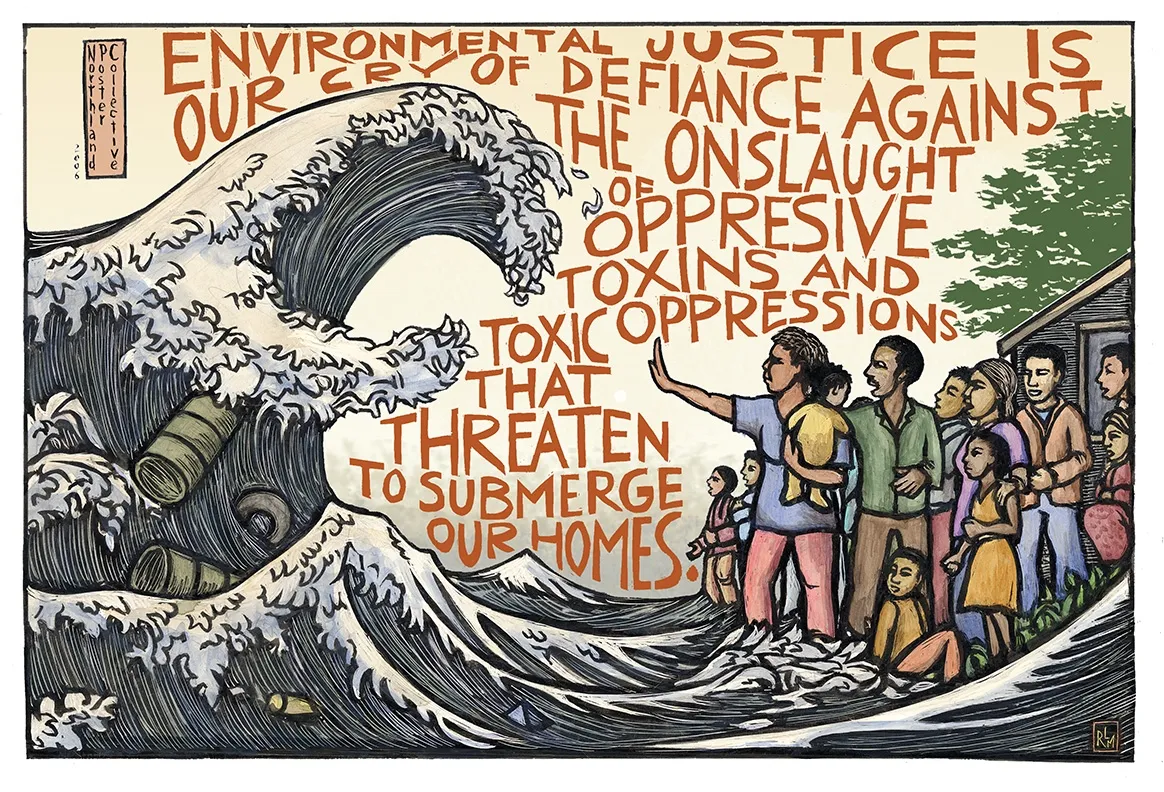
The roots of environmental racism run deeper than pollution; they reach back to the segregated housing maps created by banks and developers in the early twentieth century. Redlining created “undesirable” black neighborhoods, which subsequently became boundaries for pollution, zoning neglect, and public health disparities that still exist today. From discriminatory mortgage lending to exclusionary zoning laws, the housing placement of minority communities has long determined their exposure to toxic industries and a lack of environmental protection [1]. Some opponents argue that environmental hazards are the result of economic necessity or urban development decisions, while others contend that the placement of toxic facilities in minority neighborhoods reflects deliberate neglect and discriminatory policy [2]. Scholars Dorceta E. Taylor and Harriet A. Washington defined environmental racism as not simply about pollution, but about power. Historical and structural injustices persist through modern law and policy [3]. The modern-day struggle for environmental justice reveals how courts and agencies often reinforce, rather than dismantle, unequal exposure to environmental harm. Beyond factories and landfills, environmental injustice is visible in everyday neighborhoods where fast-food restaurants outnumber grocery stores. Environmental racism persists today not only because of historical housing and zoning policies, but also due to the structural limitations of legal frameworks and urban planning. Discriminatory planning has poisoned not only the air residents breathe but also the food they can eat [4].
The geography of environmental racism in the United States was created before the first environmental justice lawsuit was ever filed. In the early twentieth century, racially restrictive covenants and federal housing policies systematically confined black and brown families to segregated neighborhoods [5]. The Federal Housing Administration (FHA) and Home Owners’ Loan Corporation (HOLC) established this segregation through redlining maps that marked minority neighborhoods as “hazardous” for investment [6]. The federal government played a central role in institutionalizing redlining through the Federal Housing Administration. The FHA sponsored redlining from 1934 through the 1960s. From the start, the FHA claimed that mortgages in neighborhoods with current or future black residents were “unsafe,” which made race a key part of how corporations judged loan risk [7]. These communities suffered decades of disinvestment, substandard housing, and proximity to industrial zones, a pattern that still exists in many cities today. Today, about three-quarters of the neighborhoods that the Home Owners’ Loan Corporation (HOLC) once designated “hazardous” remain low- to moderate-income, and nearly two-thirds are now predominantly minority communities [8]. Cities where these formerly high-risk areas are largely minority neighborhoods also show much higher levels of economic inequality. The same mechanism appears in cities where the HOLC’s “desirable” areas have remained mostly white [9].
Discriminatory housing practices did more than determine where people could live; they determined which communities would face the greatest exposure to environmental hazards. City planners often zoned redlined areas for industrial or waste facilities, arguing that property values were already low and residents lacked political influence to resist [10]. In Toxic Communities, Dorceta E. Taylor describes how these policies created what she calls “environmental ghettos,” places where racial segregation and industrial exploitation intersect [11]. Those zoning decisions continue to expose residents of color to higher levels of air pollution, lead contamination, and waste hazards. Harriet A. Washington extends this historical analysis in A Terrible Thing to Waste, linking these structural inequities to long-term health and cognitive consequences. She notes that African American and Latino children are disproportionately affected by neurotoxic exposures precisely because of where they live, a result of past housing discrimination rather than personal choice [12]. She notes that African American and Latino children are disproportionately exposed to neurotoxins precisely because of where they live, with black children nearly three times more likely than white children to have dangerously high blood-lead levels [13]. This disparity connects directly to the placement of industrial sites and substandard housing in their communities [14]. The intersection of redlining and discriminatory zoning not only segregated communities but also left communities of color disproportionately exposed to environmental hazards, a pattern that persists despite decades of legal reform [15]. Many of these initiatives, such as the Fair Housing Act and early environmental justice programs, failed to fully address these inequalities because they lacked strong enforcement, faced local resistance, and allowed exclusionary zoning practices to continue.
The 1997 case Chester Residents Concerned for Quality Living v. Seif became an early landmark in environmental justice litigation under Title VI of the Civil Rights Act of 1964. Chester, Pennsylvania, a predominantly black community near Philadelphia, challenged the state’s decision to permit another waste facility in their already disproportionately impacted neighborhood [16]. This community had been targeted for multiple waste-treatment and hazardous-facility permits issued by the state’s Department of Environmental Protection [17]. Community members argued that the repeated approval of waste and industrial facilities in Chester caused serious health problems and violated Title VI by allowing state agencies to approve policies that had a racially discriminatory impact [18]. The U.S. Court of Appeals for the Third Circuit initially held that residents could bring a lawsuit under the Environmental Protection Agency’s regulations, recognizing their right to challenge environmental policies that disproportionately harmed communities of color, even without proof of intentional discrimination [19]. Although the Supreme Court later nullified the ruling because the underlying permit was withdrawn, Chester still marked a turning point by exposing the limitations of federal environmental law in addressing racial inequity [20].
Dorceta E. Taylor describes Chester as a case where zoning decisions and racial segregation intersect to create consistent patterns of environmental exposure [21]. Residents in these neighborhoods face higher rates of asthma, lead poisoning, and cognitive decline, the direct health effects of long-term neglect [22]. The Chester case highlights both the progress and the limitations of using civil-rights laws to fight environmental racism: it validated what many marginalized communities had long suspected—that government action often reinforces, rather than resolves, environmental inequality.
In the small community of Alsen in East Baton Rouge Parish, Louisiana, the case McCastle v. Rollins Environmental Services played a key role in shaping the early legal understanding of environmental racism by highlighting how hazardous waste sites were disproportionately placed in black neighborhoods, even before the term “environmental racism” gained legal recognition. Residents alleged that a hazardous-waste disposal facility operated by Rollins Environmental Services targeted their predominantly black community for land farming and sludge treatment, despite the availability of safer and less-polluted locations in majority-white neighborhoods [23]. The plaintiffs argued that placing the facility in Alsen was not simply a matter of industrial convenience, but reflected choices targeting neighborhoods that were racially segregated, politically marginalized, and least able to resist [24]. Although the case never went to a full trial because the parties ultimately settled, it succeeded in achieving class certification and drew national attention to how hazardous-waste placement disproportionately affects poor and minority communities [25]. Furthermore, it added to the foundation of the legal doctrine of environmental justice, showing the importance of how communities of color challenge not only individual permit decisions but structural patterns of industrial exposure [26]. McCastle v. Rollins Environmental Services reveals structural problems within the institutions and policies that perpetuate environmental racism. Segregated housing and limited mobility leave marginalized communities trapped in zones of toxic exposure, while land-use and zoning decisions intensify these harms over time. Even when legal challenges are available, residents face barriers such as strict rules about who can sue and tight deadlines, and their efforts are limited by a lack of resources, including the cost of lawyers and the inability to afford independent environmental testing [27]. In Alsen, residents reported chronic illnesses, soil contamination, and declining property values, all outcomes linked to long-standing patterns of unequal regulation and political neglect [28]. Environmental racism is reinforced through both policy and law. Like the other cases discussed, McCastle reveals that structural inequality persists not because of a single decision, but because of a system that continually exposes low-income and minority communities to disproportionate environmental harm [29]. Environmental racism extends beyond pollution and zoning; it also appears in how urban planning shapes access to basic resources like food and clean air. In many low-income and minority neighborhoods, decades of disinvestment have produced what researchers call “food deserts,” areas where fresh, affordable, and healthy foods are scarce [30]. These communities are often saturated with fast-food restaurants and convenience stores that sell processed, low-nutrient foods. The placement of these businesses is not random, but reflects the same economic and racial logics that guided discriminatory zoning throughout the twentieth century [31]. Historically, redlining and exclusionary zoning not only confined black families to under-resourced neighborhoods but also deterred grocery chains from investing there. For example, a nationwide study of 102 census tracts found that those graded “hazardous” during the redlining era are more likely today to be characterized by unhealthy food environments, including fewer full-service grocery stores and more fast-food restaurants [32]. Private developers and local governments prioritized short-term profit and tax revenue over public health, promoting the spread of fast-food outlets in busy areas while ignoring the need for grocery stores and green spaces [33]. As a result, residents face higher rates of obesity, diabetes, and heart disease, conditions made worse by limited access to healthcare and environmental pollutants. These outcomes reinforce the cycle of inequality: unhealthy communities are portrayed as “undesirable” for development, which in turn justifies further neglect [34]. From a legal standpoint, addressing food-access inequities presents challenges similar to those in environmental racism litigation. Courts have been hesitant to view the absence of supermarkets or the overconcentration of fast-food restaurants as civil-rights violations, since such patterns are often framed as “market outcomes” [35]. However, advocates argue that public health and land-use law can be leveraged together to regulate zoning density, provide incentives for grocery investment, and prioritize equity in urban planning.
Environmental justice means expanding the legal and policy discussion beyond pollution permits and hazardous waste. The cases examined in this article, McCastle and Chester, show that the same structures that once enforced redlining and discriminatory zoning continue to influence which neighborhoods lack grocery stores and green space, and which communities face legal and financial barriers when seeking relief. Combating environmental racism requires viewing urban planning as a legal issue that connects environmental health, food equity, and the right to live in a safe and sustainable community.
[1] Taylor, Toxic Communities.
[2] Rothstein, The Color of Law.
[3] Taylor, Toxic Communities.
[4] Morland & Filomena, “Disparities in the Availability of Healthy Foods.”
[5] Rothstein, The Color of Law.
[6] “Redlining,” Federal Reserve History.
[7] HOLC, “Residential Security Map for Chicago (1939).”
[8] “HOLC ‘Redlining’ Maps: The Persistent Structure...”
[9] Bullard, “Environmental Justice for All.”
[10] Taylor, Toxic Communities.
[11] Id at 10
[12] Washington, A Terrible Thing to Waste.
[13] Id at 12
[14] Chester Residents Concerned for Quality Living v. Seif
[15] Cole & Foster, From the Ground Up.
[16] Washington, A Terrible Thing to Waste.
[17] Id at 16
[18] Id at 16
[19] Carrasco, “Public Wrongs, Private Rights.”
[20] Bullard, “Environmental Justice for All,”.
[21] Taylor, Toxic Communities.
[22] Washington, A Terrible Thing to Waste.
[23] McCastle v. Rollins Environmental Services.
[24] Id at 23
[25] Ibid.
[26] Ibid.
[27] Ibid.
[28] Ibid.
[29] Gallagher, Examining the Impact of Food Deserts.
[30] Taylor, Toxic Communities.
[31] Meltzer & Patel, “Zoning and the Food Environment.”
[32] Washington, A Terrible Thing to Waste.
[33] Bullard, Dumping in Dixie.
[34] Squires & Hartman, “The Continuing Significance of Discrimination.”
[35] Ver Ploeg et al., Access to Affordable and Nutritious Food.
Works Cited
Bullard, Robert D. Dumping in Dixie: Race, Class, and Environmental Quality. Boulder, CO: Westview Press, 1990. p. 45–53.
Bullard, Robert D. “Environmental Justice for All.” EPA Journal 18, no. 1 (1992): 11–13.
Carrasco, Gilbert Paul. “Public Wrongs, Private Rights: Private Attorneys General for Civil Rights.” Brigham Young University Law Review (1998): 321–339.
Chester Residents Concerned for Quality Living v. Seif, 132 F.3d 925 (3d Cir. 1997).
Cole, Luke W., and Sheila R. Foster. From the Ground Up: Environmental Racism and the Rise of the Environmental Justice Movement. New York: NYU Press, 2001. 34–50.
Federal Home Owners’ Loan Corporation. “Residential Security Map for Chicago, 1939.” Mapping Inequality Project. University of Richmond, 2016.
Gallagher, Mari. Examining the Impact of Food Deserts on Public Health in Chicago. Chicago: Mari Gallagher Research & Consulting Group, 2006.
Li, Min, and Faxi Yuan. “Historical Redlining and Food Environments: A Study of 102 Urban Areas in the United States.” Health & Place 75 (2022): Article 102775. https://doi.org/10.1016/j.healthplace.2022.102775.
Meltzer, Rachel, and Purvi Patel. “Zoning and the Food Environment.” Urban Affairs Review 54, no. 1 (2018): 126–150.
Morland, Kimberly, and Kelly R. Filomena. “Disparities in the Availability of Healthy Foods and Fast-Food Restaurants.” American Journal of Preventive Medicine 30, no. 2 (2006): 155–162.
McCastle v. Rollins Environmental Services, 514 F. Supp. 936 (M.D. La. 1981). https://law.justia.com/cases/louisiana/supreme-court/1984/83-c-2621-1.html
Federal Reserve History. “Redlining.” June 2, 2023. https://www.federalreservehistory.org/essays/redlining
Rothstein, Richard. The Color of Law: A Forgotten History of How Our Government Segregated America. New York: Liveright, 2017. 59–65, 64–78.
Squires, Gregory D., and Chester Hartman. “The Continuing Significance of Discrimination in the Metropolis.” Urban Affairs Review 50, no. 6 (2015): 931–958.
Taylor, Dorceta E. Toxic Communities: Environmental Racism, Industrial Pollution, and Residential Mobility. New York: NYU Press, 2014. 27–35, 41–55, 90–97, 168–171.
Ver Ploeg, Michele, et al. Access to Affordable and Nutritious Food: Measuring and Understanding Food Deserts and Their Consequences. Washington, DC: U.S. Department of Agriculture, 2009.
Washington, Harriet A. A Terrible Thing to Waste: Environmental Racism and Its Assault on the American Mind. New York: Little, Brown and Company, 2019. 34–35, 44–49, 194–198.
“HOLC ‘Redlining’ Maps: The Persistent Structure of Segregation and Economic Inequality.” National Community Reinvestment Coalition (NCRC), 2018.