The Policing of Afro-American Expression: Lyrics as Evidence in Court and the Implications on the First Amendment
Written by: Sophia Marin Stoute
Edited by: Armando Gimenez
Abstract:
This article examines the criminal prosecution of Jeffery Lamar Williams—known globally as Young Thug—specifically focusing on the usage of his rap lyrics as character evidence in a high-profile Racketeer Influenced and Corrupt Organizations Act (RICO) case. It explores how the criminal justice system disproportionately uses rap lyrics by Afro-American artists to portray criminal propensity, thereby extending its reach beyond traditional forms of policing into the domain of Afro-American cultural expression. The article argues that this practice exemplifies systemic racial bias and reveals how the legal system weaponizes artistic creativity to criminalize Afro-American identity. Additionally, this piece critiques the broader implications of admitting lyrics as evidence in any case, asserting that doing so violates the First Amendment’s protection of freedom of expression. Rather than seeing lyrics as fiction, metaphor, or performance—as is typically afforded to Euro-American artists—courts and prosecutors disproportionately frame the lyrics of Afro-American musicians as literal confessions of criminal behavior. The selective enforcement of these evidentiary practices reflects not only racial double standards, but also a deeper societal discomfort with and surveillance of Afro-American art. Through a legal and cultural analysis of Young Thug’s case, this article sheds light on how the courtroom becomes a space where stereotypes override fairness, and where Afro-American artists must defend not only their purported innocence, but their right to artistic freedom.
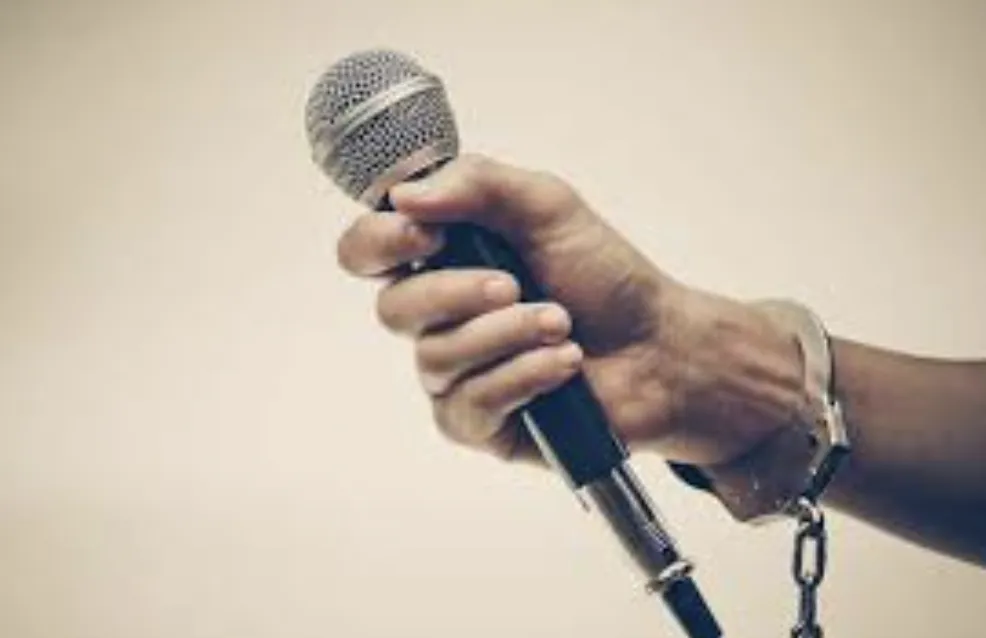
The criminal justice system is frequently critiqued as a system that disproportionately impacts Afro-Americans through racial profiling, increased policing in predominantly Afro-American neighborhoods, and harsher sentencing [1]. However, outside of these egregious injustices faced by Afro-Americans, the criminal justice system extends its reach to Afro-American musicians by referencing their lyrics in court as a form of evidence. In 2022, Jeffery Lamar Williams, known to the world as Young Thug, faced a Racketeer Influenced and Corrupt Organizations Act, referred to as “RICO,” indictment in Georgia. The “RICO” charge, which names Williams alongside 28 others allegedly connected to the Young Stoner Life “YSL” collective, accuses Young Thug and other named individuals of operating as a criminal enterprise responsible for violent acts, including murder, robbery, and gun possession. This case sparked a national debate, making news headlines in Billboard and CNN, prompting Young Thug’s fans to create “Free YSL” posters, and eventually leading to a congressional bill proposition. This case was in the public eye not only due to Young Thug's popularity as a musician, but especially due to the decision by Judge Ural Glanville to admit Young Thug’s rap lyrics as evidence of his alleged criminal activity. Legally, lyrics often function as “character evidence,” content used to suggest a person’s propensity for crime [19]. Under normal evidentiary rules, such as Federal Rule of Evidence 404, this act is intended to be highly restricted to prevent bias in court proceedings [2]. However, in many state courts, including Georgia, judges have broad discretion to admit such material if they find it relevant and probative [3]. This article does not condone any alleged or proven acts of violence and is not intended to support Young Thug. Instead, this article examines how a judge's decision to admit lyrics as evidence in a criminal proceeding is often reserved to Afro-American musicians—extending the reach of the criminal justice system's disenfranchisement of Afro-Americans, and infringing on freedom of expression protected by the First Amendment [20].
Young Thug’s case illustrates how the legal system is empowered to police Afro-American expression and interpret it as criminality. As one of many examples, Afro-American citizens are far more likely to be stopped by police and sentenced more harshly despite being less likely to possess contraband in California, and over 50% more likely to be searched in New York [4][5]. These disparities highlight that Afro-American citizens can be viewed by the legal system as inherently violent with a higher propensity towards crime. Similarly, Afro-American musicians are disproportionately targeted in the referring of lyrics as evidence. Afro-American art is rarely given the benefit of creative interpretation. Lyrics from rap and hip-hop are often judged as evidence of criminality, while violent or dark themes in white genres—metal, punk, country—are rarely introduced as evidence of real-life criminal intent and instead characterized as fictional.
Prosecutors, those bringing the “RICO” charges against Young Thug, argue that his music is not just art but autobiographical evidence—criminal confessions masked as entertainment [13]. Interestingly, Young Thug’s lyrics referenced in the “RICO” case were handpicked from over 1,000 recorded songs, cited for “violent imagery” and references to gang life. The lyrics, however metaphorical or fictional, were reframed as factual confessions—a legal strategy that poses serious implications for free speech, artistic expression, and racial justice [6]. For example, in the indictment against Young Thug and others, the prosecution used lyrics such as “Fuck, fuck the police (fuck’em), in a high speed,” and “I escaped every one of the licks cause I was supposed to be rich, I don’t care nothing bout no cop, I’m tellin you just how it is.” Other lyrics, referencing murder, mob relations, and theft, were also cited in this indictment [7]. At the legal core of the case is Georgia’s “RICO” statute, a state-level version of the federal RICO Act initially designed to target mafia networks. “RICO” allows prosecutors to charge individuals not just for specific acts, but for their alleged involvement in an ongoing criminal enterprise [12]. This means that even if Young Thug was not personally accused of committing violent acts, the state argued that his leadership or affiliation with YSL tied him to the actions of others in the group and used his lyrics to support their claims. This malleable legal framework makes “RICO” charges especially dangerous when combined with racist assumptions about rap culture. The prosecution claims that Young Thug’s lyrics, social media posts, and even his fashion choices are evidence of his authority within a violent gang [7]. In simple terms, his Afro-American identity, cultural expression, and artistic persona became central to the prosecution’s proof of criminality.
Young Thug’s case is not an anomaly, it fits into a decades-long pattern of criminalizing rap music. In the early 1990s, law enforcement agencies labeled groups like N.W.A. and Public Enemy as threats to public order when largely their themes centered on opposing police brutality. In 2000, rapper McKinley Phipps was convicted of manslaughter largely based on his lyrics, despite a lack of physical evidence and a security guard's confession to the shooting [17]. In recent years, Drakeo the Ruler and Tay-K both faced prosecutions where lyrics and videos were central to the state’s case [18]. According to Rap on Trial, a growing body of research, rap lyrics have been admitted as evidence in over 500 cases, disproportionately affecting Afro-American and Latino artists [14]. Evidently, the law has been used as a tool not to prosecute crimes, but to police non-Euro-American culture and categorize non-Euro-American expression as dangerous. Artists like Eminem, who rapped, “I’ll kill you,” are seen as profound storytellers, but for Afro-American rappers, prosecutors often insist that lyrics are autobiographical, manipulating art, a narrative tool, into a legal weapon. This practice reflects not only racial double standards but also the selective enforcement of cultural bias. Hip-hop’s genesis is in the Afro-American community as a mode of cultural expression; thus, hip-hop has historically faced scrutiny as racism in America remains central to the policing of Afro-American expression [9]. Hip-hop is not only music, it is a culture of vulnerability and rejection of Euro-American supremacy. For instance, a study conducted by Nkemka Anyiwo, Daphne C. Watkins, and Stephanie J. Rowley found that “Black youth who consumed more hip-hop media and who interacted with artists on social media had more agency to address racism and reported engaging in more racial-justice activism” [9]. According to the State Court Report, “They aren’t trying to prove that defendants, at some point, sang along to or wrote country lyrics comparable to Johnny Cash crooning, ‘I shot a man in Reno just to watch him die.’ Or rock songs, like Freddie Mercury’s lyrical confession that he ‘just killed a man, put a gun against his head, pulled my trigger, now he’s dead.’ Or pop hits like Taylor Swift’s song ‘nobody, no crime,’ where she sings about murdering her friend’s husband. Instead, in case after case, when prosecutors introduce music as evidence, it’s rap music” [8].
Similarly, studies show that when rap lyrics are presented without context to mock juries, respondents are far more likely to presume the defendant’s guilt, especially when the defendant is Afro-American [11]. The mock jury experiment is highly relevant as lawyers play a large role in which jurors decide a court proceeding. Lawyers select jurors through a process called “voir dire,” which involves questioning candidates to assess their suitability for the case. “Voir dire” allows lawyers to identify any biases or reasons why a juror might be unable to serve impartially. Lawyers also use “peremptory challenges,” allowing them to remove a certain number of jurors without providing a reason. The jury selection process is important, even in Young Thug’s case where jury selection took 10 months. In Georgia, both the prosecution and the defense have an equal opportunity to challenge jurors, meaning they can remove jurors who they believe are not suitable for the jury. This ensures that both sides have an equal chance to select a fair and “impartial jury” [21]. The disproportionate policing of rap music coupled with mock juries' propensity to presume an Afro-American defendant's guilt when lyrics are presented without context highlights how stereotypes about Afro-American expression are legitimized through the legal system. It is crucial that if an artist's lyrics are going to be referenced in court, that anyone, regardless of their race, can be investigated for their lyrics. As a response to Young Thug’s case, lawmakers and artists have rallied behind the Restoring Artistic Protection Act, introduced by Reps. Hank Johnson (D-GA) and Jamaal Bowman (D-NY). The bill, backed by the Recording Academy and major music industry voices, does not ban the use of lyrics in court entirely but sets a higher bar for admissibility. Under the proposed law, prosecutors must prove: that the lyrics refer to specific facts of the alleged crime, and that the defendant intended the lyrics to be factual representations rather than fictional or performative [15]. This is a crucial intervention, as it forces courts to treat Afro-American art with the same nuance afforded to other genres and protects the foundational right to artistic freedom of expression.
However, the reference of lyrics in the court of law poses a threat to the freedom of speech, protected by the First Amendment [20]. Lyrics are protected under the First Amendment of the United States Constitution as they are a mode of expression and have social, political, economic, and cultural connotations. According to the Free Speech Center, “Supreme Court decisions over the years have affirmed that the First Amendment covers artistic expression, as exemplified in motion pictures, plays, and movies.” The exact language in the United States Constitution’s First Amendment is “Congress shall make no law abridging the freedom of speech” [22]. It is because of this protection that the music and entertainment industries have diverse perspectives and can express sentiments without government interference—freedom of speech is a foundational aspect of American democracy. Freedom of speech in entertainment allows us to watch a range of movies, listen to podcasts, and read books. For instance, it is extremely rare that a writer’s screenplay is referenced as character evidence in the court of law. Character evidence refers to an individual's disposition and propensity to perform acts [20]. Arguably, referencing a writer's movie script as character evidence would seem absurd, even though many movies have dark and violent themes. As discussed, the mode of artistic expression that is mostly targeted in the courtroom is Afro-American expression and rap music [8]. This disparity highlights how fundamentally First Amendment rights are undermined by the usage of expression and speech through lyrics as a form of character evidence, especially in music. Similar to a movie or a fiction book, song lyrics can depict imagined events or the exaggeration of circumstances. Thus, introducing lyrics as a mode of evidence underpins First Amendment rights that protect speech from government intervention—especially important given the negative impact that rap lyrics have on mock juries [11].
The case of Young Thug demonstrates how the law operates not just as a tool for justice but as an interpreter of free speech, one that is often biased against Afro-American art and artists. When lyrics become evidence, the courtroom becomes a stage not for fairness but for stereotypes, disregarding free speech protections by assuming the speech is a confession of crime when it is coming from Afro-American artists. Gunna, another popular artist and named defendant in Young Thug’s “RICO,” shared a letter from jail on Instagram: “As a Black Man in America, it seems as though my art is only acceptable when I’m a source of entertainment for the masses,” he writes. “My art is not allowed to stand alone as entertainment, I’m not allowed that freedom as a Black Man in America. It is a sad reality that slavery is still alive in America today and still affecting my people. In 12 states, more than half of the prison population is Afro-American, one of those states is Georgia” [16]. Instead of analyzing structural violence, economic injustice, or systematic marginalization—the very conditions that hip-hop critiques—the legal system often blames the art that exposes it. Until laws and legal interpretations evolve to recognize the artistic legitimacy and cultural specificity of rap, Afro-American artists will continue to face criminalization not just for what they do, but for what they say, write, and perform. In the case of Young Thug, the stakes are not just about one man, but about the freedom of Afro-American expression itself.
Works Cited
[1] The Sentencing Project. “One in Five: Disparities in Crime and Policing.” www.sentencingproject.org/reports/one-in-five-disparities-in-crime-and-policing/. Accessed 28 Apr. 2025.
[2] Legal Information Institute. “Rule 404. Character Evidence; Other Crimes, Wrongs, or Acts.” Cornell Law School, www.law.cornell.edu/rules/fre/rule_404. Accessed 28 Apr. 2025.
[3] FindLaw Codes. “GA Code § 24-4-418 (2020) - Evidence.” codes.findlaw.com/ga/title-24-evidence/ga-code-sect-24-4-418/. Accessed 28 Apr. 2025.
[4] Public Policy Institute of California. “Racial Disparities in Law Enforcement Stops.” www.ppic.org/publication/racial-disparities-in-law-enforcement-stops/. Accessed 28 Apr. 2025.
[5] New York Civil Liberties Union. “Black, Latinx People Were 90 Percent of Those Arrested in Marijuana Possession Cases.” www.nyclu.org/commentary/black-latinx-people-were-90-percent-those-arrested-marijuana-possession-cases. Accessed 28 Apr. 2025.
[6] ACLU of Northern California. “Prosecutors Used Rap Lyrics as Evidence in a Murder Trial. Here’s Why That’s a Problem.” www.aclunc.org/blog/prosecutors-used-rap-lyrics-evidence-murder-trial-s-racial-bias. Accessed 28 Apr. 2025.
[7] CourtHouse News. “Young Slime Life Indictment.” May 2022, www.courthousenews.com/wp-content/uploads/2022/05/young-slime-life-indictment.pdf. Accessed 28 Apr. 2025.
[8] State Court Report. “‘Rap on Trial’: But It’s Not All Musical.” www.statecourtreport.org/our-work/analysis-opinion/rap-trial. Accessed 28 Apr. 2025.
[9] Gonzalez, Andrew. “Public Enemy? A New Era of the Black Power Movement.” CUNY Humanities Alliance, hsac.commons.gc.cuny.edu/public-enemy-a-new-era-of-the-black-power-movement/. Accessed 28 Apr. 2025.
[10] Wilkins, David. “Revisiting the Debate over Rap as Evidence.” National Science Foundation, par.nsf.gov/servlets/purl/10308667. Accessed 28 Apr. 2025.
[11] “An Examination of Rap Music, Perceptions of Threat, and Race.” eScholarship, escholarship.org/content/qt8m22j8h3/qt8m22j8h3.pdf. Accessed 28 Apr. 2025.
[13] Jones, Marcus. “The Criminal Trial of Young Thug and the Use of Rap Lyrics as Evidence.” Belmont Entertainment Law Journal, 20 Mar. 2023, www.belmontentertainmentlaw.com/2023/03/20/young-thug-trial-lyrics/. Accessed 28 Apr. 2025.
[14] State Court Report. “‘Rap on Trial.’” www.statecourtreport.org/our-work/analysis-opinion. Accessed 28 Apr. 2025.
[15] The Recording Academy. “The RAP (Restoring Artistic Protection) Act Has Been Reintroduced in Congress.” www.recordingacademy.com/advocacy/news/rap-act-reintroduced-in-congress. Accessed 28 Apr. 2025.
[16] “Gunna Writes Letter to Fans from Jail: ‘I Am Innocent.’” HipHopDX, 12 May 2022, hiphopdx.com/news/id.71006/title.gunna-writes-letter-to-fans-jail-rico-case-innocent. Accessed 28 Apr. 2025.
[17] “Mac Phipps, Lyrics on Trial and a Legacy of Injustice in Rap.” NPR, 23 Oct. 2020, www.npr.org/2020/10/23/mac-no-limit-lyrics-trial. Accessed 28 Apr. 2025.
[18] “The Controversial Use of Rap Lyrics as Evidence.” The New Yorker, www.newyorker.com/culture/music/rap-on-trial. Accessed 28 Apr. 2025.
[19] “From Rhyming Bars to Behind Bars: Rap Lyrics and the Law.” UMKC Law Review, www.debevoise.com/-/media/files/insights/publications/2023/09/ukmc-law-review-from-rhyming-bars-to-behind-bars.pdf. Accessed 28 Apr. 2025.
[20] Legal Information Institute. “The First Amendment.” Cornell Law School, www.law.cornell.edu/constitution/first_amendment. Accessed 28 Apr. 2025.
[22]https://constitution.congress.gov/constitution/amendment-1/