Private Interests, Public Harm: An Analysis of Kaur Through Ewick, Sibley, and Galanter
Written by: Sophia Marin Stoute
Edited by: Kaleb Sy and Kaleah Taylor
Abstract:
This article examines the case Kaur v. New York State Urban Development Corporation in the context of Ewick and Sibley’s triad notion of legal consciousness and Galanter’s “Why the "Haves" Come Out Ahead”. This article argues that Columbia University in Kaur operated as a “Repeat Player” in the legal system, benefiting from strong financial support and elite legal representation, and that Columbia University works “With the Law” to actualize plans that support private interests. Ultimately decided by the Supreme Court of the United States, Kaur underscores how institutional power can shape a legal decision, disproportionately impacting marginalized groups that lack “Repeat Player” status and operate “Against the Law” as the law has long disenfranchised marginalized communities. Finally, this paper calls into question the legitimacy of the Supreme Court’s decision, notably claiming that institutional power shaping legal outcomes fundamentally undermines any quest toward equal justice under the law.
The meaning of legal consciousness is often debated in legal scholarship and does not uniformly note distinctions between racial groups' respective conscientiousness [1]. Although race is not a biological attribute, the impacts of racism have made it so that different ethnic groups experience life differently in the United States of America [2]. Social systems are etched in racism and thus perpetuate social hierarchies that particularly dictate how African-Americans and Euro-Americans are viewed by the law, as discussed in “White by Law” by Ian Haney-Lopez [3]. To explore variances in legal consciousness, Patricia Ewick and Susan S. Silbey, in “The Common Place of Law: Stories from Everyday Life,” examine how Americans understand, experience, and relate to the law through interviews. Ewick and Silbey are particularly attentive to how these individuals relate to legal authority. They show that legal consciousness is shaped by power, identity, and social location, meaning that people in marginalized positions tend to have different experiences and narratives about the law than those in privileged positions. They outline three facets of legal consciousness, firstly, “Before the Law,” where law is seen as an objective respectable institution. Secondly, they define “With the Law” as a strategic view where individuals feel they could use the law to their advantage if they understand its functions. And lastly, “Against the Law,” where the law is seen as an oppressive force, something to be resisted or avoided. People who hold this view may comply with the law not out of belief in its legitimacy, but out of necessity, fear, or a lack of alternatives. Marginalized individuals often operate “Against the law,” not because they disagree with a legal system, but because their experiences with the United States legal system have shown them that legal institutions can often be unfair, inaccessible, or complicit in their oppression. For example, communities of color tend to distrust police and courts because of historical and ongoing injustices [13].
Ewick and Silbey’s concept is further highlighted by Marc Galanter’s classic 1974 article “Why the ‘Haves’ Come Out Ahead: Speculations on the Limits of Legal Change.” In this article, Galanter argues that “Repeat players” in the legal system—typically well-resourced actors like corporations or state institutions—tend to do better than “One-shotters,” who are usually individuals or groups who rarely engage with legal institutions (like injured parties or defendants in criminal cases). He explains that “Repeat players” can shape the rules and procedures of law over time as they can hire more experienced or specialized attorneys. They can also easily navigate losses in the short term, like financial burdens, to influence favorable long-term outcomes, and most importantly, they help create legal precedent by selecting favorable cases to push forward. Thus, “Repeat players” exhibit the Ewick and Silbey notion of “With the Law”—viewing the law as a means to their end. Galanter’s proposition is foundational in law and society research and is often used to analyze structural inequalities in the legal process—particularly as it affects marginalized communities. Because marginalized groups (ethnic minorities, poor people, immigrants, etc.) generally do not have broad access to legal power, financial resources, or systemic influence, they overwhelmingly fall into the “One-shotter” category of Galanter’s framework. While Galanter does not say explicitly that all marginalized people are “One-shotters,” his theory clearly situates them as disadvantaged participants in a system that structurally favors the “Repeat players”—who tend to be wealthier, more powerful, and less vulnerable to systemic oppression [5]. Together, Ewick and Silbey’s notion of “With the Law” and “Against the Law” and Galanter’s conception of “Repeat Players” and “One-shotters” underline that not only do marginalized groups tend to perceive the law as a tool for injustice, but also that Euro-Americans tend to benefit more from the law and have the power to influence its structure. This paper argues that Ewick and Silbey and Galanter’s frameworks are illuminated in the case of Columbia University’s expansion into Manhattanville, a historically Afro-American and working-class neighborhood in West Harlem in 2010.
In the early 2000s, Columbia University sought to use eminent domain to seize land from local property owners and businesses for a private Ivy League campus. Though challenged by Harlem residents and business owners in Kaur v. New York State Urban Dev. Corp. 2009 NY Slip Op 08976 [72 AD3d 1] December 3, 2009, the case went to the Supreme Court of the United States, which legitimized Columbia University’s expansion under the pretext of “public benefit” [7]. Kaur illuminates that Cilumbia UNiveristy operated as a “Repeat Player” in Galanter’s framework and worked “With the Law”, using th elaw to Columbia’s advantage, according to Ewick and Silbey. This case began in 2000 when Columbia University owned 2 properties in West Harlem. In 2001, Columbia University, alongside other organizations, began to work with the New York City Economic Development Corporation, the “EDC,” to economically redevelop West Harlem. The exercise of eminent domain is a power held by the New York State Urban Development Corporation, the “ESDC.” In 2004, the ESDC, the EDC, and Columbia University began meeting to enact the redevelopment plan. This redevelopment plan of West Harlem was founded as “EDC” believed West Harlem was “once denser, livelier and a waterside gateway for Manhattan,” and that “[a] renewed future seem[ed] possible.” The “EDC” stated that they sought to “revitaliz[e] . . . a long-forsaken waterfront,” and foster “a vibrant commercial and cultural district.” The EDC referred to the state of West Harlem as “vacant” and consisting of “empty buildings.” However, the data presented for the plan noted that 54 of the 67 lots were in at least “fair” condition. In 2002, Columbia University rapidly began purchasing property in West Harlem, and by 2003 Columbia University controlled 51% of the property there. In June 2004, Columbia University hired Allee King Rosen & Fleming, Inc. “AKRF”, an environmental and planning consulting firm, to assist in its planning, and to act as its representative. In 2007, “AKRF” conducted a study which noted that “48 of the 67 lots in the study area (or 72 percent of the total lots) have one or more substandard condition, including poor or critical physical lot conditions, a vacancy rate of 25 percent or more, or site utilization of 60 percent or less.” Additionally, the study found that “34 of the 67 lots in the study area (or 51 percent of the total lots) were assessed as being in poor or critical condition.” Thus, the study concluded that due to the high volume of properties in “substandard conditions” the area likely had a “long term trend of poor maintenance and disinvestment” and concluded that the West Harlem area was “substantially unsafe, unsanitary, substandard, and deteriorated.” The study referenced building and sidewalk defects as well as “unpainted block walls or loose awning supports.” This 2007 study failed to address, however, that the land that they deemed “substantially unsafe” was majorly owned by Columbia University, as by 2007 the University owned 72% of the land in West Harlem [7]. Further, the studies that concluded that the area was “substandard” were commissioned by Columbia University. The New York Court of Appeals who initally decided this case before the supreme cout ruling underlines that “EDC” and the “ESDC” were committed to rezoning West Harlem for the expansion of Columbia University. “The only purportedly unbiased or untainted study that concluded that Manhattanville was blighted, and thus in need of redevelopment, was not completed until 2008: the point at which the ESDC/Columbia steamroller had virtually run its course to the fullest,” said Judge Catterson of the New York Court of Appeals [7].
The concurring opinion in the New York Court of Appeals, which ruled against Columbia University’s eminent domain claim, references that West Harlem was not in a substandard economic condition when EDC began its plan to economically redevelop West Harlem. In fact, the 2002 plan states that Harlem was “experiencing a renaissance of economic development… [and] the area had great development potential that could easily be realized through rezoning.” Thus, the New York Court of Appeals rejected “EDC” and Columbia University’s claim of eminent domain. However, this decision was appealed and brought before the Supreme Court of the United States. The Supreme Court held that the determination that West Harlem was blighted was legitimate and that the redevelopment project “qualifies as a land use improvement project and a civil project serving a public purpose.” The Supreme Court reasoned that the “ESDC”s findings of blight had overwhelming evidence, in reference to the arguably biased studies conducted by “AKRF”. The court also explained that the redevelopment of West Harlem would “provide significant public benefits like job creation, educational facilities, and public spaces, which reinforced its qualification as a civic project” [10]. However, in Kaur the petitioners, Harlem residents, asserted that Columbia University’s expansion does not serve the public good or qualify as a “civic project” as the redevelopment primarily benefits Columbia University [7].
With the facts of the case presented, examination of Kaur under Ewick and Silbey and Galanter’s frameworks is essential. This legal conflict reveals two competing legal consciousnesses: one rooted in the lived experience of systemic exclusion and “Against the Law,” the other in institutional entitlement and long-term legal strategy, operating “With the Law.” By devaluing the land prior to conducting a blight study, commissioned by Columbia University, Columbia depressed West Harlem in order to justify their claim to eminent domain. This calculated legal maneuver demonstrates Columbia’s “With the Law” legal consciousness and functionality as a “Repeat Player”—showing an understanding of how to manipulate legal standards such as blight to align with its interests. Most importantly, Columbia University’s strategy of rapidly purchasing land, allowing the land to appear “substandard” and then conducting a blight study on land that it majorly owned, exemplifies a maneuver that inherently views the law as a tool that can be used as an advantage—operating under Ewick and Silbey’s “With the Law” conception of legal consciousness. Furthermore, by hiring elite law firms and being in cahoots with the “ESDC”, the authority in New York for eminent domain, Columbia University functioned as and was alongside “Repeat Players” in Galanter’s framework. With deep resources and elite legal representation, Columbia, like other Repeat Players, had access to top-tier law firms, as used in Kaur. In Kaur, Columbia University was represented by Carter Ledyard & Milburn LLP and legal architects from Ivy League schools like Harvard, Columbia, and Cornell. These firms don't merely argue cases; they shape legal interpretation by orchestrating long-term strategies, controlling narratives, and building favorable legal precedents for future cases.
For Harlem residents—many of whom are Afro-American or Latino—the law has historically been an instrument of displacement, surveillance, and criminalization as discussed by Ewick and Silbey [4]. Their legal consciousness is formed by experiences of exclusion from legal power, discrimination in courtrooms, and skepticism toward legal remedies that rarely serve their communities, underlined by Galanter’s reference to marginalized groups as “One-shotters” [4][5]. Harlem residents and small business owners lacked the institutional backing and repeat exposure to the courts to succeed in their case. Represented by attorneys Norman Siegel, a civil rights lawyer, David L. Smith, and Steven J. Hyman, Harlem residents had experienced attorneys, but operated with less political and financial leverage than the large multi-million dollar firms that represented Columbia University. Columbia claimed eminent domain under the pretense of providing “public good.” Harlem residents define “public good” differently, opposing Columbia University’s claims that the expansion of a private university serves public interest [7]. The “ESDC” highlighted that the redevelopment project would be used by Columbia for “education-related uses,” and therefore served a civic purpose. On the contrary, it was not until 2006 that Columbia University’s project was aimed as a civic project for “education-related uses” – the redevelopment plan began in 2002[7]. However, the educational resources that Columbia University referred to are not easily accessible to the general public, especially in light of the fact that Columbia stripped land from Afro-Americans and Hispanic people when these ethnic groups have historically had lower enrollment rates than Euro-American students at the institution [11][12].
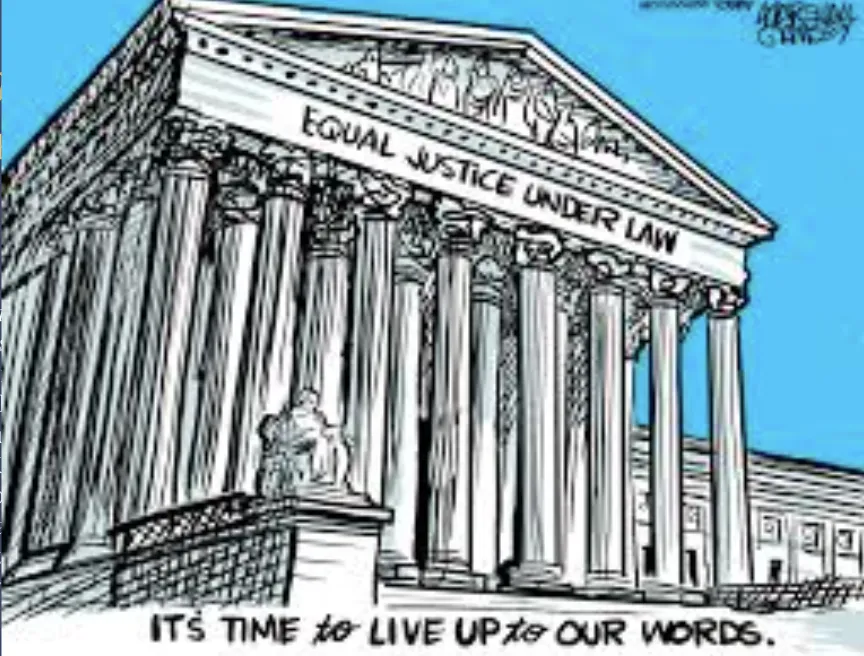
The Columbia-Manhattanville case is not just a dispute over land—it is a conflict of legal worldviews that has persisted long before this case and will continue until legal accessibility in litigation is not tied to economic and social positions [9]. This case reveals how legal consciousness is tied to the history of racism in the United States—how “Repeat Players,” usually Euro-Americans, dominate and serve private interests. Understanding legal consciousness in this way helps explain why justice appears different—and functions differently—depending on one's relationship to legal institutions. The Supreme Court's decision in Kaur illustrates a larger truth: when two legal consciousnesses clash—one shaped by institutional power operating “With the Law” and the other by minority resistance “Against the Law”—the law often defers to the view of economic interests and support. Although there have been many cases where minority interests prevail, Kaur illustrates that in many ways, financial resources, and thus, elite representation and institutional power, impact a court's decision. This calls into question the legitimacy of the law as a prescriber of justice—if economic power and resources impact a ruling, can justice ever be achieved in the current legal system?
Works Cited
[1] Nielsen, Laura Beth. "Situating Legal Consciousness: Experiences and Attitudes of Ordinary Citizens About Law and Street Harassment." Law & Society Review 34, no. 4 (2000): 1055–1090. https://www.cambridge.org/core/journals/law-and-society-review/article/abs/situating-legal-consciousness-experiences-and-attitudes-of-ordinary-citizens-about-law-and-street-harassment/CA935E6C754A87CBE82914B2E421F960.
[2] Fields, Barbara J., and Karen E. Fields. Racecraft: The Soul of Inequality in American Life. Verso, 2012.
[3] Haney López, Ian F. White by Law: The Legal Construction of Race. Revised and Updated 10th Anniversary Edition. New York University Press, 2006.
[4] Ewick, Patricia, and Susan S. Silbey. The Common Place of Law: Stories from Everyday Life. University of Chicago Press, 1998.
[5] Galanter, Marc. "Why the 'Haves' Come Out Ahead: Speculations on the Limits of Legal Change." Law & Society Review 9, no. 1 (1974): 95–160.
[6] City Detect. "Blight Survey: What Is It & How To Do One." Accessed April 2025. https://citydetect.com/blog/blight-survey-what-is-it-how-to-do-one.
[7] Kaur v. New York State Urban Development Corporation, 892 N.Y.S.2d 8 (App. Div. 2009). https://law.justia.com/cases/new-york/appellate-division-first-department/2009/2009-08976.html.
[8] Silbey, Susan S. "After Legal Consciousness." Accessed April 2025. https://web.mit.edu/~ssilbey/www/pdf/after_legal.pdf.
[9] UC Berkeley Law Library. "Black Americans and the Law." Accessed April 2025. https://www.law.berkeley.edu/library/legal-research/black-americans-and-the-law/.
[10] Studicata. "Case Brief: Kaur v. New York State Urban Development Corp." Accessed April 2025. https://studicata.com/case-briefs/case/kaur-v-new-york-state-urban-development-corp/#:~:text=The%20Appellate%20Division%20annulled%20ESDC's,project%20and%20a%20civic%20project.
[11] Data USA. "Columbia University in the City of New York." Accessed April 2025. https://datausa.io/profile/university/columbia-university-in-the-city-of-new-york#:~:text=The%20enrolled%20student%20population%20at,Native%20Hawaiian%20or%20Other%20Pacific.
[12] The Journal of Blacks in Higher Education. "Black First-Year Students at the Nation’s Leading Research Universities: 2019." Accessed April 2025. https://jbhe.com/2020/02/black-first-year-students-at-nations-leading-research-universities-2019/.
[13] The Sentencing Project. "One in Five: Disparities in Crime and Policing." Accessed April 2025. https://www.sentencingproject.org/reports/one-in-five-disparities-in-crime-and-policing/.