Private Military Firms & The 1977 Additional Protocols to the 1949 Geneva Conventions
Written by: Jameeiah A. Domercant
Edited by: Emma Farley
Abstract:
Private military firms play an increasingly large role in both international and non-international conflicts globally, engaging in military endeavors ranging from training and supply chain support to active participation in armed combat. International humanitarian law, however, has failed to produce legal frameworks that sufficiently acknowledge the intensity of both private military firms’ role in conflict and the threat to civilians when firm behavior is not regulated by the same standards as the states they are contracted by. This legal asymmetry creates avenues by which firms may produce excessive civilian casualties without bearing the same consequences as states in those same instances. This article explores the consequences of asymmetrical regulation as outlined in Article 47 of Additional Protocol I to the Geneva Conventions, examining Erik Prince and his firms, Vectus Global and Blackwater, and their history of negligence in both international and non-international conflicts.
Within public international law, international human rights law and international humanitarian law govern the civil rights of civilians, combatants, and prisoners of war, meant to preserve human dignity and minimize the casualties of war. While international human rights law is applicable at all times, international humanitarian law is invoked specifically in times of war, recognized by two classifications: international armed conflict and non-international armed conflict. While the former is easily labeled by the international community, non-international armed conflict (or internal conflict) is more ambiguously defined: organization and intensity characterize internal conflict. Two or more organized groups, either a state and an armed group or two non-state armed groups, engaged in prolonged violence, are enough to characterize an internal conflict and invoke international humanitarian law.
The 1977 Additional Protocols to the 1949 Geneva Conventions outline the rights of a newly delineated group of combatants and noncombatants in internal conflicts. Article 47 of Additional Protocol I was inspired by the increase in African freedom struggles of the 20th century, meant to respond to the ever-changing nature of modern warfare. Peacekeepers from the United Nations even found themselves in direct combat with mercenaries in Central Africa in the 1960s, forcing the international community to deal with the increase in foreign, unaffiliated combatants joining conflicts abroad [1]. The Additional Protocols, however, are underapplied to contemporary internal conflicts for their failure to uphold pragmatic legal thresholds that reflect the cost of war. Haiti, a party to both Protocols I and II of the Geneva Conventions as of 2006, is a glaring example of the costs of international law that does not keep up with the realities of conflict, specifically in post-colonial states [2].
Rather than enumerating a completely new legal framework for conflict, Protocol II’s field of application is exclusively limited to those conflicts that are not covered by Protocol I, hence why conflicts are categorized as international and non-international [3]. However, Protocol II is limited in breadth, failing to consider events that occur in internal conflict as in international conflict. This necessarily maintains the relevance of the articles of Protocol I in internal conflicts, as in international conflicts, where Protocol II is unclear. This has benefits insofar as the protection of human dignity remains universal, but the explicitly asymmetrical nature of internal national conflicts– specifically where the state is against a non-state armed group– complicates the articles of Protocol I in ways that Protocol II fails to account for.
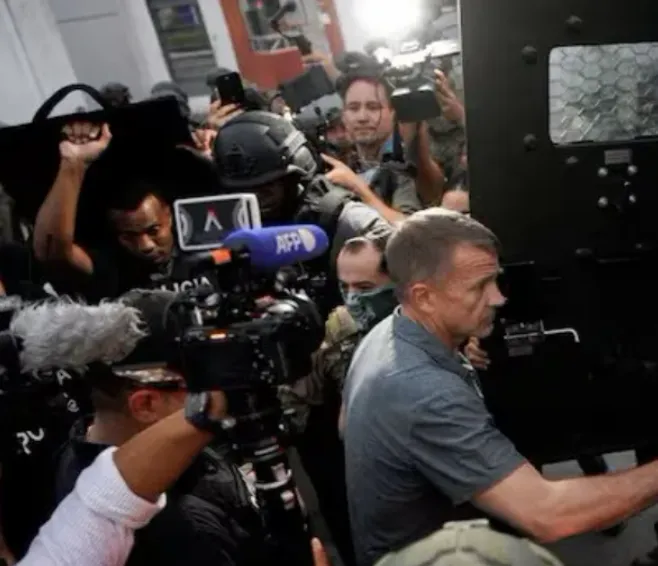
For years, coalitioned gangs in Haiti under the name Viv Ansanm have led what can only be described as a large-scale assault on the state. Viv Ansanm controls between 80-90% of Haiti’s capital, Port-au-Prince, obstructing democracy, capsizing state imports, and holding citizens hostage [4][5]. The state, facing a severely understaffed police and military force, has made a deal with American private military firm Vectus Global, owned by Erik Prince. For an undisclosed amount, the firm dispatched mercenaries to Port-au-Prince with military-grade weaponry to defeat the gangs and restore Haiti’s taxation system. Private military firms are separated into two categories, active or passive, with active private military firms carrying out active combat and passive firms that handle “training and organizational issues” [6]. While private military firms provide opportunities for weakened states to ward off threats from armed groups and other military threats, the transactional nature of their relationship to the state blurs the already opaque lines of when to consider them combatants in internal conflicts.
Article 47 Protocol I of the Geneva Conventions, an addition to the 1949 Geneva Conventions adopted alongside Protocol II in 1977, establishes a criterion by which an individual can be considered a mercenary. It says:
1. A Mercenary shall not have the right to be a combatant or prisoner of war. 2. A mercenary is any person who(a) is specially recruited locally or abroad in order to fight in an armed conflict; (b) does, in fact, take a direct part in the hostilities; (c) is motivated to take part in the hostilities essentially by the desire for private gain and, in fact, is promised, by or on behalf of a Party to the conflict, material compensation substantially in excess of that promised or paid to combatants of similar ranks and functions in the armed forces of that Party; (d) is neither a national of a Party to the conflict nor a resident of territory controlled by a Party to the conflict; (e) is not a member of the armed forces of a Party to the conflict; and (f) has not been sent by a State which is not a Party to the conflict on official duty as a member of its armed forces. [7]
Unambiguously exempting mercenaries from combatant status, Article 47 is intended to disincentivize states from recruiting foreign mercenaries. It, however, is a terrifically weak institution, whose irretrievably high ceiling for mercenary status and mercenary accountability are public dangers. One explanation for this legal architecture is the simple apathy of Western states to treat foreign mercenaries as legitimate actors in conflict. While Article 47 was adopted in 1977, Belgium became the first Western state to accede to the statute 25 years later (Percy 370) [8]. Indeed, Western states demonstrated a tremendous indifference to the implications of private military involvement in conflicts, perhaps due to their ability to deliver consequences without much support from international institutions. Failure to adequately collaborate with affected states is reflected in the lack of nuance in the Article’s first provision. If total exemption from combatant of prisoner-of-war status, however, were insufficient to dissuade the use of foreign mercenaries, the second provision of Article 47 completely divorces the legal definition of mercenaries from a positive assessment of their impact on the ground. To be considered a mercenary, an individual must meet every criterion established in Article 47, which scholars generally agree is a towering definition that would apply to almost no one. In other words, Article 47 not only exempts mercenaries from combatant status, but goes as far as to practically deny their existence in both international and non-international conflict.
Private military firms, however, play an enormous role in conflicts globally, particularly in nations where state armed forces are inadequately prepared to defend the state. In the case of Haiti, Vectus Global is largely acting in place of the military due to a restricted capacity for combat. This not only undermines the state, a paradoxically equivalent consequence as Viv Ansanm’s prolonged assault on Port-au-Prince, but also insulates the firm from international legal consequences. Article 51 of Additional Protocol I, another 1977 addition to the 1949 Geneva Conventions, prohibits the use of indiscriminate attacks, including “an attack which may be expected to cause incidental loss of civilian life, injury to civilians, damage to civilian objects, or a combination thereof, which would be excessive in relation to the concrete and direct military advantage anticipated” [9]. Vectus Global has employed quadcopter drones in Port-au-Prince to fight off Viv Ansanm gang members, which has resulted in the death of about 50 civilians between March 2025 and January 2026 [10]. Despite this, the firm has been unsuccessful in apprehending major gang leaders to date. What framework does international humanitarian law offer to hold the firm and relevant actors accountable? Despite the existence of Article 51 to protect civilians, Article 47 provides undue de facto pardons to mercenaries by displacing protections from civilians affected by casualties of war and granting these permissions to mercenaries. Noncombatant status for mercenaries allows private military firms to evade international humanitarian legal standards for the treatment of civilians. While mercenaries are not recognized parties to conflicts in international humanitarian law, their role in conflict is simply too great to ignore. While Article 47 of Protocol I aims to dissuade states from recruiting foreign mercenaries, the effect is an inadvertent failure to deliver meaningful consequences to all relevant parties when the Conventions are violated.
Consider, for instance, Vectus Global’s CEO Erik Prince’s previous private security firm, Blackwater. Blackwater was contracted by the United States in 2003 in the Iraq War, leading to the extrajudicial killings of 17 Iraqi citizens [11]. Remembered as the Nisour Square Massacre, Blackwater was brought to the U.S. District Court for the District of Columbia under a civil suit, Estate of Himoud Saed Atban et al. v. Blackwater USA, et al., in 2007. Erik Prince, the firm’s founder and chief executive, was also named as a defendant in the suit. Counts brought forth against Prince, and his firm included but were not limited to: war crimes, negligent hiring and supervision, and assault and battery [12]. War crimes– defined generally as any deliberate violation of international humanitarian law, and identified in Atban v. Blackwater as the deliberate and malicious use of force to produce foreseeable injuries to the civilian plaintiffs during armed conflict– are typically charged in criminal court, most notably the International Criminal Court. Article 47 of Protocol II, however, implies that while the individuals who personally carried out the 2003 murders could be held accountable in domestic criminal court, Erik Prince cannot stand before the International Criminal Court and be tried for war crimes.
The implications of litigating consequences for Prince and his firm by civil rather than criminal procedure are vast. Most notably, despite the suit opening up litigation, the defendant can also initiate negotiations with the plaintiffs and settle privately, as happened in Atban v. Blackwater. The plaintiffs received a fraction of the damages initially demanded, and while the four individuals personally responsible for the murders were imprisoned, Prince circumvented major penalties for his failure to regulate the behavior of his mercenaries because the charges against him could only be brought through civil proceedings. The most significant consequences facing Prince and Blackwater were reputational, causing the firm to rename and merge into Constellis, and leading to Prince’s resignation as CEO shortly after the settlement in 2009 [13]. Prince would go on to found Vectus Global, another private military firm, in 2021. The outcome of Atban v. Blackwater is a symptom of the absence of any frameworks in international law that adequately grapple with the rise of private military firms in conflict.
A potential solution, then, to the shortcomings of Article 47 of Protocol I is to raise foreign mercenaries to combatant status when deployed by an active firm or taking an active role in combat. While an attractive proposition, it only partially repairs the wedge between legal frameworks and reality. Mercenaries, as in the case of Haiti, take on largely supplementary roles in internal conflict, fighting alongside state armed forces against a guerrilla opponent. The melange of state and firm troops into a unified group of combatants is practical until the rules of war are violated. Consider, for instance, Vectus Global's civilian deaths in Haiti — who should be held accountable: the state, the firm, or both? While a power asymmetry exists between states and nonstate armed groups, another asymmetrical power imbalance is reflected in the relationship between the firm and the state. Without international regulation, firms can evade accountability under international humanitarian law. States cannot. The state is held to higher legal standards by being named a combatant, meaning consequences for the potentially deliberate actions of foreign mercenaries can be brought to the state and not the firm, even though it is the firm’s responsibility to regulate the behavior of its contractors.
While Article 47(1) exempts mercenaries from combatant status, Article 47(2) defines the mercenary. This definition makes it such that even if 47(1) is amended, few will have their status change from civilian to combatant. Article 47(2)(a) in particular stands out, stating that a mercenary must be an individual specifically recruited by the state. Among many qualms, the scope of the definition is narrow, seeking to define an individual rather than a group. Private military services are a multi-billion-dollar industry, meaning people employed by these firms are joining armed conflicts for completely different reasons than they did decades ago [14]. Simply put, private military services are a market now, and international humanitarian law, rather than trying to erase the market, needs to regulate the market. Otherwise, no multilateral international laws exist to serve as humanitarian criteria for private military firms. Vectus Global’s negligent conduct in Haiti is a product of the absence of any international regulation regarding the conduct of private military firms. Equally concerning is that the consequences of no international regulation of private military firms are, predictably, unevenly distributed among states. Because no international legal framework exists to penalize Prince for atrocities in Iraq, Vectus Global was founded and is being operated by Prince himself. While the United States remains the greatest consumer of private military services, the disproportionate presence of military contractors in post-colonial states makes it clear that weak states are bearing the costs of unregulated private military firms. Civilian deaths in Haiti will remain dually attributable to the terrors of gang violence in the capital and unrestrained conduct of Vectus Global.
References:
[1] James Doty, “INTERNATIONAL LAW: INTERNATIONAL LAW AND PRIVATE MILITARY FIRMS” GPSolo 25, no. 2 (2008): 38.
[2] United Nations, “Protocol additional to the Geneva Conventions of 12 August 1949, and relating to the protection of victims of international armed conflicts (Protocol I),” United Nations Treaty Collection, accessed April 20th, 2026.
[3] International Committee of the Red Cross, “Protocols I and II additional to the Geneva Conventions,” January 1, 2009.
[4] Jillian Kestler-D’Amours, “Who are Haiti’s gangs and what do they want? All you need to know,” Al Jazeera, March 13, 2024,
[5] Al Jazeera Staff, “First troops from UN-backed Gang Suppression Force arrive in Haiti,” Al Jazeera, April 1, 2026.
[6] Alexandre Faite, “Involvement of Private Contractors in Armed Conflict: Implications under International Humanitarian Law,” Defense Studies 4, no. 2 (2004): 166-183.
[7] Protocol additional to the Geneva Conventions of 12 August 1949, and relating to the Protection of Victims of International Armed Conflicts (Protocol 1) art. 47, June 8, 1977, 1125 U.N.T.S. 3, 25.
[8] Sarah Percy, “Mercenaries: Strong Norm, Weak Law,” International Organization 61, no. 2 (2007): 370.
[9] Protocol additional to the Geneva Conventions of 12 August 1949, and relating to the Protection of Victims of International Armed Conflicts (Protocol 1) art. 47, June 8, 1977, 1125 U.N.T.S. 3, 26.
[10] Human Rights Watch, “Haiti Drone Strikes Put Residents at Risk,” March 10, 2026.
[11] International Code of Conduct Association, “The Nisour Square Massacre,” n.d.
[12] Estate of Himoud Saed Atban et al v. Blackwater, No. 1:07-cv-01831(D.D.C. filed Oct. 11, 2007).
[13] Sam Biddle, “Blackwater Successor Hunts Immigrants for ICE,” The Intercept, January 3, 2026.
[14] Jessica Rosenblum, “New Research: Military Contractors Received Over Half of Pentagon Spending Since 2020,” Quincy Institute for Responsible Statecraft, July 8, 2025.
Works Cited:
Alexandre Faite, “Involvement of Private Contractors in Armed Conflict: Implications under International Humanitarian Law,” Defense Studies 4, no. 2 (2004), 166-183.
Al Jazeera Staff, “First troops from UN-backed Gang Suppression Force arrive in Haiti,” Al Jazeera, April 1, 2026, https://www.aljazeera.com/news/2026/4/1/first-troops-from-un-backed-gang-suppression-force-arrive-in-haiti#:~:text=Haiti's%20last%20democratically%20elected%20senators,have%20registered%20to%20take%20part.
Estate of Himoud Saed Atban et al v. Blackwater, No. 1:07-cv-01831(D.D.C. filed Oct. 11, 2007).
Human Rights Watch, “Haiti Drone Strikes Put Residents at Risk,” March 10, 2026. https://www.hrw.org/news/2026/03/10/haiti-drone-strikes-put-residents-at-risk
International Code of Conduct Association, “The Nisour Square Massacre,” n.d. https://icoca.ch/case-studies/the-nisour-square-massacre/?cn-reloaded=1
International Committee of the Red Cross, “Protocols I and II additional to the Geneva Conventions,” January 1, 2009. https://www.icrc.org/en/article/protocols-i-ii-geneva-conventions
James Doty, “INTERNATIONAL LAW: INTERNATIONAL LAW AND PRIVATE MILITARY FIRMS” GPSolo 25, no. 2 (2008), 38.
Jillian Kestler-D’Amours, “Who are Haiti’s gangs and what do they want? All you need to know,” Al Jazeera, March 13, 2024, https://www.aljazeera.com/news/2024/3/13/who-are-haitis-gangs-and-what-do-they-want-all-you-need-to-know.
Sam Biddle, “Blackwater Successor Hunts Immigrants for ICE,” The Intercept, January 3, 2026. https://theintercept.com/2026/01/03/blackwater-successor-constellis-omniplex-hunts-immigrants-for-ice/
Sarah Percy, “Mercenaries: Strong Norm, Weak Law,” International Organization 61, no. 2 (2007), 370.