Settler Sovereignty by Statute: France’s Constitutional Threat to the Nouméa Accord
Written by: Chastity Blair
Edited by: Jameeiah Domercant and Emma Farley
Abstract:
This article examines the historical and legal implications of France’s proposed 2024 constitutional bill to amend the electoral body of New Caledonia, a French overseas territory undergoing a contested decolonization process. The bill, which sought to unfreeze the restricted enfranchised population codified in the 1998 Nouméa Accord, would have substantially diluted the political agency of the indigenous Kanak population, who became a demographic minority due to historical settler immigration policies. Though the French Parliament ultimately suspended the bill in response to domestic unrest and international pressure, its proposal underscores an enduring legal strategy of constitutional manipulation to preserve settler colonial dominance. By comparing the legislative language of the Nouméa Accord with the legal threats of the 2024 bill, this article interrogates France’s duplicitous conduct and questions its authentic commitment to the right to self-determination of colonized peoples.
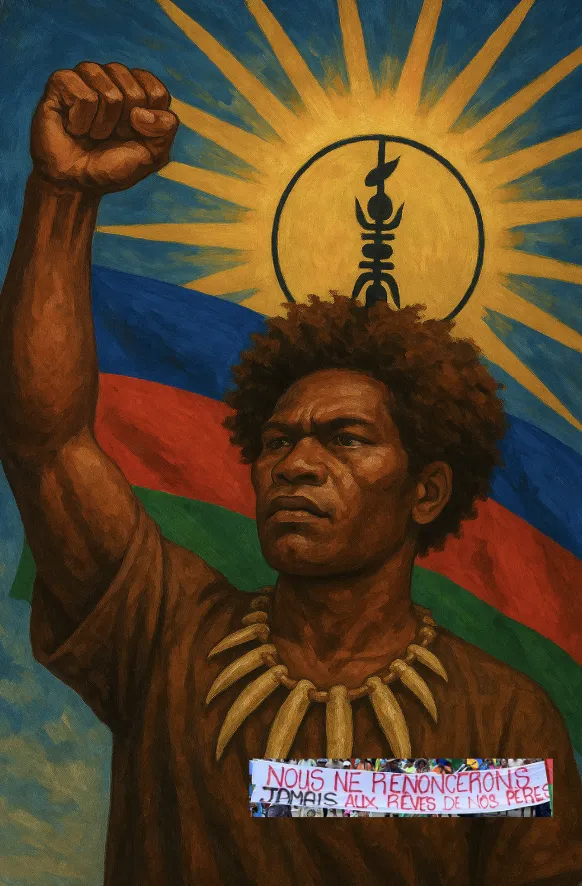
The legal relationship between New Caledonia and France is defined by tension and bad faith, as France consistently falls short of its constitutional commitments while reinforcing structures of settler colonial dominance. Pro-independence groups and Kanak people initially celebrated the Nouméa Accord of 1998, written in Article 77 of the French Constitution, as a watershed moment for their liberation. The agreement promised a gradual, irreversible decolonization process, recognition of a Kanak identity, and adherence to demands calling for the consolidation of political power in indigenous hands. Most importantly, the Accord included an electoral freeze designed to protect Kanak’s representation by limiting current voting rights to only those enfranchised in 1998 or descendants of those voters. This measure was a deliberate safeguard against the long-standing tactic of French state-sponsored immigration intended to dilute indigenous political agency. The Accord’s framework, which envisioned a series of independence referenda, created a legal roadmap for self-determination within the colonial system. Yet, in 2024, that roadmap was directly threatened by the French National Assembly’s introduction of a constitutional bill seeking to dismantle the electoral freeze, one of the most vital protections for Kanak sovereignty. The Nouméa Accord is crucial to understanding France’s calculated legal move, the 2024 constitutional bill, to undermine its most transformative promises under the guise of democratic expansion.
The motivation to incorporate the 1998 Nouméa Accord in the French Constitution stemmed from the indigenous Kanak Melanesian people’s resistance to French settlers and loyalists. During the New Caledonia nickel boom in the 70s, many pro-independence nationalist groups accused France of weaponizing the immigration of Caldoches (French settlers) and job-seeking neighbors from other Pacific states to force the Kanak peoples into minority status [1]. They believed France’s calculated encouragement of immigration created an imbalanced population. A 1980 report by France’s National Institute of Statistics and Economic Studies documented dramatic demographic shifts in New Caledonia between 1887 and 1980. In 1887, the Kanak people accounted for 68% of the population. By 1980, their share had fallen by 24.7%, leaving the Kanak people at just 43.3%. Their position as the indigenous majority steadily diminished as the European settler population increased and other ethnic groups expanded significantly. The “Others” category—primarily composed of Asian, Polynesian, and Wallisian immigrants—rose from just 1.9% in 1887 to 21.1% in 1980, reflecting a 1000% increase and growth of 28,200 people. Meanwhile, the European Caldoche population grew by 164% over the same period, increasing by 30,900 individuals [2].
These figures reinforce claims that demographic shifts played a central role in eroding Kanak’s political dominance and stifling access to resources for native upward mobility. The drastic shifts in population dynamics raised concerns for the Kanak nationalists. Moreover, the nickel boom in New Caledonia between 1969 and 1974 attracted many French settlers and maintained the French government’s colonial presence [3]. Subsequently, France benefited from immigrants such as Caldoches and other migrant groups because of their opposition to Kanak's independence and support for French control. France funds New Caledonia’s “roads, schools, and health clinics”[4]. Therefore, settlers support France’s control out of fear of their provisions being stripped. Moreover, France and its settlers controlled 97% of New Caledonia’s exports. With the country’s complete independence, it would result in a loss of monetary and social control [5]. New Caledonia’s position as the fourth largest nickel producer also incentivizes France and its loyalist settlers to maintain their mining wealth and Kanak suppression in the nickel industry [6].
Similarly, immigrant laborers want to preserve French citizenship for economic upward mobility. The nickel boom and growing job opportunities attracted laborers seeking economic stability that their resource-poor home countries could not offer. Pro-independence groups argue that France strategically encouraged this immigration as part of a broader effort to weaken Kanak political power. By securing the loyalty of non-Kanak communities who oppose independence, France has used demographic shifts to undermine pro-separatist movements and reinforce its control over the colony.
In the late 20th century, the diversity in political ideology created violence between separatists and loyalists in New Caledonia. Increasing tensions between the two groups prompted the Matignon Accord of 1988, which brought temporary peace. Nevertheless, the binding agreement prolonged discussions about indigenous sovereignty [7]. Due to Front de Libération Nationale Kanak et Socialiste’s (FLNKS) negotiations with the French government and their Caledonian conservative party, the Nouméa Accord was signed. It replaced the Matignon Accord’s promise for an independence referendum in 10 years and established a transitional process that would hopefully lead to independence. The French Assembly passed the amendments, and New Caledonia ratified the agreement, with 72% of the New Caledonian population supporting it on 8 November 1988 [8]. The 20-year power transition plan toward decolonization was also a period for the French government to provide enhanced aid for New Caledonia’s infrastructure and education. The plan for gradual sovereignty was at the core of the Accord and satisfied the Caldoches and Kanaks. The Caldoches preserved their privileged lives in New Caledonia, and the Kanak people made a monumental step toward gradual independence.
The main pillars of their irreversible “multi-year programs” for the Accord’s “ new steps toward sovereignty” included progressive signs of citizenship such as: 1. a restricted electoral body, 2. increased accessibility to employment for permanent residents, 3. increased French autonomy in French-Caledonian power sharing, and 4. a French to Kanak transfer of technical skills for economic and social development [9]. These facets of the agreement were core to FLNK’s concerns, and they were met. Nevertheless, dissenting actors voiced concerns about room for continued French control and the absence of the words self-determination or independence used in the ratified agreement.
Regardless, the Nouméa Accord became the 77th Article of the French constitution and an attempt to reconcile the atrocities of their colonialism. The most potent facet of the agreement is the freeze of the 1998 electoral body to preserve and uphold Kanak’s power and autonomy over their political future. Thus, the government enfranchised only those who could have voted in 1998, had parents who could have, or “were domiciled in New Caledonia from 1988 to 1998” [10]. The New Caledonia electoral freeze only enfranchises “voters who met the conditions to vote in the 1998 election” [11]. Kanak’s pro-independence actors’ agency produced the electoral freeze to protect the indigenous faction of their electoral body and ensure France does not dilute their vote through the continued weaponization of immigration [12]. Kanak people were only 43.3% of the population, and since the Accord, France encouraged and attracted 40,000 French nationals and other ethnic minorities seeking work in nickel mines to immigrate to New Caledonia [13]. Pro-independence groups are continuously attempting to preserve native electoral influence, which would raise the chances of attaining a future vote for independence.
Less than 30 years after the Nouméa Accord, the French Parliament proposed, adopted, and suspended their 2024 constitutional bill to unfreeze the electoral roll of New Caledonia. Granting tens of thousands of immigrants equal voting power to the Kanak people would further erode Indigenous political influence, effectively marginalizing their ability to shape electoral outcomes in their territory. UN experts published a press release in opposition to the adoption because the “electoral law change undermines the Nouméa Accord” and threatens France’s promised decolonization process and the original function of the Nouméa Accord [14]. The rollback of electoral protections is against the FLNK’s agreement and promotes colonial ideologies that the two parties once used legal provisions to combat together. France's withdrawal of its commitment to decolonization is an attempt to erode Kanak’s strides toward self-determination and autonomy. Was the Nouméa Accord a performance for continued colonial power under the façade of progress, or was it a sincere commitment to anti-colonial efforts?
This was not the first time France reversed its established agreements with FLNKS. In the late 90s, the two parties negotiated under the Matignon Accord about an eventual Caledonian state merely associated with France. Nevertheless, Premier Juppé rejected that plan and declared New Caledonia could only have “greater autonomy”, not the initially planned independence. The Nouméa Accord of 1998 emerged in response, and it introduced “shared sovereignty” as a new avenue for governance. This is an instance of the deceptive volatility colonies endure while negotiating with France [15].
France’s instability continues today. The French Assembly’s proposal and adoption of the 2024 bill is a dangerous signal about the fragility of New Caledonia’s sovereignty. If French legislators are not wholeheartedly committed to the agreements they ratified and passed in their constitution, it exposes the absence of their legal credibility. Eventually, they suspended the bill, but only after a series of peaceful pro-independence protests that escalated into violent ones because of France’s neglect and inability to address the indigenous people’s demands. Moreover, French military and settler-armed militias attacked pro-independence and indigenous peoples for their protest against the bill [16]. Eventually, the international community, including the UN and pro-independence agencies, influenced the bill’s suspension.
Those groups, however, called for the bill’s full repeal to restore the original intended function of the Nouméa Accord and to terminate the unrest provoked by France’s actions. The difference between suspending and repealing the bill is vital because repealing the bill would acknowledge the atrocities of the legislation. Nevertheless, the French government’s refusal to repeal the bill is an alarming indication of its lack of commitment to the principles of the Nouméa Accord. Suspending the bill, rather than repealing it, projects optics that the French government is only concerned about performative acts or declarations of Kanak solidarity or peace in New Caledonia [17]. Yet, pointed and meaningful action is needed to rectify their violation of the pro-independence and French agreement. Its subsequent actions will further reveal whether the Accord’s promises are being fulfilled in earnest or if they are merely symbolic. After decades of negotiation, the freeze on the electoral roll signified a tangible effort to combat French transgressions of settler colonialism. Ultimately, their attempt to dismantle reconciliation is a regressive step to uphold colonial structures.
The 2024 constitutional bill revealed how France continues to manipulate legal structures to maintain settler colonial dominance in New Caledonia, despite decades of negotiated promises. The attempt to unfreeze the electoral roll directly threatened the core protection that pro-independence had negotiated for so long. France’s decision to suspend, but not to repeal, the bill shows a continued pattern of avoiding accountability while reinforcing colonial control through constitutional means. Their duplicitous actions behind a façade of reconciliation exemplify that capitalism and colonial greed for the exploitation of indigenous peoples and land are omnipresent. Nevertheless, decades of Kanak agency have not and will not go unnoticed. As protests intensify and international bodies express concern, France will be forced to reckon with its obligations. Whether it chooses to restore the Accord’s integrity or deepen its political control will shape the future of Kanak sovereignty.
[1] S. K. Blay, “Self-Determination and the Crisis in New Caledonia: The Search for a Legitimate Self,” Asian Survey 28, no. 8 (August 1, 1988): 866, https://doi.org/10.2307/2644591.
[2] Blay, 869.
[3] David A Chappell, “The Noumea Accord: Decolonization Without Independence in New Caledonia?,” Pacific Affairs 72, no. 3 (1999): 377, https://doi.org/10.2307/2672227.
[4] Chappell, 378.
[5] Chappell, 383.
[6] France Bailly, “New Caledonia: Land of Nickel,” Elements 13, no. 5 (October 1, 2017): 1–2, https://doi.org/10.2138/gselements.13.5.360.
[7] Stephen Henningham, “The Uneasy Peace: New Caledonia’s Matignon Accords at Mid-Term,” Pacific Affairs 66, no. 4 (1993): 519–37, https://doi.org/10.2307/2760677.
[8] Nic Maclellan, “The Noumea Accord and Decolonisation in New Caledonia,” The Journal of Pacific History 34, no. 3 (December 1999): 245–52, https://doi.org/10.1080/00223349908572908.
[9] Caroline Gravelat and Françoise Cayrol-Baudrillart, Understanding New Caledonia, ed. Elaine Sutton (Nouméa, New Caledonia: University Press of New Caledonia, 2021).https://unc.nc/wp-content/uploads/2021/11/Understanding-New-Caledonia-Web-06-12-21.pdf
[10]Assemblée nationale, “Accord Sur La Nouvelle-Calédonie,” Légifrance, March 5, 1998, https://www.legifrance.gouv.fr/jorf/id/JORFTEXT000000555817.
[11] Assemblée nationale
[12] Assemblée nationale
[13] Thomas Spender, “Macron Puts New Caledonia Voting Reform on Hold after Riots,” BBC News, May 23, 2024, https://www.bbc.com/news/articles/c0jj0e3ng2qo.
[14] “France: UN Experts Alarmed by Situation of Kanak Indigenous Peoples in the Non-Self-Governing Territory of New Caledonia,” Nations Unites Droits De L’Homme, August 20, 2024, https://www.ohchr.org/en/press-releases/2024/08/france-un-experts-alarmed-situation-kanak-indigenous-peoples-non-self.
[15] Chappell, 382.
[16] Mathurin Derel, “Nouvelle-Calédonie : La CCAT, Organisation Indépendantiste Au Cœur de La Mobilisation et de Toutes Les Critiques,” Le Monde, May 19, 2024, https://www.lemonde.fr/politique/article/2024/05/19/nouvelle-caledonie-la-ccat-organisation-independantiste-au-c-ur-de-la-mobilisation-et-de-toutes-les-critiques_6234214_823448.html.
[17] “France: UN Experts Alarmed by Situation of Kanak Indigenous Peoples in the Non-Self-Governing Territory of New Caledonia,” Nations Unites Droits De L’Homme, August 20, 2024, https://www.ohchr.org/en/press-releases/2024/08/france-un-experts-alarmed-situation-kanak-indigenous-peoples-non-self.