Understanding the Relationship Between United States Domestic Law and International Law Through an Analysis of Public Law 108-25
Written by: Rolihlahla Nyirenda
Edited by: Rafaela Drake
Abstract:
Global health relies on a complicated network of funding, research, development, and implementation from multiple countries. All these need to be governed by law. Since domestic laws govern a specific jurisdiction, typically demarcated by national boundaries, international law serves as a set of regulations and principles that govern the interactions between states and other international actors, such as international organizations and individuals. This article analyzes the relationship between Domestic and International law through the analysis of the introduction, implementation, and expiration of the President’s Emergency Plan for AIDS Relief (Public Law 108-25, commonly known as PEPFAR. Furthermore, the article highlights how Human Rights Law, Contract Law, and Health Law work together to protect public health at a global scale, especially in the face of political upheaval.
Understanding the Legal Framework of PEPFAR
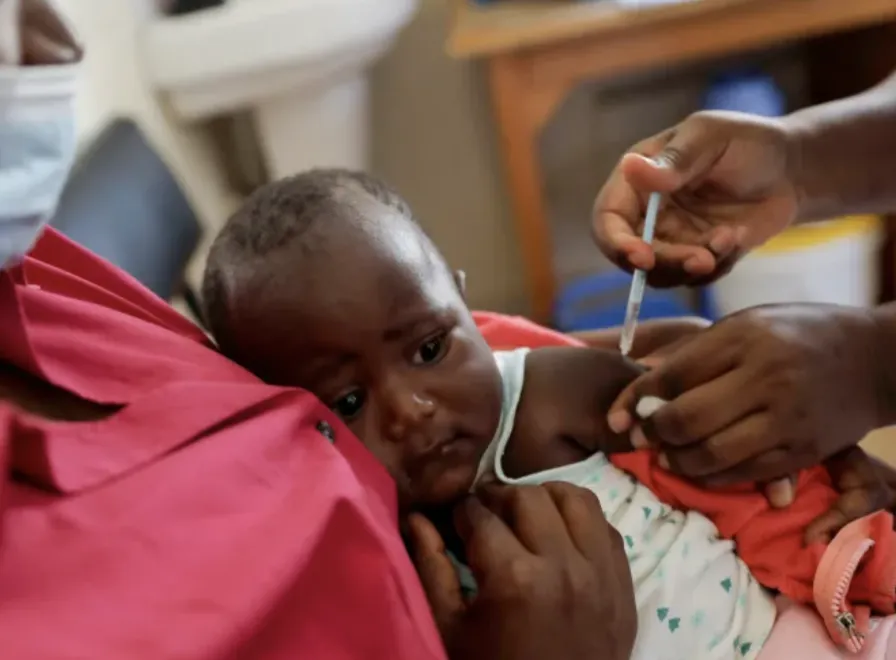
The President’s Emergency Plan for AIDS Relief (Public Law 108-25) was established in 2003 under President Bush’s administration and quickly became one of the most significant U.S global health initiatives. It delivers critical funding and infrastructure to prevent and mitigate the effects of HIV/AIDS, malaria, and tuberculosis. Legally, Public Law 108-25, often referred to as PEPFAR, operates at the intersection of United States domestic law, international law, and global public health initiatives. Its authority derives from the U.S. Statutes, such as the Foreign Assistance Act and the Public Health Services Act, which authorize the federal government to allocate funds for health-related foreign aid. Since its inception, PEPFAR has supported antiretroviral treatments for over 17.2 million people living with HIV/AIDS, trained over 280 thousand new health care workers, and provided financial assistance to more than 6.3 million orphans and their caregivers worldwide, primarily with a strong focus on developing nations.[1]
Global Health as Domestic Protection: Reframing Legal Incentives
The United States of America has a deep interest in participating in global health initiatives, such as PEPFAR, for both humanitarian and legal reasons. This form of international relations is considered soft law, which supports diplomatic relations, and global powers like the United States can benefit from having a wider sphere of influence. However, for this article, it is crucial to frame PEPFAR as a protective health measure to mitigate health threats that could potentially impact the American people. The legal right to healthcare, although not codified in the United States Constitution, is protected by a series of Supreme Court Rulings and congressional acts, and can be both positively and negatively affected by the global state of public health.[2] The COVID-19 pandemic was a clear example that global healthcare, or the lack thereof, affects every country, even those with stronger healthcare systems. Hence, investing in global healthcare indirectly protects the health and well-being of Americans, in a world that continues to globalize. In this sense, PEPFAR can be viewed as both a defensive health measure and a humanitarian commitment.
Principles of International Law
International law is generally composed of three main categories: customary law, soft law, and hard law. Customary law develops through consistent state practices and a sense of legal obligation and is binding for all countries. Soft law encompasses non-binding declarations, guidelines, and resolutions that influence countries’ behavior but lack a legal foundation. Finally, hard law consists of treaties and legally enforceable agreements between states that are forms of contracts that can be enforced in both domestic courts and international courts and tribunals.[3] PEPFAR’s legal foundation draws from all three categories, with a primary grounding in soft and customary law. While there is no binding treaty that mandates the U.S. to fund global health initiatives, its involvement is shaped by obligations associated with international cooperation, such as under the membership of the World Health Organization and through the United Nations Sustainability Goals (SDGs), shape its legal and policy rationale.
PEPFAR’s funding mechanism is also aligned with international legal principles, as evident in cases such as United States Agency for International Development v. Alliance for Open Society International, Inc. (2020).[4] The Supreme Court decision ruled that U.S funding for foreign aid should be conditioned on compliance with domestic policies and Federal law. This raises legal questions about the extent to which the United States can impose an ideological framework on recipients of global health aid. This tension is particularly evident in the realm of sexual and reproductive health rights in PEPFAR-funded countries, especially following the U.S. Supreme Court’s decision in Dobbs v. Jackson Women’s Health Organization, which overturned Roe v. Wade.[5] The ruling raised complex questions about whether—and to what extent—U.S. foreign aid may be subject to domestic ideological constraints that conflict with international human rights norms.
International Norms into Domestic Law
The translation of international law into domestic law is crucial for understanding PEPFAR’s operations. In this context, domestic law is the legal system within a specific country or state, encompassing laws enacted by national, state, or local governments to regulate the behavior of individuals and entities within that jurisdiction. The U.S. has not ratified international treaties like the Universal Declaration of Human Rights and the International Covenant on Economic, Social and Cultural Rights, which articulate and codify the universal right to health, and such commitments only become legally binding when Congress enacts corresponding statutes. PEPFAR is emblematic of this by incorporating international health goals into U.S. legislation and budget allocations, effectively translating global obligations into enforceable domestic action.[6]
Despite its recorded success, PEPFAR remains legally vulnerable due to its dependence on periodic congressional reauthorization rather than being codified into law. Unlike permanent statutory frameworks, PEPFAR relies on continuous legislative and executive support, making it particularly susceptible to shifts in administrative priorities.[7] As of 2025, under the new Trump administration, the program is placed in a precarious position as debates over foreign aid and domestic priorities intensify. The stark absence of binding legal obligations to maintain PEPFAR raises key questions: Does the US bear an ongoing duty of continued support to beneficiary countries? And can principles of international health law be leveraged to bolster global health funding despite political challenges?
Role of Reliance: PEPFAR as a Contractual Commitment
Furthermore, the international relationship established by PEPFAR can be analyzed as a contractual agreement between one or more countries. This contract outlines the specific obligations and rights that each party must fulfill, and in this case, it involves financial and resource support from the United States.[8] Fulfilling a contract successfully over a long period of time allows the receiving country to develop a sense of reliance. Legal scholars such as L. L. Fuller and William R. Perdue Jr., have argued that the principle of reliance protects the receiving party from abrupt changes to the contract.[9] One party relies on the other party to perform competently, and if the counterparty fails to do so, the consequences can be severe. In the case of PEPFAR, international funding can disrupt the lives of over 17 million people by limiting access to quality healthcare, leading to a regression on many health milestones and progress towards United Nations Sustainable Development Goal 3 (good health and well-being). U.S. common law— the customary legal framework in the United States—permits contracts to be modified in accordance with the changing capacities of the parties involved. Accordingly, the United States retains the legal discretion to alter or terminate its commitments under such agreements, even to the point of complete withdrawal.
Legal Framework for Sustainable Health Justice
Legal professionals advocating for global public health within the U.S. can utilize a combination of international and domestic law to argue for sustained investment in programs like PEPFAR. However, it is crucial to acknowledge that strengthening legal protections for such initiatives through domestic legislation, international agreements, and litigation may offer more stability in a rapidly shifting political landscape. International law underscores the interdependent relationship between legal and political systems, emphasizing the need for a balanced approach between the two to safeguard the rights enshrined in global humanitarian agreements. Ultimately, the convergence of health law and international law provides a powerful platform for advancing global health equity, highlighting the law’s capacity not only to respond to injustice but also to proactively shape a more just and sustainable future in public health.
Bibliography
- “Results and Impact – PEPFAR.” U.S. Department of State. Accessed April 22, 2025. https://2017-2021.state.gov/results-and-funding-pepfar/.
- “Universal Declaration of Human Rights.” United Nations. Accessed April 22, 2025. https://www.un.org/en/about-us/universal-declaration-of-human-rights.
- Meier, Benjamin Mason, Alexandra Finch, and Roojin Habibi. “Global Health Law: Between Hard and Soft Law.” Journal of Law, Medicine & Ethics, 2025, 1–5. https://doi.org/10.1017/jme.2025.21.
- "United States Agency for International Development v. Alliance for Open Society International, Inc." Oyez. Accessed April 22, 2025. https://www.oyez.org/cases/2019/19-177.
- "Dobbs v. Jackson Women's Health Organization." Oyez. Accessed April 22, 2025. https://www.oyez.org/cases/2021/19-1392.
- Taylor, Allyn L. “Global Health Law: International Law and Public Health Policy.” Edited by Stella R. Quah. International Encyclopedia of Public Health, 2017. https://pmc.ncbi.nlm.nih.gov/articles/PMC7150305/.
- Kellie Moss and Jennifer Kates Published: Apr 10, 2025. “PEPFAR Reauthorization: Side-by-Side of Legislation over Time.” KFF, April 10, 2025. https://www.kff.org/global-health-policy/issue-brief/pepfar-reauthorization-side-by-side-of-existing-and-proposed-legislation/.
- Victor P. Goldberg, Protecting Reliance, 114 Colum. L. Rev. 1033 (2014). Available at: https://scholarship.law.columbia.edu/faculty_scholarship/676
- Fuller, L., and William Perdue. “The Reliance Interest in Contract Damages: 2.” Yale Law School Legal Scholarship Repository, November 25, 2021. https://openyls.law.yale.edu/handle/20.500.13051/12698?show=full.