The Weaponization of Language: How the Justice System Surveils Black Bodies Through “Reasonable Suspicion”
Written by: Shawndel Gilchrist
Edited by: Chastity Blair
Abstract:
This paper examines how police brutality against Black Americans, combined with the lack of accountability for officers, reflects a deeper pattern of racial control embedded in U.S. legal doctrine. It analyzes how Supreme Court cases such as Tennessee v. Garner, Graham v. Connor, and Terry v. Ohio have expanded police discretion and weakened constitutional protections through broad interpretations of “reasonableness” and the shield of qualified immunity. Drawing on Michel Foucault’s idea of disciplinary power, this piece will show how police surveillance and the incessant Black fear of “looking suspicious” work in tandem to subjugate Black people to constant, unjust scrutiny. The paper also considers recent reform efforts and argues that meaningful change requires confronting both the legal structures and the racial assumptions that continue to shape policing in America.
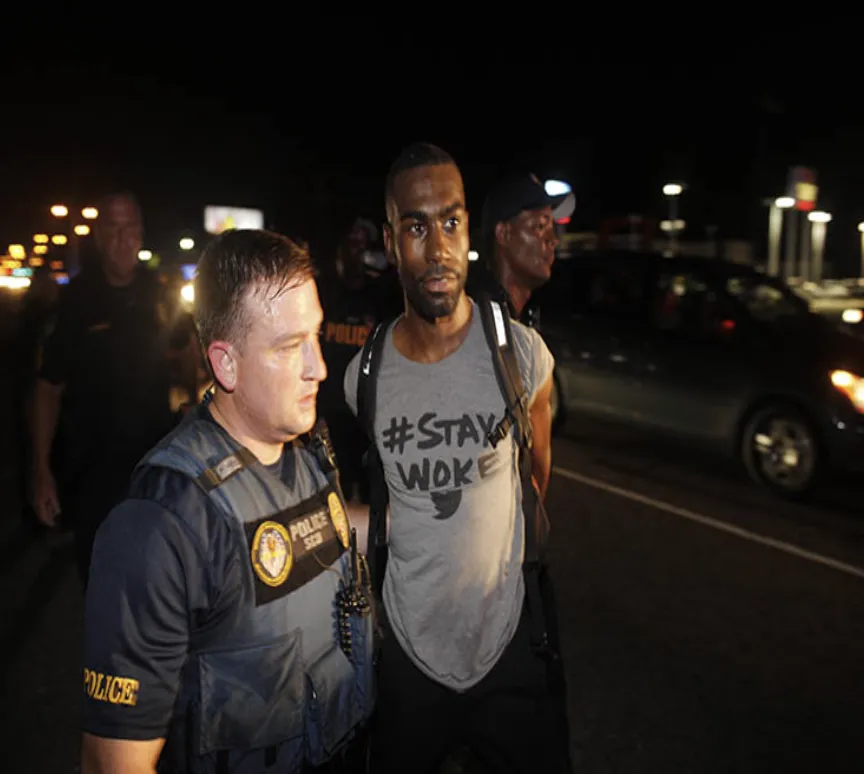
Police officers take an oath to "respect the constitutional rights of all people to liberty, equality, and justice,” yet many Americans, specifically Black Americans, do not see the realization of this oath.[1] The Mapping Police Violence Project reported a staggering reality: Black Americans are twice as likely as their white counterparts to be shot and killed by police officers in the United States. [2] Imagine living in a country where the very people sworn to protect you are, statistically, twice as likely to end your life. This is a harsh and fear-inducing reality for too many Black people. Police brutality is not a collection of coincidental incidents with occasional bad actors but a continuation of systematic racial control deeply rooted in slavery-ridden law enforcement tactics ingrained in American history.
French historian Michel Foucault stated, “It was the perfection of managing and controlling bodies, not through the brutality of public torture, but through the psychology and efficiency of surveillance. The Panoptic gaze moves out of the walls of the prison and is very soon taken over by the police apparatus, creating a technology of generalized surveillance." [3] Foucault argued that modern power does not require spectacular punishment to control people. It operates through surveillance, categorization, and normalization. His theory of disciplinary power provides a powerful and helpful perspective on understanding how systems of carceral control are transient and extend beyond prison walls. I would argue that Black bodies, especially modern ones, endure immense strife from both the spectacle of brutality and the psychological warfare of self-surveillance. Nevertheless, the American justice system reflects Foucault’s logic: force is justified through legal language that enables violence through selective ambiguity.
The law not only struggles to punish state violence, but the courts often legitimize it, allowing police brutality to thrive disproportionately in the Black community. This paper will expose the cracks in legal language that have perpetuated institutionalized racism, beginning with the doctrine established in the 1968 Terry v. Ohio case. The Court’s ruling arose after an officer stopped and frisked three men, Terry being Black, because the officer thought their repeated pacing and glancing into a shop window meant they might be preparing for a robbery. This case created a new category of police encounter based on “reasonable suspicion” and significantly expanded police discretion under the Fourth Amendment.[4] Terry v. Ohio exhibited how the Fourth Amendment’s “reasonableness” standard presents a façade of constitutional protection that ultimately legitimizes egregiously broad police discretion and perpetuates racialized state violence.
The expansion of modern police discretion began with Terry v. Ohio because it reshaped the meaning of the Fourth Amendment. The Fourth Amendment was designed to protect citizens against unreasonable searches and seizures, traditionally requiring officers to show probable cause before detaining or searching someone. Terry v. Ohio created a major exception to this protection when the Supreme Court upheld the officer’s decision to stop and frisk solely based on suspicion. Foucault’s framework helps illuminate how “reasonable suspicion” became a technology of surveillance, training police to scan Black bodies, movements, and environments for signs of deviance long before any crime occurs.[5] By permitting an investigative stop on nothing more than “reasonable suspicion,” the Court introduced a far lower constitutional threshold for police encounters. It fundamentally altered the balance between individual rights and state power.
Terry illustrated how the “reasonableness” standard contradicts the Fourth Amendment’s façade of protection while legitimizing egregiously broad police discretion that disproportionately targets Black Americans. In theory, the doctrine required specific and articulable facts. In practice, it opened the door for officers to rely on instinct, fear, and long-standing racial stereotypes. This is precisely the disciplinary power Foucault describes: the state transforms ordinary spaces, sidewalks, storefronts, and neighborhoods into sites of surveillance where Black bodies are constantly observed, classified, and policed. Although the Court described the Terry stop as a limited and temporary detention, it quickly became a routine tool of surveillance, especially in neighborhoods already saturated with policing. By allowing officers to search people without probable cause, Terry created a legal space where racial prejudice fills the gaps that evidence does not. The result is a system where everyday moments, such as walking to the store, talking with friends, or standing outside one’s home, can be transformed into police encounters for Black Americans, justified under a standard so vague that almost any suspicion can satisfy it.
This expansive discretion paved the way for later cases confronting police officers’ varying use of force. The 1985 Tennessee v. Garner decision arose after Memphis officers killed fifteen-year-old Edward Garner as he tried to climb a fence. On the surface, the ruling appeared to be a limit on state violence. [6] The Court applied a Fourth Amendment balancing test in Tennessee v. Garner, weighing the suspect’s fundamental interest in life and bodily integrity against the government’s interest in preventing escape or harm, and concluding that deadly force is unreasonable unless the person poses a significant threat of serious physical injury. In Terry v. Ohio, the Court also applied a balancing test, reasoning that the government’s interest in officer safety and crime prevention justified allowing brief stops and frisks based on ‘reasonable suspicion,’ a standard far below probable cause.” When this discretion collides with racial bias, the results are devastating. New York City is a quintessential modern example of how this racial subjugation has persisted across time and state lines. The NYPD’s stop-and-frisk policy targets Black men under the guise of crime prevention and has risen under Mayor Adams, but evidence does not support that it makes New Yorkers safer. The New York Civil Liberties Union data revealed that between 2003 and 2024, roughly 60 percent of all recorded stops targeted Black residents. In most years, three-quarters of the people stopped were completely innocent. [7] The data reflects a Foucauldian “panoptic” dynamic: Black communities are rendered hyper-visible to law enforcement, while the harms inflicted on them remain structurally invisible. These statistics highlight the futility of “reasonable suspicion” because skin color does not determine innocence and should not carry more legal weight than evidence.
When this discretionary power meets racial bias, deadly force becomes far easier to justify, which is why the killing of Eric Garner in 2014 reflects not an isolated tragedy but a predictable outcome of legal rules that mask expansive police authority behind the appearance of constitutional restraint. [8] Officers claimed Garner was under suspicion of selling untaxed cigarettes. Within minutes, he was in a chokehold, gasping, “I can’t breathe” eleven times. For Foucault, the body becomes the site where state power is enacted; Garner’s death demonstrates how legal doctrines transform the Black body into something the state feels entitled to restrain, control, and suffocate. In contrast to Foucault’s belief, the spectacle aspect of state violence is just as important as the psychological control because social media has proliferated and desensitized society to the violence inflicted upon Black bodies. The world could hear his repeated pleas of “I can’t breathe” because they were captured on video as officers held him in a prohibited chokehold. This tragedy illustrates the human cost of a system in which reasonableness is filtered through racialized fear and unchecked police judgment that unjustly creates a hyper-aware self-surviving Black population for survival.
The 1989 Graham v. Connor decision further exhibited how deeply the justice system embeds racial bias into the legal standards that shape everyday policing. The case began when Dethorne Graham, a Black man experiencing a diabetic episode, rushed into and out of a convenience store in search of orange juice. [9] Although he had committed no crime and his friend explained the medical emergency, officers forcibly removed Graham from the car, threw him to the ground, and ignored his pleas for help as he sustained multiple injuries. Instead of condemning this treatment, the Supreme Court transformed it into a legal blueprint: all excessive force claims must be judged under the Fourth Amendment’s “objective reasonableness” standard, which subjectively weighs police fear more heavily than the lived reality of the person being harmed. By warning courts not to rely on “20/20 hindsight,” the ruling elevates an officer’s split-second instincts, even when those instincts are shaped by racial bias, into constitutional justification. This doctrinal shift represents what Foucault calls the normalization of institutional violence: once police perceptions are accepted as truth, the state no longer needs spectacle to exert control. Its authority is embedded in ordinary legal tests. When the law prioritizes an officer’s perception over the truth of what happened, the result is predictable: Black Americans, who are already disproportionately viewed as dangerous, are placed at greater risk, while officers receive broad protection for violent encounters. Graham does not merely reinterpret the Fourth Amendment; it cemented a system where racialized fear is given the force of law and where police violence becomes easier to excuse than to prosecute.
In addition to the reasonableness standard, qualified immunity remains one of the strongest barriers to accountability because it requires victims to point to a previous case with almost identical facts that a court has already ruled unconstitutional. This impossible standard means that even extreme misconduct often goes unpunished. The 2021 City of Tahlequah v. Bond case makes this clear: officers cornered a man, escalated the situation, and then fatally shot him, yet the Supreme Court granted immunity because no earlier case matched those exact details. [10] Foucault claimed that power protects itself through bureaucratic mechanisms, and qualified immunity is one such mechanism. It shields institutional actors from consequences, enabling the cycle of violence to reproduce itself. The ruling shows how officers can create the danger themselves and still avoid liability. For Black Americans, this qualified immunity routinely stops cases before a jury ever hears them, reinforcing a system that protects police power rather than people harmed by it.
In the 2013 Floyd v. City of New York case, a federal court declared the NYPD’s stop-and-frisk program unconstitutional, citing violations of the Fourth and Fourteenth Amendments and exposing how racial profiling had become routine rather than incidental. [11] The persistence of these tactics, even after judicial condemnation, shows how deeply racialized suspicion is embedded in police culture and how often the legal system fails to restrain it. This failure becomes most visible in the nation’s most high-profile police killings. George Floyd’s murder, Derek Chauvin pressed his knee into Floyd’s neck for nine minutes while three other officers and other bystanders did nothing, demonstrating how easily police power can override human life. A Foucauldian lens reveals that this was not a failure of the system but one of its clearest expressions: a police officer confident enough in his authority to kill a man slowly, publicly, and on camera. But where Foucault saw the spectacle of state violence disciplining the public into obedience, the modern reality for Black Americans is even more devastating. The Black body is both the object of the spectacle and the one forced to witness it.
The endless circulation of videos showing Black people dying at the hands of police means the community experiences violence twice: in the flesh and in the constant psychological replay. Rather than deterring misconduct, this visibility normalizes it, conditioning both the police and the public to expect Black suffering as an ordinary part of American life. In this way, Floyd’s death exposes how the reasonableness doctrine and surveillance culture converge, permitting state violence to operate openly and repeatedly without fear of sanction.
The evidence is undeniable: police brutality among Black Americans is not the result of individual misconduct but a reflection of deep-rooted systemic racism and failure. These recurring cases of police brutality, spanning from Terry to Floyd, should not be glossed over as mere numbers but honored as martyrs for our movement toward equity and justice. In addition to honoring the people who have suffered police brutality, we must continue to use the numbers to argue a pattern while keeping individual stories sacred. Each case ripples outward, not only leaving families behind in mourning but also entire communities scarred by grief, anger, and mistrust. As Foucault reminds us, power endures not only through violence but through our carceral state’s infliction of self-surveillance. Legal doctrines perpetuate the principles that condition society to believe that racial prejudice is acceptable and that their racism can dictate whose lives are expendable. For Black Americans, police brutality cases are not just distant headlines or memories swept under the rug, but realities that hold a painful truth: that our safety, dignity, and humanity remain under threat during every encounter with law enforcement in spaces where they are meant to be protected. The future of justice in America depends on the collective willingness of Americans to dismantle these oppressive structures due to police brutality in the Black community still being a major problem today, as of 2025. Until the legal system confronts its own complicity, the cycle of violence will endure, and “protect and serve” will remain an empty promise for Black communities.
[1] “Code Of Ethics.” n.d. Mobile Police Department. https://www.mobilepd.org/code-of-ethics/.
[2] “Mapping Police Violence.” n.d. Mapping Police Violence. https://mappingpoliceviolence.org/neighborhoods.
[3] Dowell, Dominique. 2018. “Visibility is a Trap: The Panopticon of Police Power.” Medium. https://medium.com/gendered-violence/visibility-is-a-trap-the-panopticon-of-police-power-6a0c05b214a5.
[4] Terry v. Ohio, 392 U.S. 1 (1968) https://supreme.justia.com/cases/federal/us/392/1/
[5] Foucault, Michel. 1920. Discipline & Punish. New York, NY: Random House.
[6] Tennessee v. Garner, 471 U.S. 1 (1985) https://supreme.justia.com/cases/federal/us/471/1/
[7] “Stop-and-Frisk Data.” May 27, 2027. NYCLU. https://www.nyclu.org/data/stop-and-frisk-data.
[8] “Justice for Eric Garner and the Urgent Need for Police Accountability.” 2018. NAACP. http://naacp.org/resources/justice-eric-garner-and-urgent-need-police-accountability.
[9] Graham v. Connor, 490 U.S. 386 (1989) https://supreme.justia.com/cases/federal/us/490/386/
[10] City of Tahlequah v. Bond, 595 U.S. ___ (2021). https://supreme.justia.com/cases/federal/us/595/20-1668/
[11] Floyd v. City of New York, No. 13-3088 (2d Cir. 2014) https://law.justia.com/cases/federal/appellate-courts/ca2/13-3088/13-3088-2014-10-31.html
Works Cited
City of Tahlequah v. Bond, 595 U.S. ___ (2021).
https://supreme.justia.com/cases/federal/us/595/20-1668/.
“Code of Ethics.” Mobile Police Department. n.d.
https://www.mobilepd.org/code-of-ethics/.
Dowell, Dominique. “Visibility Is a Trap: The Panopticon of Police Power.” Medium, 2018.
https://medium.com/gendered-violence/visibility-is-a-trap-the-panopticon-of-police-power
6a0c05b214a5.
Floyd v. City of New York, No. 13-3088 (2d Cir. 2014).
https://law.justia.com/cases/federal/appellate-courts/ca2/13-3088/13-3088-2014-10-31.html.
Foucault, Michel. Discipline & Punish. New York, NY: Random House, 1975.
Graham v. Connor, 490 U.S. 386 (1989).
https://supreme.justia.com/cases/federal/us/490/386/.
“Justice for Eric Garner and the Urgent Need for Police Accountability.” NAACP, 2018.
http://naacp.org/resources/justice-eric-garner-and-urgent-need-police-accountability.
“Mapping Police Violence.” Mapping Police Violence. n.d.
https://mappingpoliceviolence.org/neighborhoods.
“Stop-and-Frisk Data.” New York Civil Liberties Union (NYCLU), May 27, 2027.
https://www.nyclu.org/data/stop-and-frisk-data.
Tennessee v. Garner, 471 U.S. 1 (1985).
https://supreme.justia.com/cases/federal/us/471/1/.
Terry v. Ohio, 392 U.S. 1 (1968).
https://supreme.justia.com/cases/federal/us/392/1/.