Please find articles from the 2023-2024 academic year below!
News 2023-2024
Written by: Jonathan Ritchie
Edited by: Chastity Blair
Abstract:
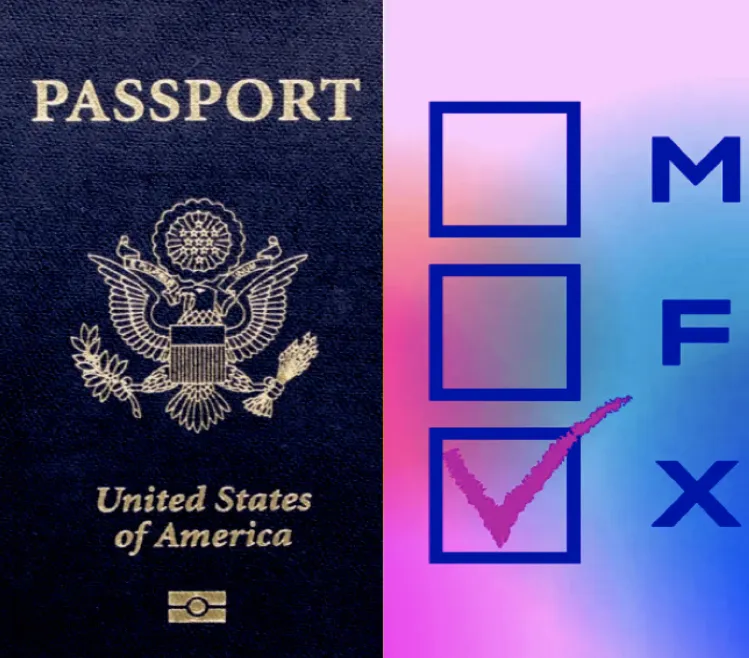
By forcing transgender and gender non-conforming Americans to represent their biological sex rather than their gender on federal passports, the Trump Administration and conservative lawmakers violate the constitutional rights outlined in the Fourth and Fourteenth Amendments, while weaponizing transphobia as a conservative tool. In January 2025, Donald J. Trump signed Executive Order 14168: Defending Women from Gender Ideology Extremism and Restoring Biological Truth to the Federal Government. Executive Order 14168 is…

Written by: Aiyanna Legrand
Edited by: Nuna Endale & Kimberly Abbas
Misleading, radical, and hateful content is prevalent in online spaces, and it has inspired numerous acts of violence, including a racially motivated mass shooting in Buffalo, New York. Violence motivated by online content can be characterized as stochastic terrorism, or predictable acts of violence inspired by false, demonizing speech promoted through a form of mass media. The concept of stochastic terrorism and the widespread influence of social media are relatively new phenomena; many legal questions exist…

Written by: Ogechi Uzoukwu | University of Maryland, College Park
Edited by: Rafaela Drake
Abstract:
This article explores the intersection of systemic injustice and substance abuse in Baltimore, with a focus on government-led interventions intended to address the opioid and broader substance abuse crises. It examines how historical, systematic, and racial inequities, rooted in economic disinvestment and underregulated public health initiatives, contribute to disproportionate amounts of harm in marginalized communities. This article examines practices that reinforce mistrust of the healthcare…

Written by: Jada Cook
Edited by: Chastity Blair
Abstract:
The 2023 Supreme Court decisions in Students for Fair Admissions (SFFA) v. Harvard and SFFA v. University of North Carolina have fundamentally destabilized the legal framework of affirmative action, signaling a decisive shift toward constitutional colorblindness. This research paper examines the viability of state-level procedural mandates, specifically Oregon’s codified Rooney Rule—a former state law requiring public universities to interview at least one minority candidate for athletic coaching positions—under…
Written by: Grace Silva | University of Texas at Austin
Edited by: Kazon Barbee
Abstract:
This article argues that capital punishment should be abolished in the United States due to its high financial cost, lack of deterrent effect, risk of wrongful execution, and inherently discriminatory application. Drawing on Supreme Court jurisprudence and the opinions of Justices Thurgood Marshall, William J. Brennan Jr., and Stephen Breyer, the article demonstrates that the death penalty conflicts with evolving standards of decency under the Eighth Amendment. Empirical evidence shows that capital punishment…

Written by: Symphony Devine
Edited by: Sophia Jackson and Rafaela Drake
Abstract:
This article examines the current inequalities and the anti-Black historical grounding of the United States’ reproductive healthcare system, as well as detailing the acquiescence of these inequalities against Black women by the United States Judiciary and Healthcare systems. It first provides a biopic detailing the racially explicit history of J. Marion Sims’ modern gynecology, and then examines further Supreme Court rulings, historical lawsuits, and healthcare phenomena such as Buck v. Bell (1927),…

Written by: Loran Woods
Edited by: Sophia Jackson and Rafaela Drake
Abstract:
This article examines how the United States healthcare system, while operating under notions of neutrality, continues to produce racial inequality. Despite the constitutional protections afforded by the Fourth and the Fourteenth Amendments, healthcare policies shaping medical standards, insurance, and clinical decision-making often embed racial bias into the legal definitions of “risk,” “compliance,” and “care.” By analyzing cases such as Ferguson v. Charleston (2001), Relf v. Weinberger (1974), and…

Written by: Kai Franklin
Edited by: Rafaela Drake
Abstract:
Current federal environmental law is not properly enforcing its standards on tribal consultation. Without proper consideration of tribal opinion, protected native lands are abused and destroyed with no legal remedy available. Tribal consultation requirements embedded in the National Environmental Policy Act and the National Historic Preservation Act were designed to ensure that federal agencies meaningfully incorporate tribal perspectives before approving projects that affect native lands and sacred sites. In practice, however,…

Written by: Brianna Wilson
Edited by: Kazon Barbee & Justin James
Abstract:
The Trump Administration's first year back in office, characterized by detaining immigrants, the death of political commentators and leaders, and censorship within the media, has raised concerns surrounding its encroachment on freedom. Among the concerns are questions about the right of television and news companies to enact such restrictions and to be scrutinized for their true intent. The radical views posited by President Donald Trump and his agencies, led by his personal colleagues, provide cause to research…

Written by: Joseph De Jesus Bravo | Borough of Manhattan Community College (CUNY)
Edited by: Jessica Nwosu
Abstract:
This paper analyzes the constitutional and social implications of modern immigration enforcement practices in the United States. While Immigration and Customs Enforcement (ICE) derives its authority from the Immigration and Nationality Act (INA), particularly 8 U.S.C. §§ 1357 and 1226, that authority is not unlimited. It remains subject to the Fifth Amendment’s guarantee of due process. Recent court challenges and enforcement incidents have raised questions about whether…
Written by: Yasmine Hightower | Howard University
Edited by: Jameeiah Domercant & Sophia Stoute
Abstract:
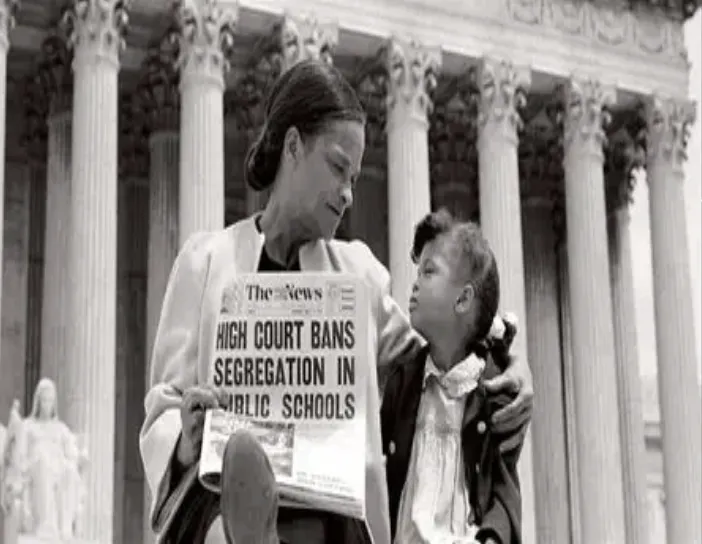
This article examines how NAACP’s usage of impact litigation within Brown v. Board of Education popularized impact litigation as a strategy to combat institutionalized bias. The NAACP used impact litigation to bring together filed appeals cases from district courts to argue against unequal treatment at the Supreme Court level. Through the legal work presented in this article, an analysis will be presented on how this legal strategy was successful in helping the…
Written by: Michelle Henaku
Edited by: Chastity Blair
Abstract:
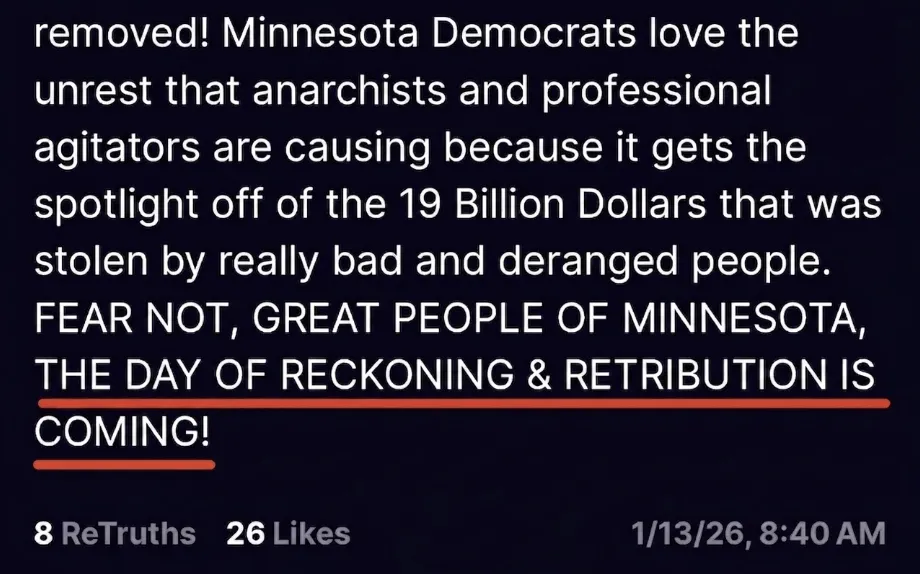
This article argues that the Trump administration’s Operation Metro Surge, a federal immigration enforcement operation that deployed over 4000 ICE agents into Minneapolis and Saint Paul, constitutes unlawful retaliation against constitutionally protected political speech of Minnesota elected officials in violation of the First Amendment. Applying the three-prong framework for First Amendment retaliation claims, this article demonstrates that Minnesota officials’ public opposition to Trump’s immigration agenda…